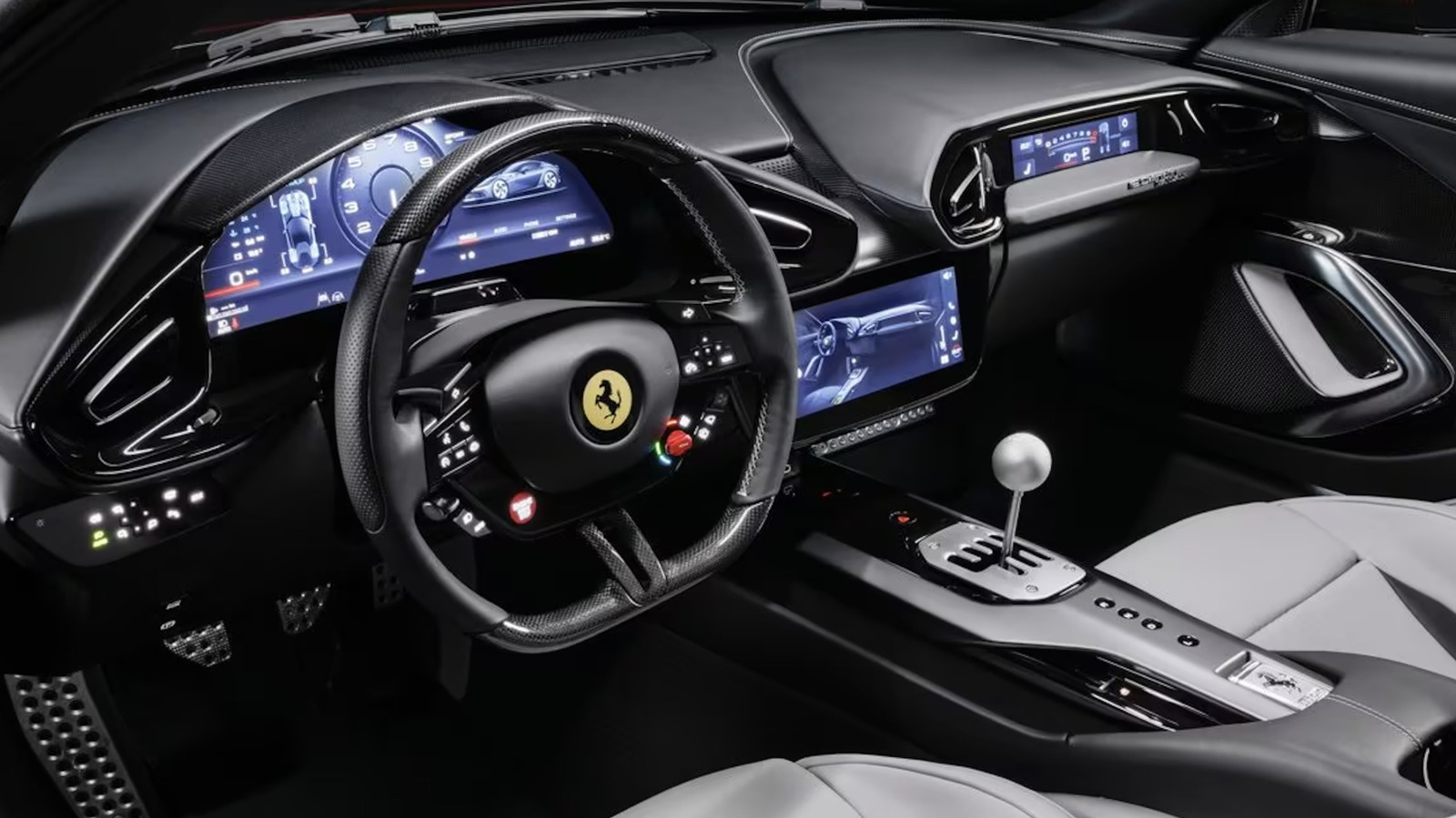
Ferrari's decision to offer a manual transmission on the 12Cilindri represents a calculated compromise rather than a betrayal of purists. The supercar's new stick shift is electronically managed, not mechanically linked to the engine in the traditional sense. This hybrid approach allows Ferrari to preserve the manual driving experience while meeting modern emissions and performance standards that a fully mechanical gearbox cannot achieve.
The 12Cilindri's 6.2-liter naturally aspirated V12 produces 819 horsepower. A conventional manual would sacrifice responsiveness, efficiency, and the precise gear-change timing that modern supercars demand. Ferrari's solution uses a clutch pedal and shifter that feel authentic but rely on electronic actuators to execute shifts. Drivers get the engagement and control of a traditional manual without the compromises.
This isn't dishonest marketing. Porsche, BMW, and Mercedes have all employed similar systems in high-performance applications. The golf enthusiast who wants three pedals has real alternatives now. A Lamborghini Revuelto won't offer a manual at all. A McLaren Artura forces buyers into automatics. Ferrari chose to deliver what customers actually asked for, even if the execution required modern engineering.
The real issue surfaces among collectors who believe manual boxes should work like they did in 1965. That's nostalgia conflicting with physics. Today's supercars operate at performance levels that mechanical manuals simply can't match consistently. A fully manual 12Cilindri would shift slower, hurt fuel economy, and struggle with torque management.
Stick-shift buyers understand the tradeoff. They want clutch feedback, control, and the psychological satisfaction of rowing gears. Ferrari delivers exactly that. The fact that electrons assist the process matters far less than whether the experience satisfies the driver.
Ferrari sold out the manual purist