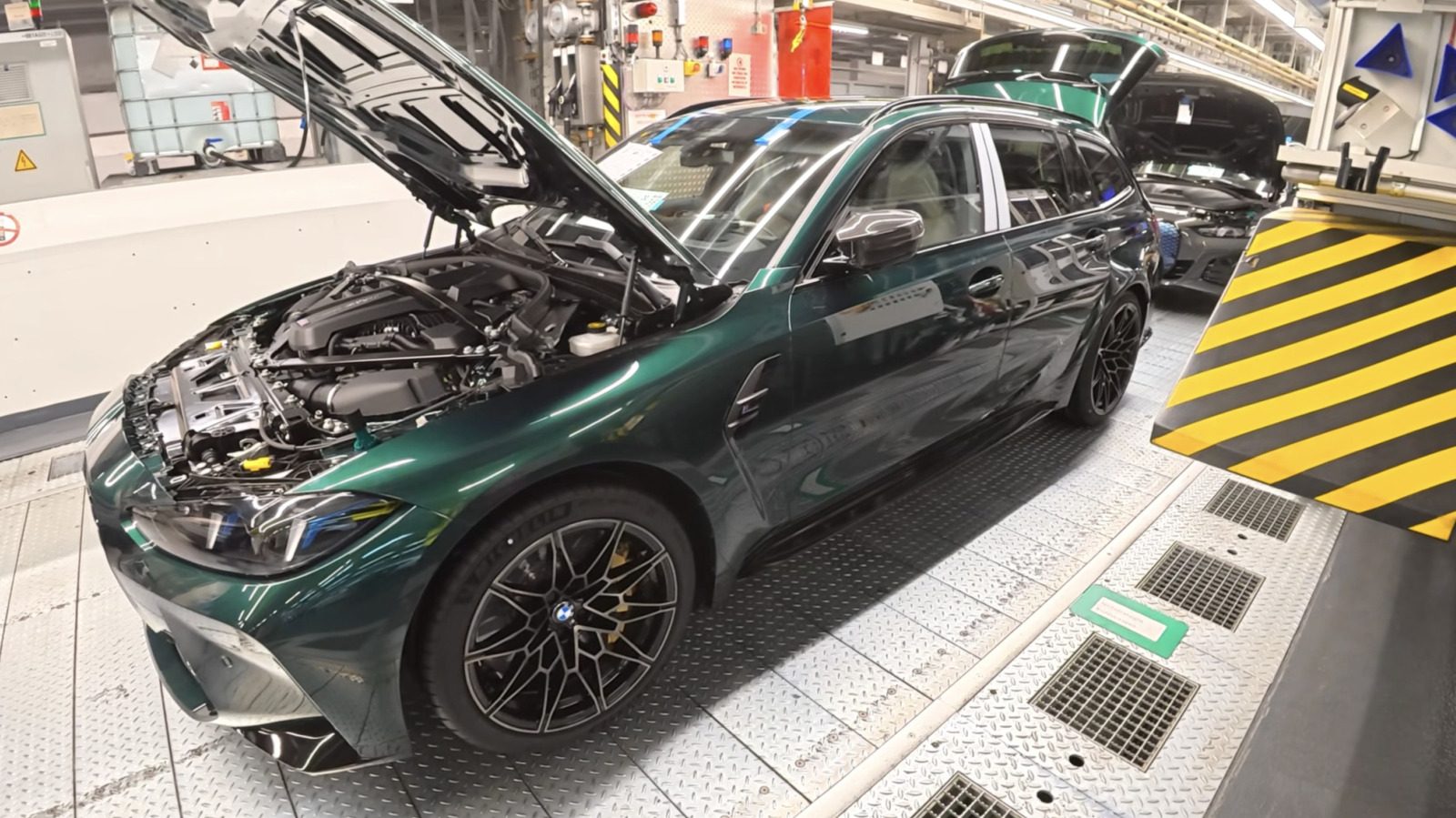
Manufacturing a modern automobile involves 40 hours of controlled chaos compressed into five basic steps, a reality that assembly line videos consistently fail to capture. The actual construction process reveals just how spectacularly complex contemporary vehicles have become.
Car assembly begins with the body shop, where robots weld steel or aluminum frames together with precision measured in millimeters. The paint shop follows, applying multiple coats and baking the finish to specification. Then comes the marriage stage, where the engine, transmission, and suspension marry to the body. The trim and assembly line installs interior components, wiring harnesses, glass, and electronics. Final assembly adds wheels, fluids, and systems before quality control testing.
What assembly footage shows is the deceptive simplicity of modern manufacturing. Robots handle repetitive welding and heavy lifting with inhuman accuracy. Human workers perform intricate tasks requiring dexterity and problem-solving. The choreography must be flawless. A single misalignment cascades through downstream stations. A missing bolt delays everything.
Modern cars contain 30,000 individual parts. A single vehicle requires coordination between dozens of suppliers delivering components on precise schedules. The average assembly plant produces 1,000 vehicles daily. Missing a deadline by hours costs millions.
The five-step framework glosses over the engineering reality. Each step contains hundreds of micro-processes. Welding sequences must follow specific orders. Paint curing times demand exact temperatures. Electrical systems require testing at multiple checkpoints. Suspension geometry tolerances sit within fractions of an inch across thousands of vehicles.
This complexity explains why vehicle recalls occur, why production ramps take months, and why scaling output strains even experienced manufacturers. When companies rush assembly, quality suffers. When they slow down to perfect details, costs rise.
Watching a car actually get built forces recognition that the $30,000 sedan in your driveway represents