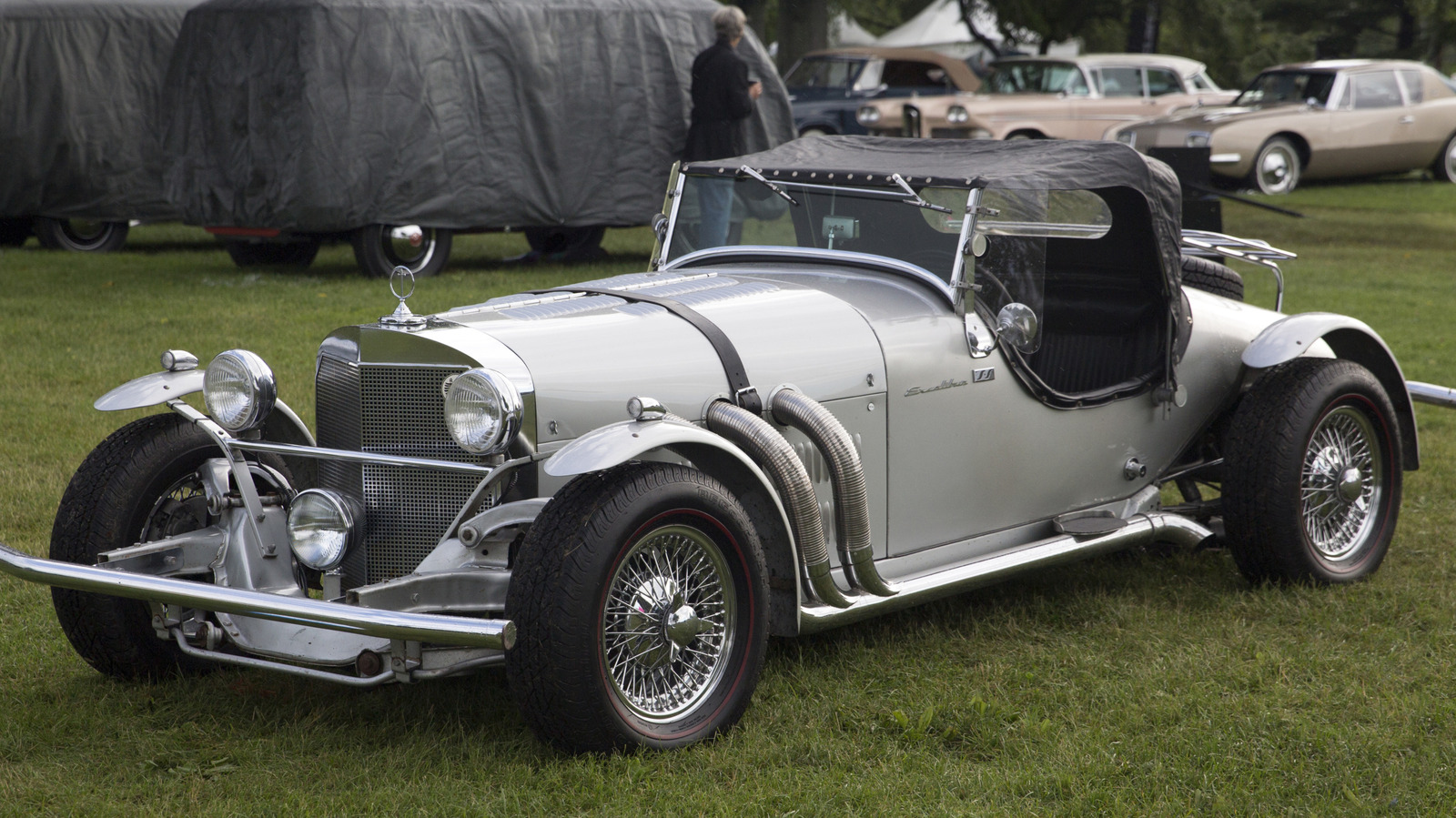
The Excalibur stands as one of America's most audacious homegrown projects, a Wisconsin-built neo-classic that married 1920s Mercedes design language with 1960s American engineering. Built on the humble Studebaker Lark platform, the Excalibur proved that bold styling could transcend its pedestrian underpinnings.
Designer Stephen Wilder took inspiration from the 1928 Mercedes-Benz SSK, one of history's most elegant sports cars, and reimagined it for mid-century America. He lowered and widened the proportions to fit the Studebaker Lark chassis, creating a car that looked like a museum piece but drove like a modern machine. The resulting machine turned heads wherever it appeared, delivering genuine performance wrapped in throwback elegance.
The Excalibur challenged the prevailing American automotive mindset of the era, which pushed toward chrome excess and bulbous forms. Instead, this Wisconsin creation offered restrained, timeless styling backed by real mechanical competence. That combination proved potent enough to establish Excalibur as a legitimate contender in the specialty car market, not a mere replica or kit car curiosity.
The Studebaker Lark foundation provided surprising capability. Though not a full-blooded supercar in horsepower terms, the Excalibur delivered handling and engineering sophistication that transcended its humble origins. Buyers attracted to its retro aesthetic discovered a car that actually performed, with responsive steering and genuine sports car dynamics.
The Excalibur's success demonstrated an enduring hunger among wealthy enthusiasts for something different from mainstream manufacturers. While Detroit pushed bigger and faster, Excalibur offered exclusivity and design purity. The car influenced subsequent generations of specialty builders and remains a benchmark for neo-classic automotive design.
Today the