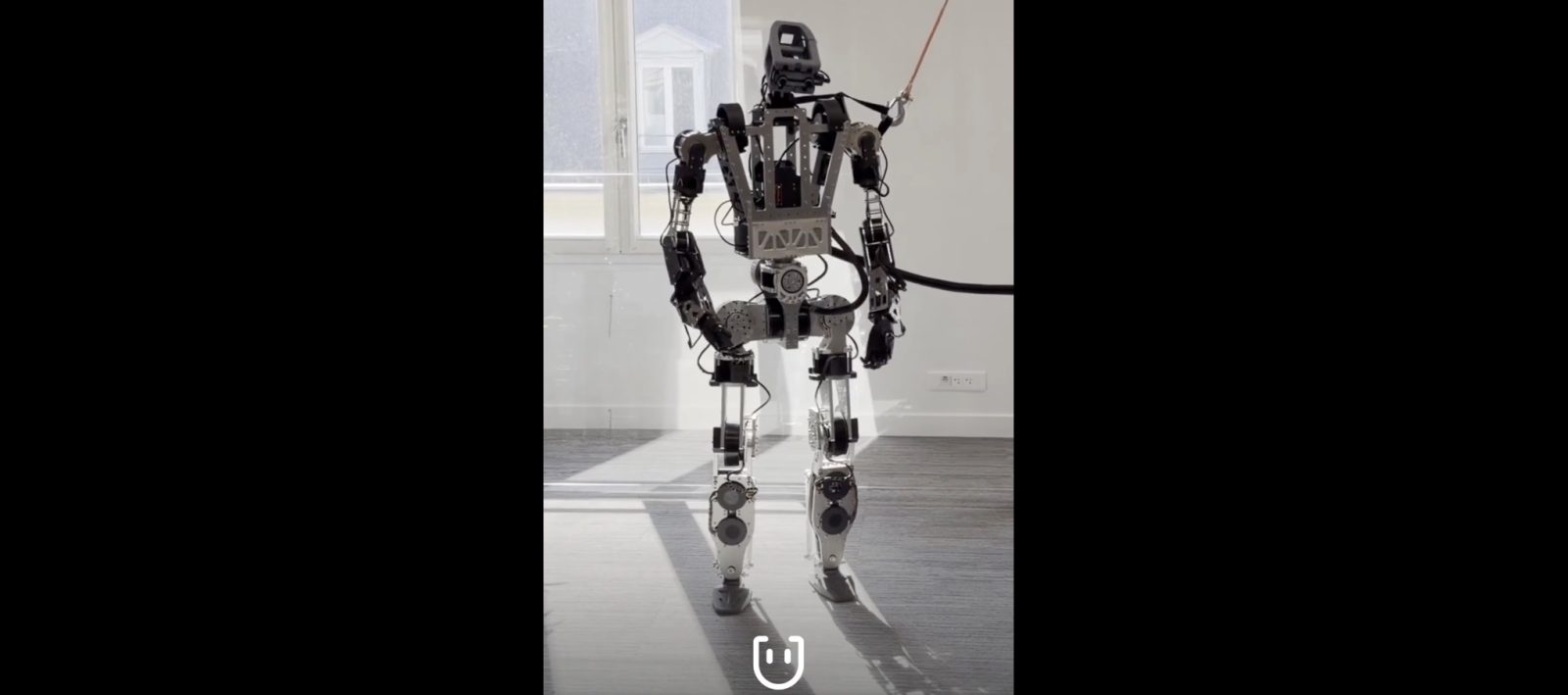
Rémi Cadène, a former Tesla scientist who contributed to the Optimus humanoid robot program, has launched UMA, a Paris-based robotics startup competing directly in the humanoid space. The company unveiled Northstar, a lightweight humanoid robot designed for industrial and commercial applications.
UMA operates from Europe rather than Silicon Valley, positioning itself as an alternative to Tesla's dominant push into humanoid robotics. Cadène brings direct experience from Tesla's Optimus development, one of the industry's most closely watched robotics programs. Northstar represents a different engineering philosophy, emphasizing lighter weight construction over the heavier Optimus platform.
The startup claims 50 potential customers already in conversations about deployment, suggesting genuine market demand exists beyond Tesla's vision. These discussions span logistics, manufacturing, and service sectors where repetitive or dangerous tasks create clear use cases for humanoid machines.
Cadène's departure from Tesla illustrates the talent migration occurring as humanoid robotics moves from research phase to commercialization. Engineers see opportunity in building specialized alternatives rather than competing head-to-head with Tesla's capital and Elon Musk's timeline commitments.
The European location carries strategic weight. Labor costs differ significantly from California, regulatory frameworks offer distinct paths to market, and European industrial customers prioritize different performance metrics than American ones. UMA positions Northstar as built for European manufacturers rather than retrofitted American designs.
Tesla targets Optimus as a future mass-market product, potentially rivaling automotive production volumes. UMA pursues narrower but immediate commercial applications. This bifurcated approach suggests the humanoid market will stratify between consumer-grade generalists and industry-specific specialists, much like industrial robotics before it.
Northstar's lightweight design particularly matters. Heavier robots require more robust infrastructure and consume more energy per task. Lighter machines integrate into existing facilities with