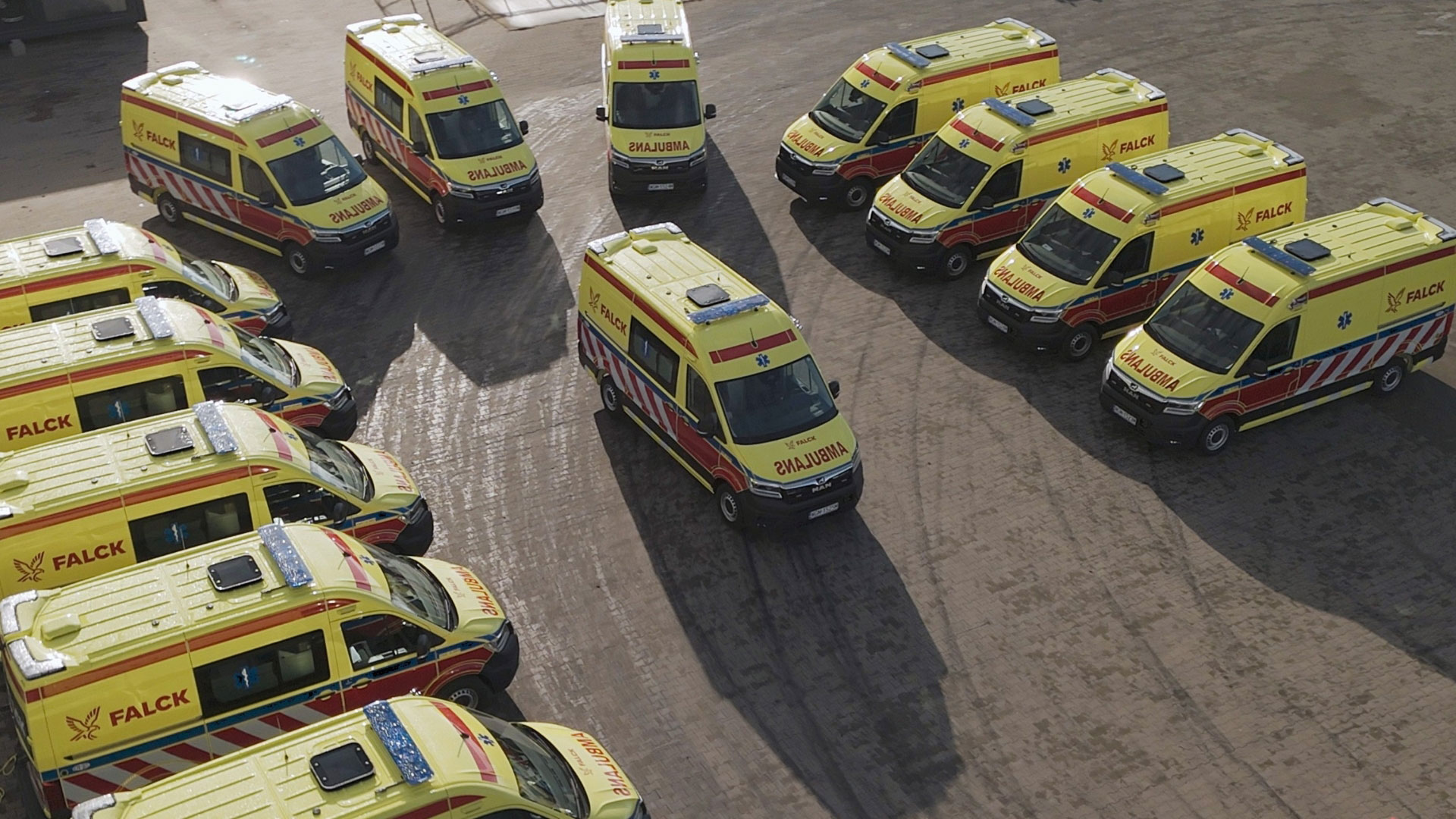
MAN has locked in a 600-vehicle contract with Falck, the European emergency services operator, cementing the German commercial vehicle manufacturer's dominance in the ambulance segment. The deal includes 335 MAN TGE vans destined for Spain in 2025, with additional units rolling out across Europe.
The TGE, MAN's compact commercial van platform, has proven itself in medical transport applications. The vehicle's modular design, payload capacity, and operational efficiency make it a natural fit for ambulance conversion. Falck's decision to standardize on MAN hardware across multiple markets signals confidence in the platform's reliability and total cost of ownership.
This contract represents more than customer loyalty. It reflects hard commercial performance metrics. MAN's ability to win such a substantial volume order from one of Europe's largest private ambulance operators demonstrates the TGE's competitive edge against rivals like Mercedes-Benz Sprinter and Ford Transit Custom in the specialized transport sector.
The ambulance market operates on different calculus than passenger vehicle sales. Durability, availability, and service network density drive fleet purchasing decisions. Falck manages thousands of vehicles across multiple countries, meaning standardization delivers operational simplification and parts commonality. MAN's established service infrastructure across Europe clearly met those requirements.
Spain represents Falck's largest expansion target in this cycle, with 335 units earmarked for 2025. That concentration suggests the operator is refreshing aging stock and positioning for growth in Spanish emergency healthcare contracts. The remaining vehicles distribute across other European markets where Falck operates.
MAN's commercial vehicle strategy has shifted aggressively toward electric powertrains in recent years, but the TGE portfolio still centers on diesel units for mainstream applications. Ambulance operators generally resist electric conversions due to range anxiety, the need for continuous availability, and charging infrastructure gaps. The traditional TGE