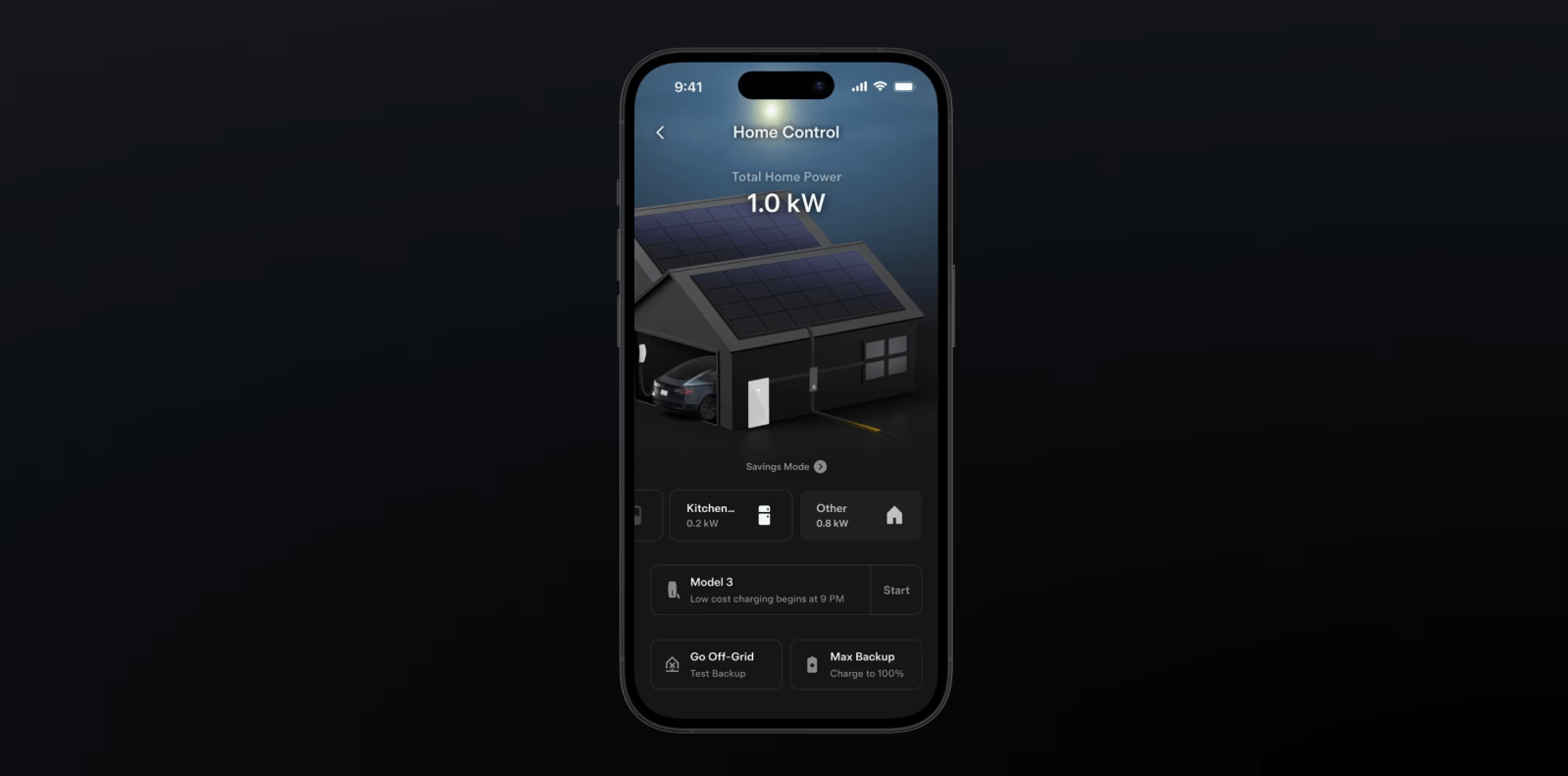
Tesla is rebranding and expanding its home energy management platform under the "Tesla Home" banner, powered by an AI system called Opticaster. The technology makes hundreds of daily decisions about when to store and discharge electricity from home battery systems to minimize electricity costs for homeowners.
Opticaster analyzes real-time energy prices, grid demand, and household consumption patterns. It automatically optimizes when home batteries charge during low-price periods and discharge during peak pricing windows. For households with solar installations and Tesla Powerwall units, this automation directly reduces monthly utility bills without requiring manual intervention.
The move positions Tesla deeper into the residential energy ecosystem. Rather than just selling batteries and solar panels separately, Tesla Home bundles these components with AI-driven software that extracts maximum value from distributed energy assets. This bundled approach gives Tesla a competitive edge over traditional utilities and other home energy providers.
The tech isn't entirely new. Tesla developed Opticaster years ago and deployed it at grid scale managing over 12 gigawatt-hours of energy storage. The company is now adapting that proven algorithm for residential use. This rebranding as Tesla Home signals Tesla's intention to make energy management as central to the company identity as vehicles.
For homeowners, the appeal is straightforward. Battery systems without optimization still reduce grid dependence, but Opticaster unlocks their financial potential. By constantly trading electricity against grid price signals, households effectively act as mini power plants, buying low and selling high into demand-responsive programs.
Tesla faces competition from other home battery makers and traditional utilities launching their own management platforms. But Tesla's advantage lies in controlling the full stack—solar production, battery hardware, inverters, and now AI optimization—all on one integrated platform. That integration reduces complexity for consumers and creates switching costs once systems are installed and running.
The Tesla Home launch represents the company's pivot toward becoming a comprehensive home energy provider rather