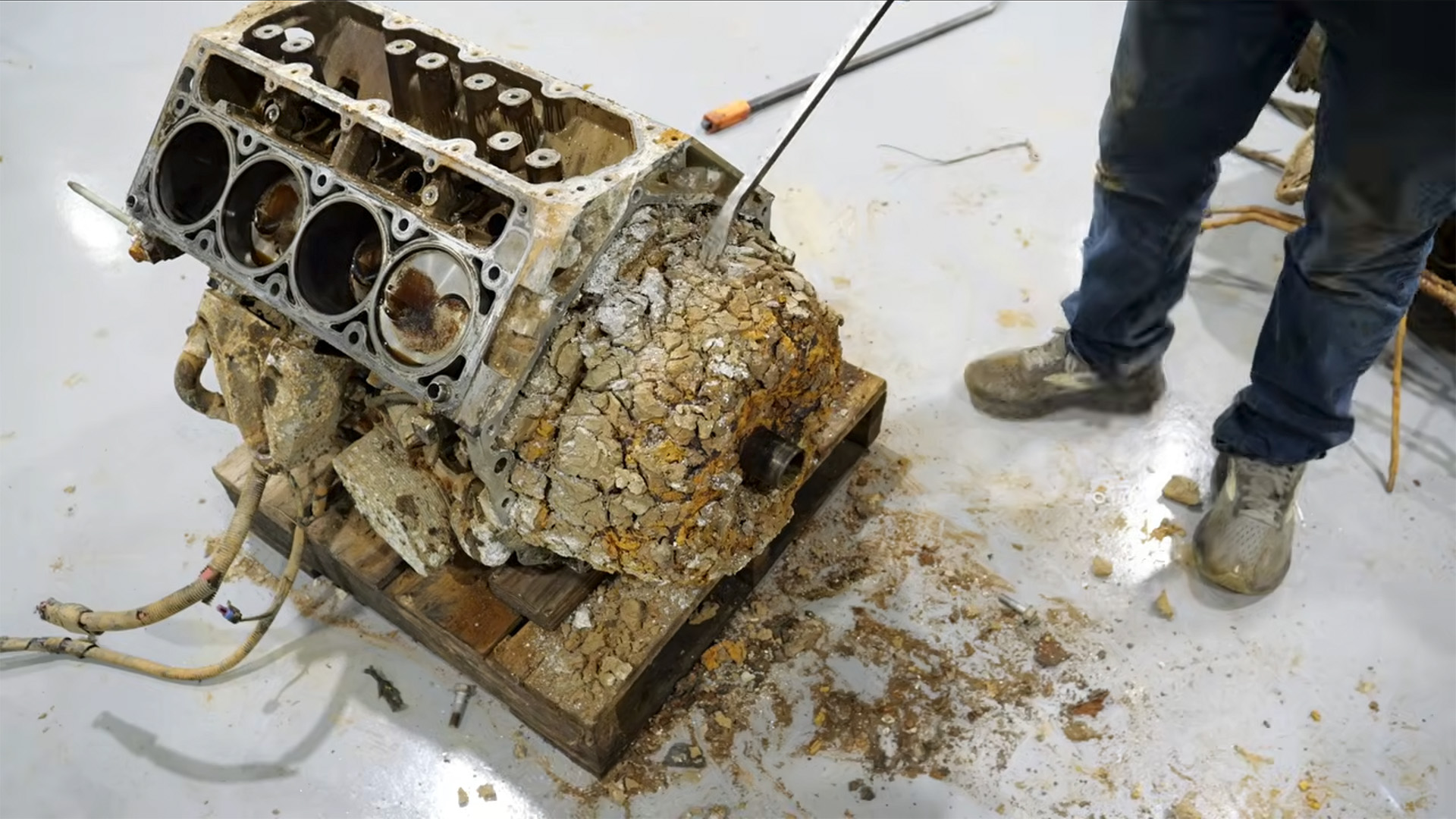
A GM 6.2L V8 engine recovered after four years submerged in a river reveals the brutal reality of long-term water exposure on modern powerplants. The LS-based engine, pulled from its watery grave, exhibits extensive corrosion, mud accumulation, and internal degradation that renders it effectively destroyed.
The 6.2L V8, a staple in GM's truck and SUV lineup since 2010, produces 420 horsepower in most applications. This particular engine endured years of submersion, allowing river sediment and stagnant water to penetrate every cavity. Internal components show severe rust formation. Cylinder walls, typically iron-lined, suffered pitting and oxidation. Bearings and valve train parts degraded significantly. Gaskets and seals failed completely, allowing water to pool inside the crankcase and engine block.
The deterioration demonstrates why water intrusion represents an engine's worst enemy. Even brief submersion can cause hydro-locking, where water enters cylinders and prevents piston movement. Extended exposure compounds the damage exponentially. Corrosive river water attacks ferrous metals relentlessly. Mud and sediment accumulate in oil passages, blocking lubrication channels. Electrical components corrode. Aluminum heads develop white oxidation.
Recovery and rebuilding becomes economically impractical. The restoration process would require complete disassembly, chemical cleaning, machining of cylinder walls, replacement of every bearing and seal, and detailed inspection of every component. Even then, hidden damage often emerges during reassembly.
This scenario, while extreme, underscores why flood-damaged vehicles carry salvage titles. Insurance companies total vehicles submerged for even brief periods because engine replacement typically proves cheaper than thorough restoration. For truck owners, the 6.2L's availability in new Silverados and