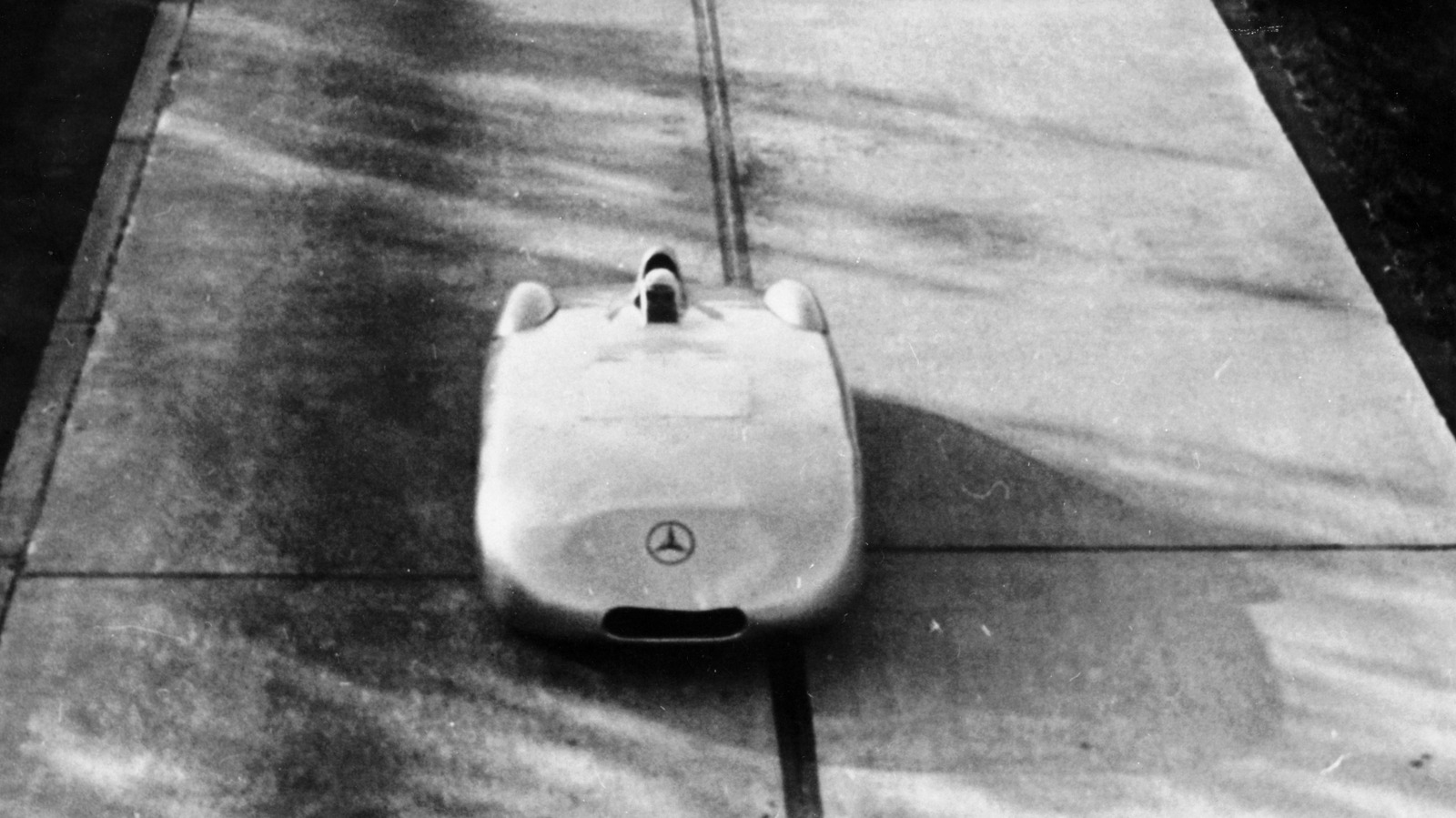
A specialized Mercedes W125 powered by a twin-supercharged V12 set a public-road speed record of 260 mph in the 1930s, a mark that stood for nearly 80 years. This remarkable feat underscores the engineering ambition of pre-war motorsport, when manufacturers pushed boundaries on actual streets rather than closed circuits.
The W125 represented Mercedes' ultimate expression of speed during the era. The twin-supercharged V12 generated extraordinary power for its time, allowing the car to achieve velocities that seemed impossible given the mechanical limitations of the decade. Drivers navigated public roads at these speeds with minimal safety equipment, no modern tire technology, and steering systems that required significant physical effort.
Context matters here. In the 1930s, land-speed attempts on public roads were legitimate sporting events. Salt flats and closed courses existed, but legendary drivers like Rudolf Caracciola pushed cars to their limits on stretches of highway closed temporarily for attempts. The Mercedes W125 was already a dominant Grand Prix racer before this specialized variant emerged, so using one for speed runs made competitive sense.
The longevity of this record reveals something about automotive progress. For 80 years, no driver managed to exceed 260 mph on a public road using a street-legal or semi-street-legal vehicle. That speaks both to the mechanical prowess of that W125 and the regulatory shift toward closed-course testing after the 1930s.
Modern hypercar makers routinely exceed these velocities on test tracks, but public-road records have become rare and heavily restricted. The Bugatti Bolide and Koenigsegg Jesko Absolut claim higher speeds on controlled surfaces, yet the mystique of that Mercedes record endures. It represents an era when automotive ambition and public danger coexisted in ways unthinkable today.