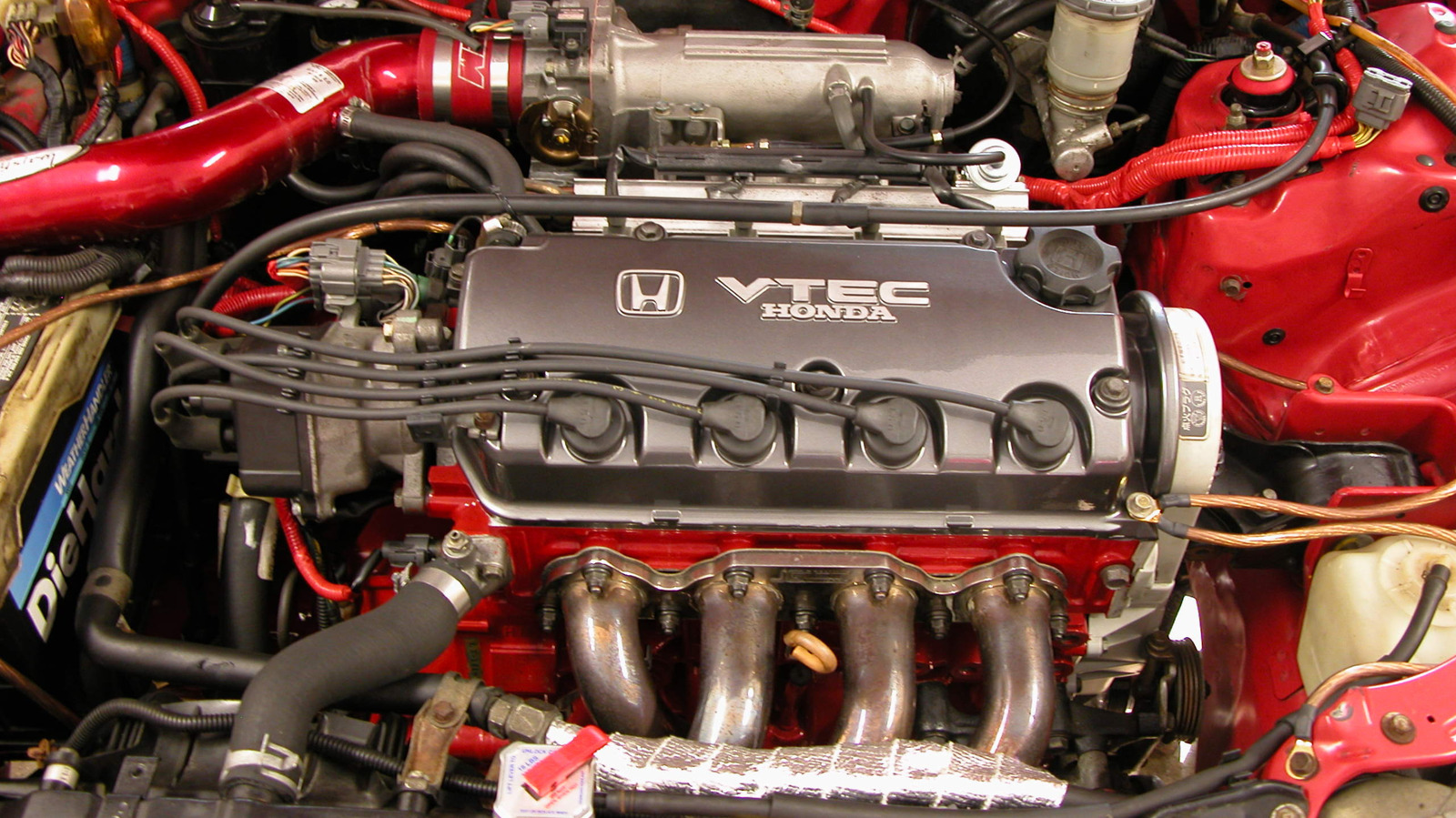
Honda's B-Series and D-Series engines represent two distinct generations of the Japanese manufacturer's four-cylinder architecture, each engineered for different vehicle classes and performance targets.
The D-Series engine debuted first, powering Honda's compact sedans through the 1990s and early 2000s. The D16Z6 variant became the workhorse in Civic models, producing 127 horsepower in naturally aspirated form. The D-Series featured a shorter stroke and smaller displacement, typically ranging from 1.5 to 1.6 liters. These engines prioritized fuel economy and reliability over peak power output.
The B-Series emerged as Honda's performance-focused alternative. The B16A2, found in the legendary Civic Si, delivered 180 horsepower from 1.6 liters through more aggressive valve timing and higher compression ratios. B-Series engines employed a longer stroke than their D-Series counterparts, creating a more robust platform for tuning. The B-Series also appeared in the Integra, where variants like the B18C produced 195 horsepower.
Key technical differences define the engines. B-Series blocks feature deeper decks and stronger internals capable of withstanding higher boost pressures for forced induction. D-Series engines prioritize efficiency through lighter construction and lower operating temperatures. Bore and stroke ratios differ significantly. The B16A runs a 81mm bore by 77.4mm stroke, while the D16Z6 uses 75mm bore by 90mm stroke.
VTEC implementation varies between the two. Both systems employ variable valve timing, but B-Series applications engage VTEC at higher RPMs, typically above 5,500. D-Series engines activate VTEC earlier in the rev range for broader torque delivery.
In the aftermarket tuning