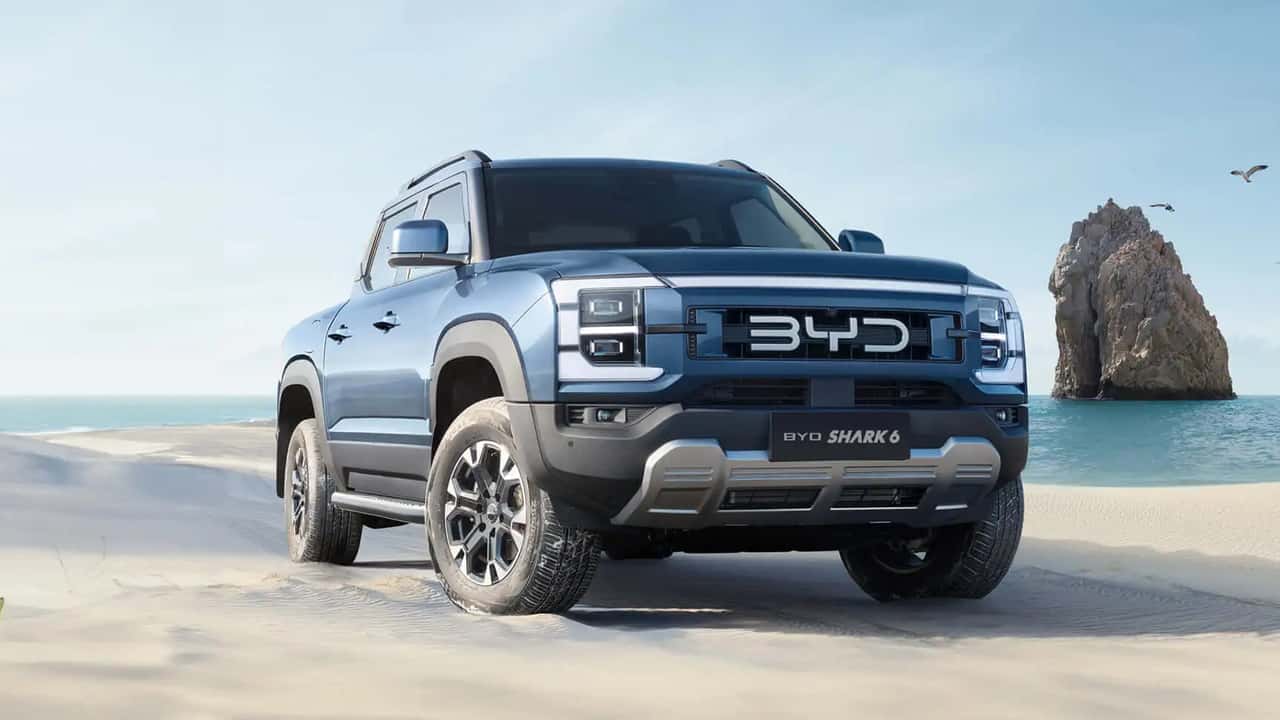
BYD's Shark plug-in hybrid pickup truck has arrived in the United Kingdom, expanding its global footprint while remaining unavailable to American buyers. The vehicle already sells in China, Mexico, South America, and Australia, making the U.S. market a notable exclusion from BYD's distribution strategy.
The Shark represents BYD's push into the competitive pickup segment with hybrid technology. As a PHEV, it offers combustion engine capability paired with electric motor assistance, addressing range anxiety while delivering lower emissions than conventional trucks. This powertrain combination appeals to markets where charging infrastructure varies or where buyers want flexibility on longer hauls.
BYD's absence from the U.S. truck market reflects deeper regulatory and trade barriers. American tariffs on Chinese vehicles and protectionist policies effectively lock out foreign automakers. The Biden administration imposed significant tariffs on Chinese EVs and batteries, and Congress has tightened rules around vehicle imports. Additionally, U.S. truck buyers show strong preference for established domestic brands like Ford F-150, Chevrolet Silverado, and Ram 1500, where dealer networks and service availability run deep.
The U.K. market represents BYD's latest European expansion attempt, though Europe has its own barriers. The company opened a European headquarters and secured EV manufacturing deals, but pickup trucks occupy a smaller niche in European markets compared to North America. Still, the Shark's PHEV configuration addresses European emissions regulations and fuel economy standards more effectively than pure gas engines.
BYD dominates global EV and battery production, but market access remains fragmented by geography and policy. China's automakers face systematic barriers in the U.S., while Europe and other markets offer opportunity. The Shark's international rollout shows BYD's ambition to compete globally, even as America's protectionist stance keeps Chinese vehicles off American roads and