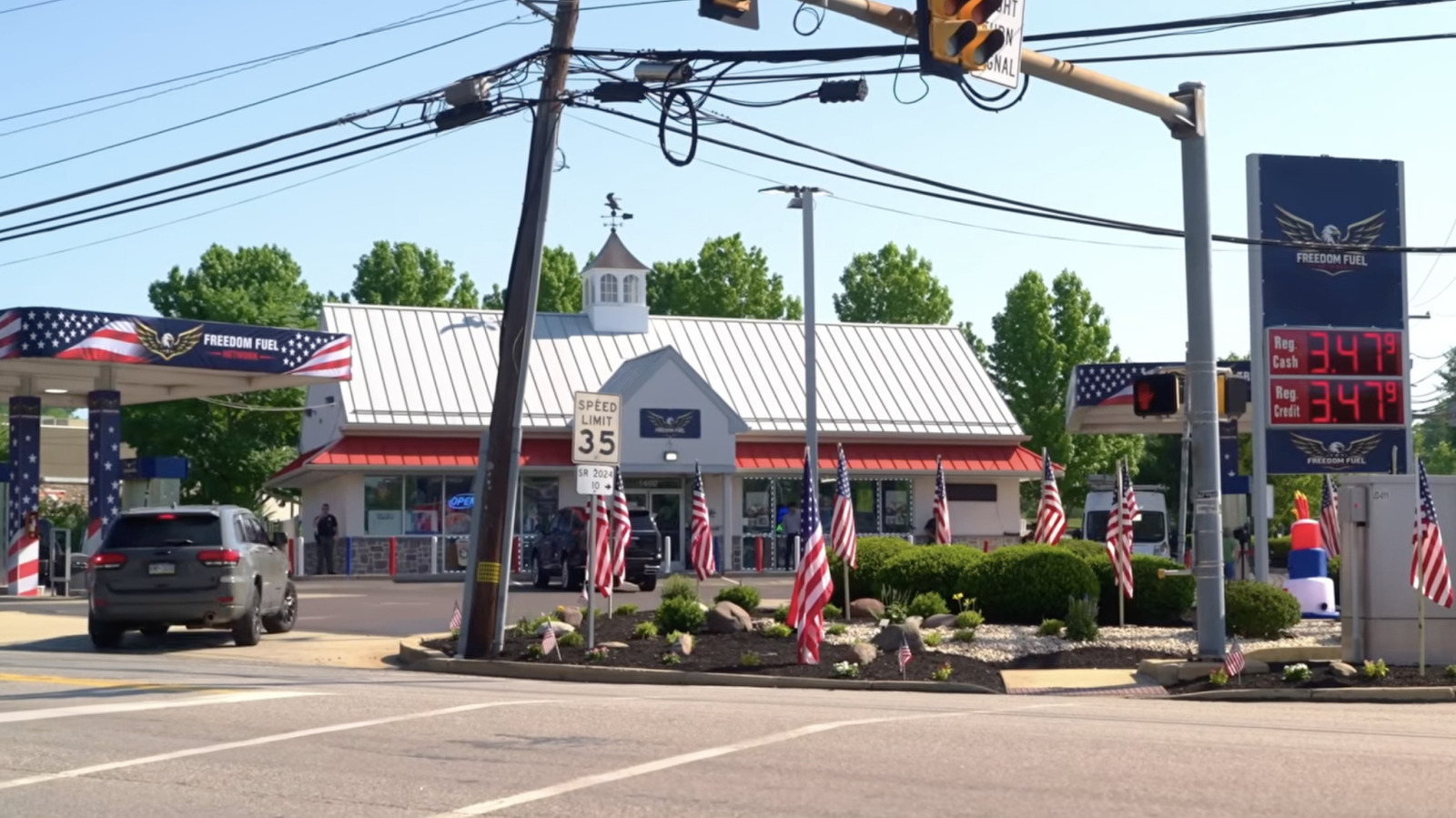
Trump's proposed "Freedom Fuel" government-operated gas station network draws criticism for contradicting free-market principles despite conservative branding. The initiative positions itself as a patriotic alternative to private fuel retailers, offering lower prices and nationalist messaging. Critics argue the model mirrors state-controlled energy infrastructure more commonly associated with communist economies, not capitalist governance.
The concept centers on federal involvement in fuel distribution and pricing. Traditional Republican ideology opposes government intervention in markets, making the proposal ideologically inconsistent with conservative doctrine. Supporters claim lower prices benefit consumers, but the mechanism for maintaining those prices requires government subsidy or price controls—tools typically deployed by centrally planned economies.
Private fuel retailers already operate in a competitive market where prices fluctuate based on crude costs, refining capacity, and distribution networks. Government-operated stations would either undercut competitors through subsidies paid by taxpayers or implement price controls that distort market signals. Both approaches reduce competitive pressure on private operators and create inefficiencies characteristic of state-run enterprises.
The patriotic framing attempts to repackage what amounts to government market participation as a nationalist economic policy. Energy independence and domestic fuel production represent legitimate policy goals, but operating retail gas stations differs fundamentally from investing in refining capacity or domestic drilling programs. Those alternatives achieve energy security without direct consumer-facing government retail operations.
The proposal highlights tension within modern populist conservatism between anti-establishment rhetoric and traditional free-market capitalism. Critics on both the left and right question whether government should compete with private industry in consumer retail markets. Libertarian conservatives oppose the model entirely. Progressive critics seize on the irony of Trump embracing state-controlled economic structures while campaigning against government overreach.
Whether "Freedom Fuel" gains traction depends on political momentum rather than economic logic. The initiative faces resistance from private fuel retailers, free-market advocates, and fiscal conservatives concerned about government spending and market distortion