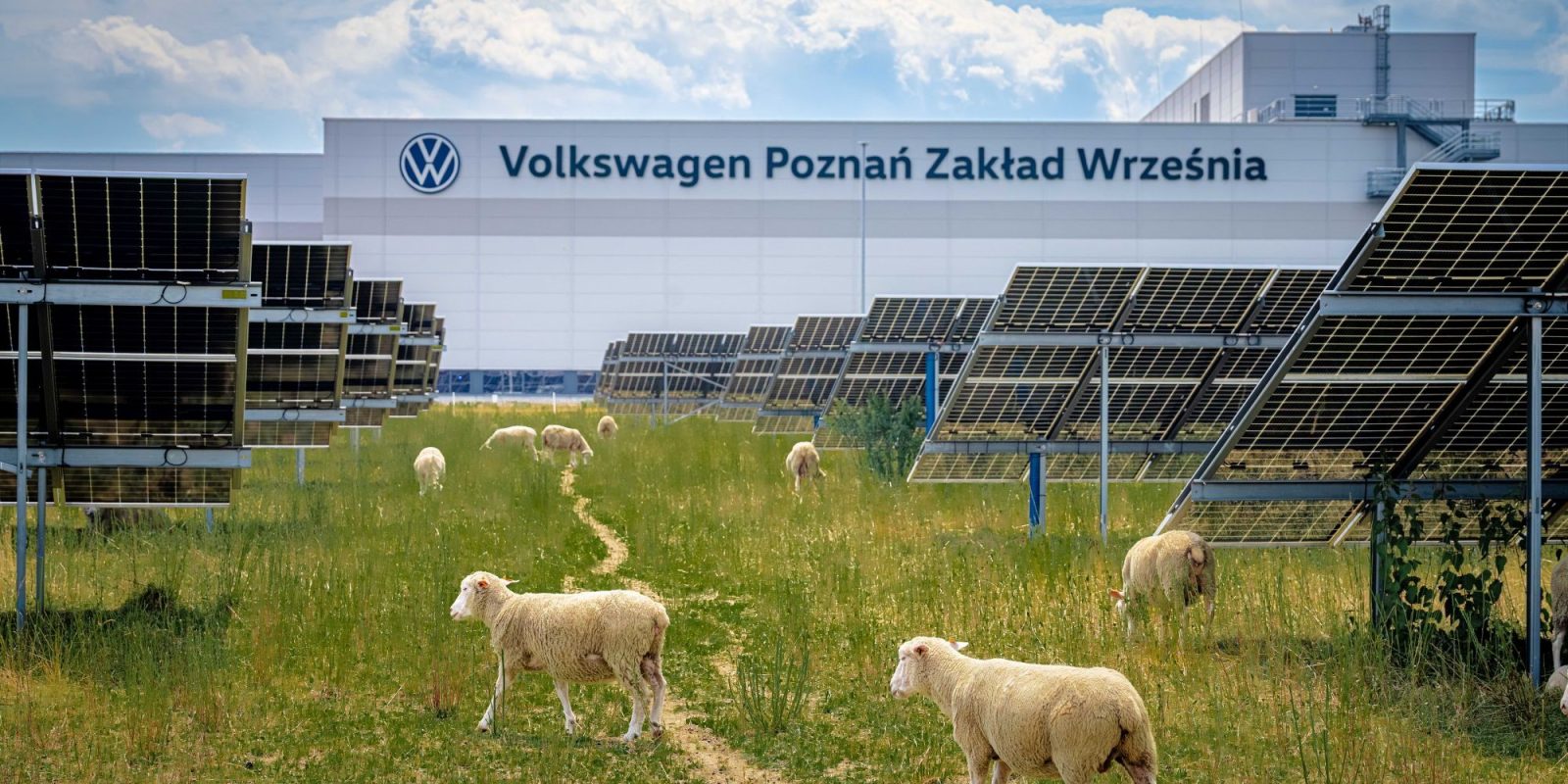
Volkswagen deployed 100 sheep to graze beneath 31,000 solar panels at its Polish manufacturing facility, replacing mechanical mowing with livestock in a dual-purpose sustainability move. The sheep maintain vegetation growth under the panels while the installation generates renewable power for factory operations.
This approach solves a practical problem at utility-scale solar farms. Mowing equipment damages panels and disrupts maintenance work. Sheep graze selectively, avoiding damage to electrical components while keeping grass from shading the photovoltaic arrays. The animals also eliminate fuel consumption and emissions tied to traditional landscaping.
The setup reflects broader automotive industry efforts to decarbonize manufacturing. Volkswagen faces mounting pressure to cut emissions across its supply chain and production footprint. Using renewable energy on-site addresses Scope 2 emissions, while livestock grazing sidesteps equipment impacts and operational costs.
The 31,000-panel installation supplies substantial power to the Polish factory. Solar deployment in Central Europe remains relatively underdeveloped compared to Western Europe, making Volkswagen's investment noteworthy for the region. German automakers increasingly pair EV production with renewable energy sources to strengthen their green credentials ahead of tightening EU regulations.
Sheep grazing under solar panels has become a recognized practice at major installations globally. The animals provide vegetation management while generating secondary revenue through wool or meat production in some cases. Volkswagen's scale here, however, demonstrates how traditional agriculture can integrate with industrial energy infrastructure.
The factory integration addresses factory-level sustainability without requiring battery storage or grid upgrades. This matters as manufacturers ramp up EV production, which demands substantial electrical capacity. Volkswagen's Polish operations likely support electrified vehicle assembly lines, making on-site renewables strategically valuable.
The approach also signals a shift in how automakers think about facility design and operational efficiency. Rather than viewing solar installations as isolated energy generators,