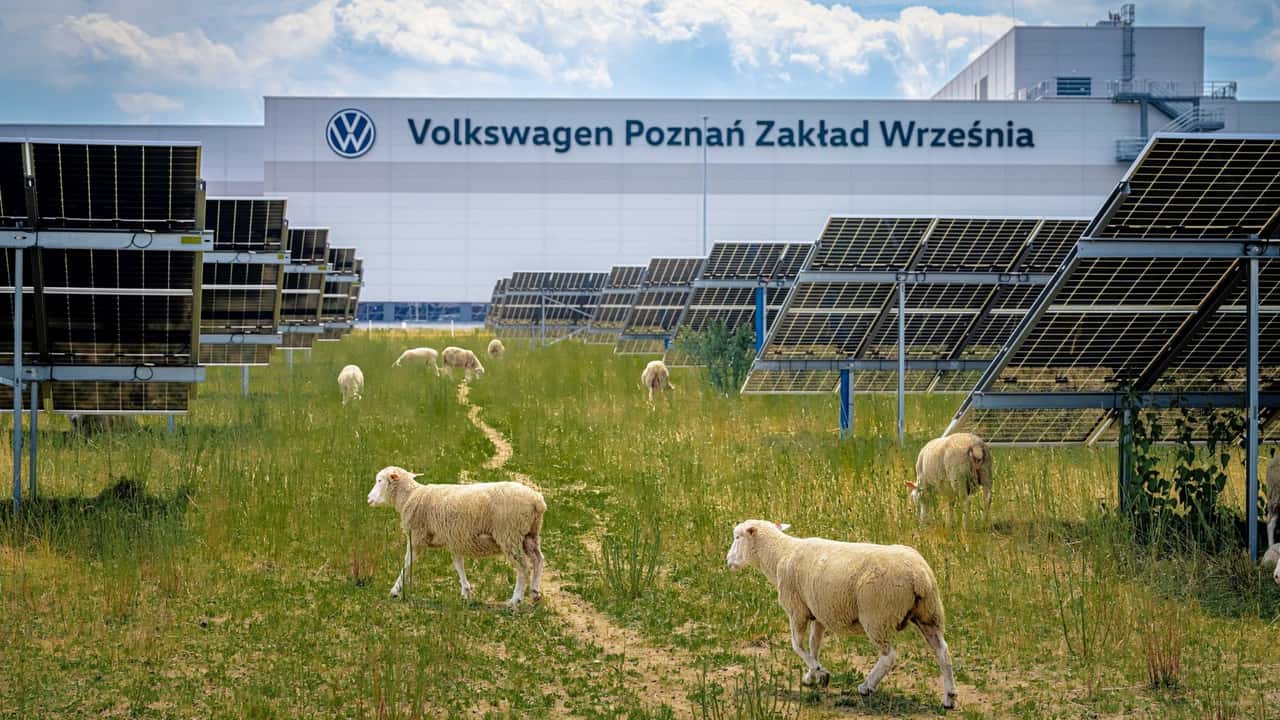
Volkswagen swapped mechanical lawnmowers for 100 sheep at its manufacturing plant in Poland, trading diesel and electric cutting equipment for grazing animals. The automaker views the shift as part of its broader sustainability strategy, reducing reliance on fuel-powered machines while maintaining the factory grounds.
The move highlights how even major industrial operations now seek unconventional approaches to environmental responsibility. Sheep grazing eliminates emissions from mowing equipment entirely, whether electric or gas-powered. The animals also naturally fertilize the grounds through their waste, reducing the need for chemical inputs. Volkswagen's Poland facility joins a growing list of corporate and municipal operations that employ livestock for land management.
This tactic underscores the complexity of defining true environmental friendliness. Electric lawnmowers appear green in isolation, yet their production, battery manufacturing, and charging infrastructure carry hidden carbon costs. Volkswagen's solution sidesteps those concerns altogether, though it introduces new variables. The sheep require feed, water, and veterinary care, with their own resource footprints worth calculating.
For an automaker, the symbolism matters as much as the practicality. Volkswagen faces intense scrutiny over its EV transition following the 2015 diesel emissions scandal. Initiatives like the sheep program signal commitment to sustainability beyond vehicle development. The company must rebuild trust with regulators and consumers suspicious of greenwashing.
The Poland factory produces electric vehicles, making the connection between the manufacturing location and environmental stewardship direct. Volkswagen positions itself as a company where sustainability extends from product design through facility operations.
Whether this model scales across Volkswagen's global footprint remains unclear. Climate, facility size, and local regulations vary dramatically by region. But the Poland experiment demonstrates that reducing environmental impact sometimes requires rejecting conventional industrial logic entirely. Sheep deliver results where machines could not.