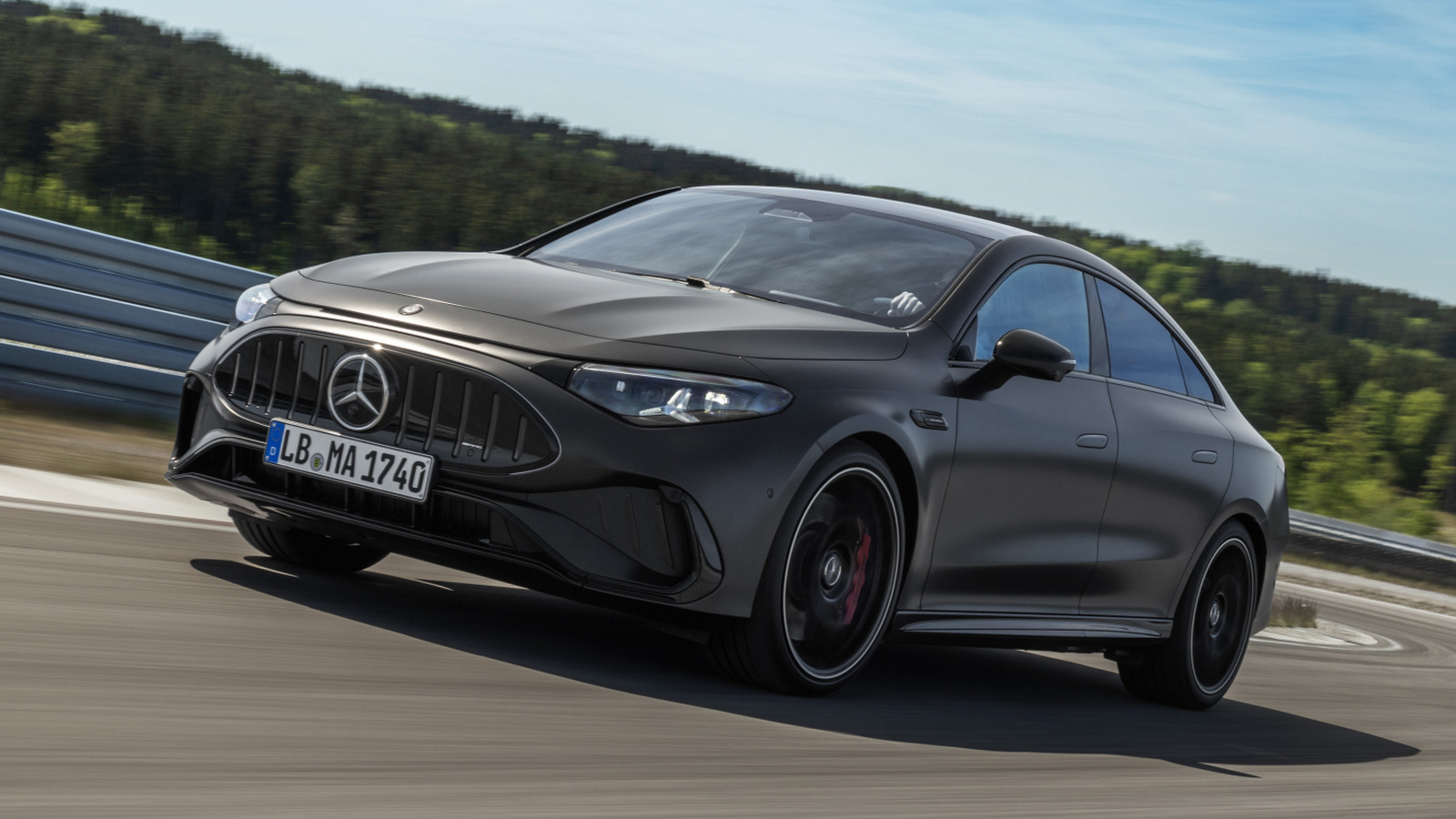
Mercedes-AMG's electrified future takes shape with the new CLA45 EV, a 671-horsepower sedan that borrows powertrain technology from the GT 4-Door electric variant. The car uses three axial-flux motors, a departure from conventional radial-flux designs that dominate the EV market. This architecture delivers instant torque distribution across all wheels while reducing weight and packaging complexity.
The CLA45 EV features simulated gear shifts, mimicking traditional transmission behavior through software-controlled power delivery. This approach appeals to performance enthusiasts who value the tactile feedback of gear changes, even in battery-electric vehicles. Mercedes-AMG calibrated the shifts to feel authentic without the mechanical complexity of a multi-speed gearbox.
North American buyers won't see the CLA45 EV directly, but the powertrain technology will likely migrate to the upcoming GLA electric variant. The GLA, Mercedes' compact crossover, represents a more practical application for this motor architecture. The GLA EV could command significant pricing given the complexity and performance credentials of the powertrain.
This triple-motor setup reflects Mercedes-AMG's strategy to differentiate its electric performance models from mainstream EVs. Porsche's Taycan and BMW's M60 xDrive models already employ multi-motor configurations, but axial-flux technology offers distinct efficiency gains. The motors generate fewer losses through reduced copper resistance compared to traditional designs.
The CLA45 EV positions Mercedes-AMG alongside Tesla and Porsche in the high-performance EV space, though with distinctly German engineering. Power delivery and dynamic response matter as much as raw output in this segment, and the three-motor system enables nuanced handling characteristics impossible with single or dual-motor setups.
Availability remains regional for now, but the technology demonstrates Mercedes' commitment to elect