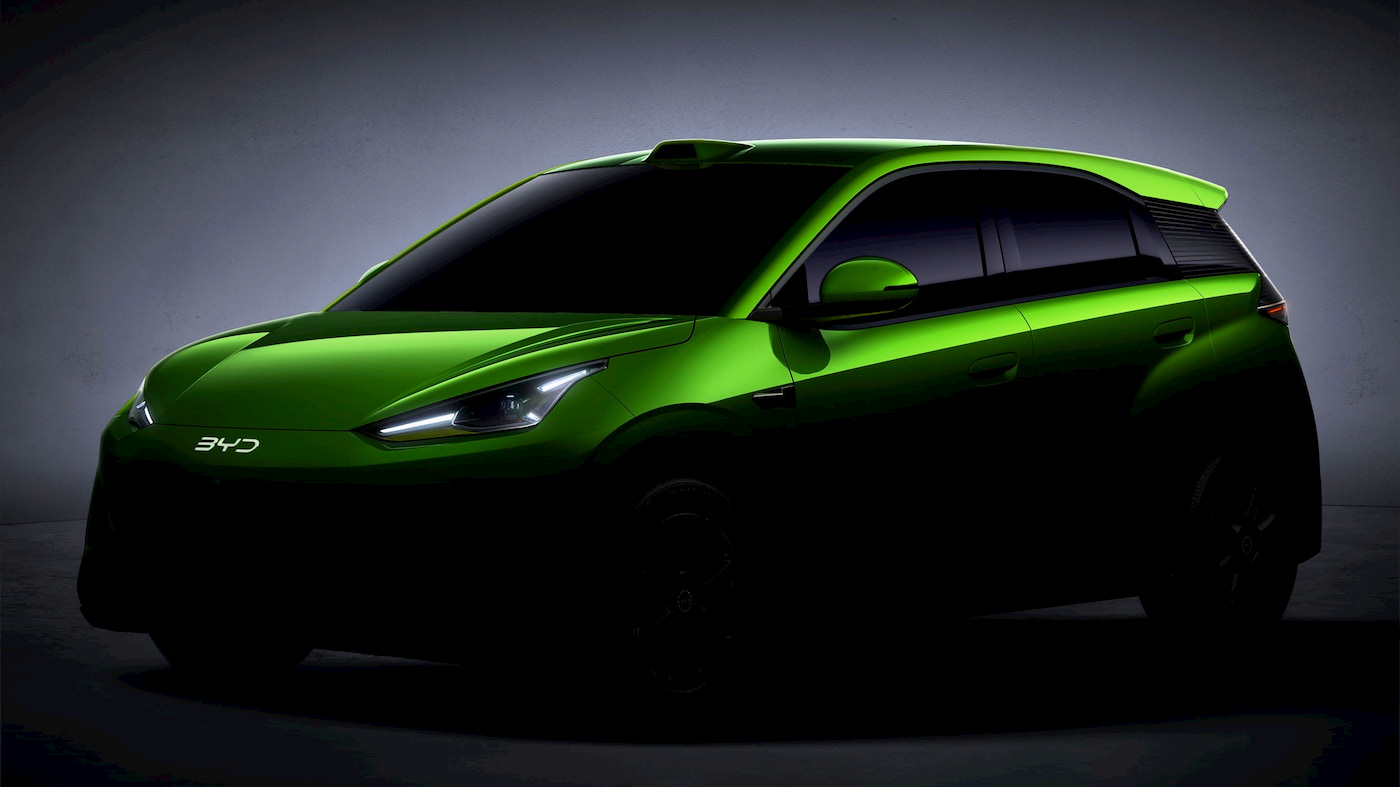
BYD has unveiled an updated version of its budget Seagull EV with a stretched body and upgraded powertrain. The Chinese automaker's entry-level electric vehicle, priced around $10,000, now offers more interior space and performance than the original model.
The refreshed Seagull features a longer wheelbase that expands cargo and passenger room without dramatically changing the car's footprint. BYD paired this with a more powerful motor, delivering better acceleration and highway performance. The extended body positions the Seagull as a more practical option in the sub-$15,000 EV segment, where space limitations have traditionally forced buyers to choose between affordability and utility.
BYD sells this model under the Dolphin Surf nameplate in Europe, reflecting the company's strategy to rebrand vehicles for different markets. The Seagull itself has become BYD's volume play in China's fiercely competitive compact EV market, where price wars force manufacturers to squeeze maximum value into minimal cost.
The upgrade cycle demonstrates BYD's aggressive product development pace. The company launches new variants and refreshes at speeds that rival legacy automakers' entire platform lifecycles. This reflects both intense domestic competition and BYD's manufacturing efficiency.
For context, the Seagull competes directly with the Chery QQ Ice Cream and other Chinese brands flooding the market with vehicles under $10,000. BYD's scale, battery expertise, and vertical integration give it structural advantages. The company manufactures its own batteries and semiconductors, allowing tighter cost control than competitors relying on suppliers.
The longer Seagull targets buyers who rejected the original model's compact dimensions but couldn't justify spending $15,000 or more on larger EVs. With an extended body and improved motor, BYD addresses a specific market gap without fragmenting its lineup ex