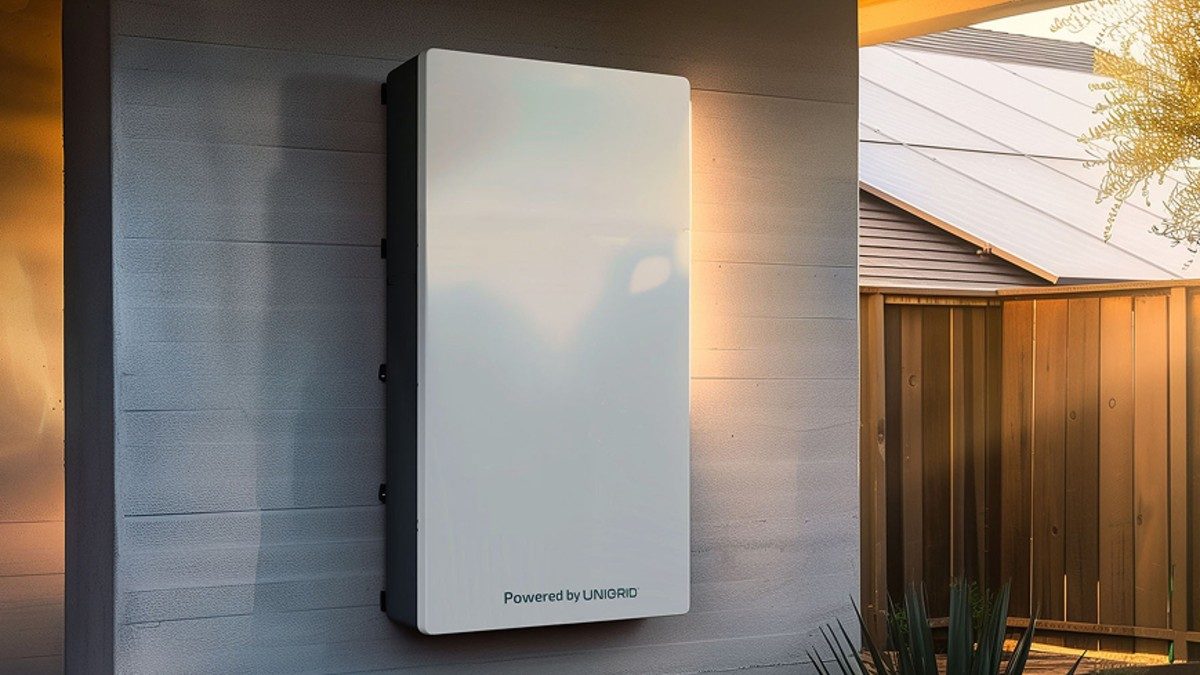
UNIGRID, a sodium-ion battery startup, has begun shipping its Na+Casa residential battery to European homes. This marks the first real-world deployment of sodium-ion technology in the residential storage market, challenging lithium-ion's long dominance in home battery systems.
Sodium-ion batteries offer distinct advantages over lithium-ion alternatives. They use abundant raw materials, eliminating supply chain vulnerabilities tied to lithium, cobalt, and nickel. Manufacturing costs run lower, and sodium-ion cells tolerate deeper discharge cycles without degradation. Safety improves too. Sodium-ion chemistries are inherently more stable and less prone to thermal runaway than lithium-ion systems.
The tradeoff involves energy density. Sodium-ion batteries deliver roughly 30 percent less energy per kilogram than lithium-ion, requiring larger physical footprints for equivalent storage capacity. This limitation matters less for stationary home battery applications than for electric vehicles, where weight and space constraints prove critical. For grid-tied residential storage, a bulkier battery sitting in a garage or basement poses no real problem.
UNIGRID plans to launch the Na+Casa in the United States next, expanding beyond Europe where it currently operates. The timing aligns with broader industry momentum. CATL and BYD, China's battery giants, already produce sodium-ion cells at scale. Western companies including Volkswagen and BMW have announced sodium-ion programs for future vehicle platforms. Governments recognize sodium-ion as a hedge against future lithium scarcity and price volatility.
The residential storage market continues expanding as homeowners install rooftop solar and seek energy independence. Traditional lithium-ion suppliers like Tesla, LG Energy Solution, and Generac currently dominate this space. UNIGRID's entry introduces cost and availability dynamics that could reshape buyer preferences, particularly in price-sensitive segments