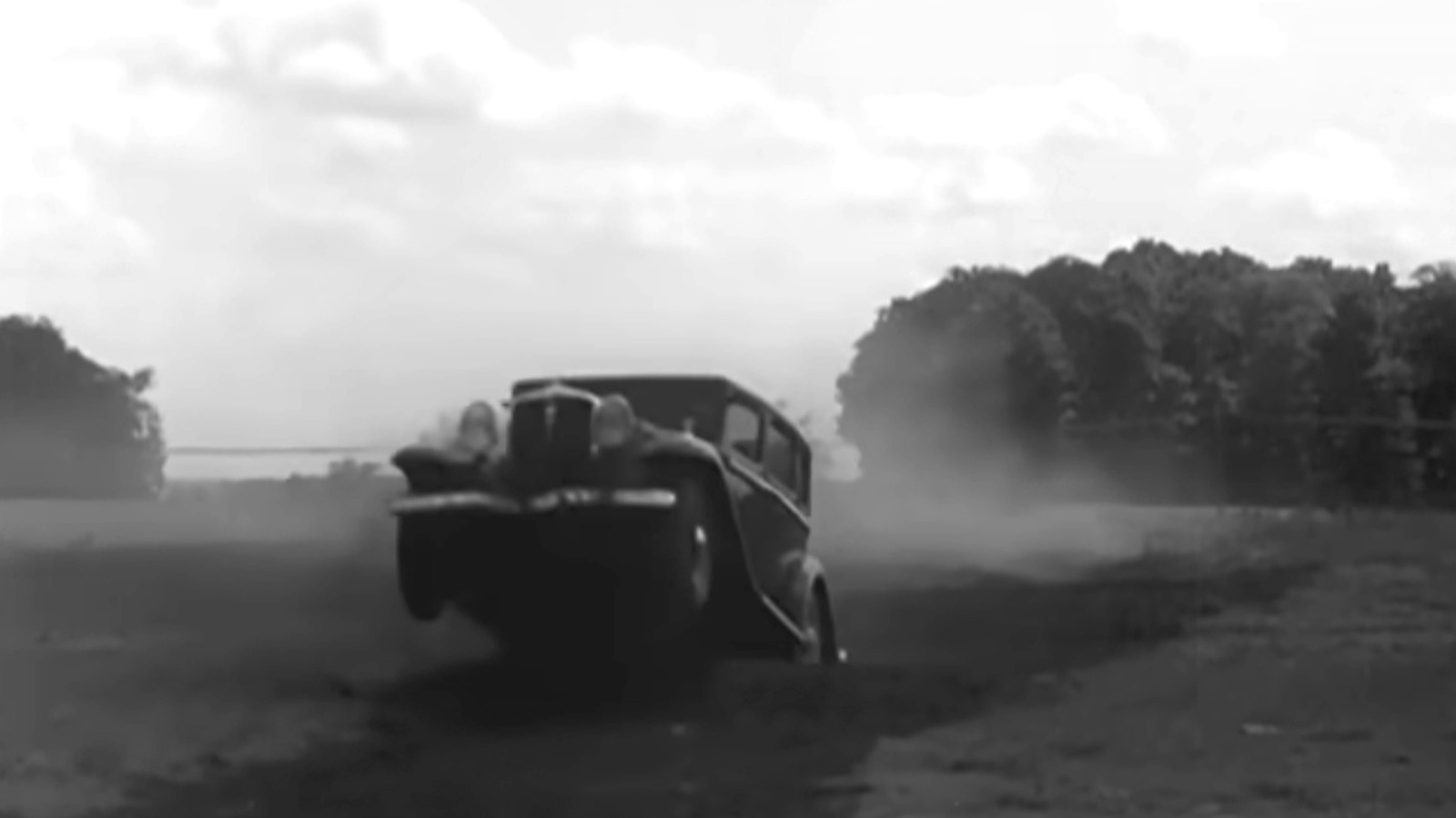
Studebaker's 1932 safety testing footage captures an era when automakers threw literal weight behind durability claims. The Studebaker National Museum unearthed this archival video showing engineers hurling vehicles down hillsides to evaluate structural integrity and component failure points.
The test methodology reflects 1930s engineering philosophy. Without modern crash test dummies, computer modeling, or regulated safety standards, manufacturers relied on brutal, direct methods. Workers rolled fully assembled Studebakers downhill repeatedly, documenting how frames crumpled, steering components failed, and suspensions collapsed. The footage serves as raw documentation of what happened when 3,000-pound machines met gravity and terrain at speed.
These tests mattered commercially. Studebaker marketed its vehicles on reliability during the Great Depression, when durability could sway purchase decisions. A car that survived rough treatment signaled quality to cash-strapped buyers. The company positioned itself against Ford and Chevrolet on engineering prowess, not just price.
The video reveals a startling absence of safety theater. No padding. No warnings. Just cars and physics. Engineers watched closely, took notes, and occasionally repositioned vehicles for another run. The crude methodology nonetheless produced valuable data about load paths, structural weak points, and component durability.
Modern crash testing seems surgical by comparison. Today's NHTSA and IIHS protocols use instrumented dummies, precisely controlled barrier impacts, and 10-point rating systems. Manufacturers spend millions on computer simulations before building prototypes. Studebaker's approach was impressionistic and violent.
The footage carries documentary appeal beyond automotive nostalgia. It shows how safety standards evolved from anecdotal testing to rigorous methodology. It also humanizes engineering decisions that shaped vehicle design for decades. Those hillside tests directly informed chassis geometry, frame thickness, and component placement that persisted into the