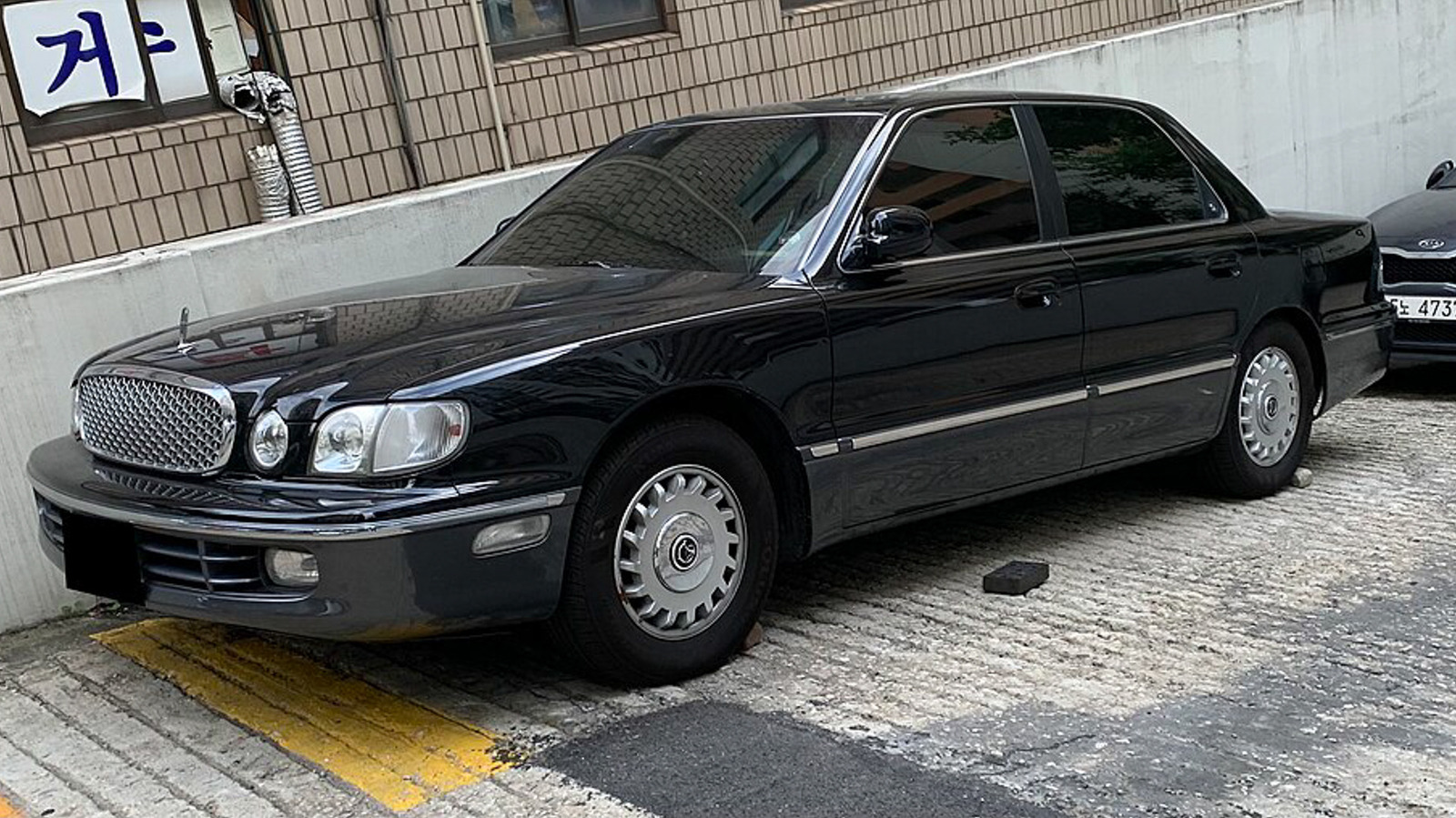
Hyundai's Genesis luxury division didn't emerge from thin air. The brand's ascent traces back to three pivotal Hyundai sedans that proved the Korean manufacturer could compete beyond the budget segment.
The Dynasty, launched in 1992, marked Hyundai's first serious push upmarket. This mid-size sedan paired Japanese-influenced styling with affordable pricing, establishing that Hyundai could build cars buyers actually wanted at higher price points. It sold respectably across Asian markets and set a template for more ambitious models.
The Grandeur followed, hitting showrooms in 1986 as Hyundai's flagship. This full-size sedan represented the company's confidence in tackling premium segments. The Grandeur evolved through multiple generations and demonstrated that Korean manufacturers could sustain long-term product lines that earned customer loyalty.
The Equus, introduced in 1999, proved most consequential. This ultra-premium sedan directly competed with established players like the BMW 7-Series and Mercedes-Benz S-Class. The Equus's success in offering luxury features at lower prices opened doors with affluent buyers skeptical of Korean brands. Its spacious cabin, quality materials, and sophisticated engineering legitimized Hyundai in the luxury conversation.
These three models created the foundation Genesis inherited. When Hyundai spun off Genesis as a standalone luxury brand in 2015, it wasn't starting from zero. The company had already built credibility, developed manufacturing expertise, and proven it could attract premium customers. The Genesis G70, G80, and GV70 benefited from two decades of accumulated knowledge.
Today's Genesis competes directly with Lexus, Cadillac, and Acura. That positioning reflects where the Dynasty, Grandeur, and Equus took Hyundai. Each represented a step forward in ambition and execution