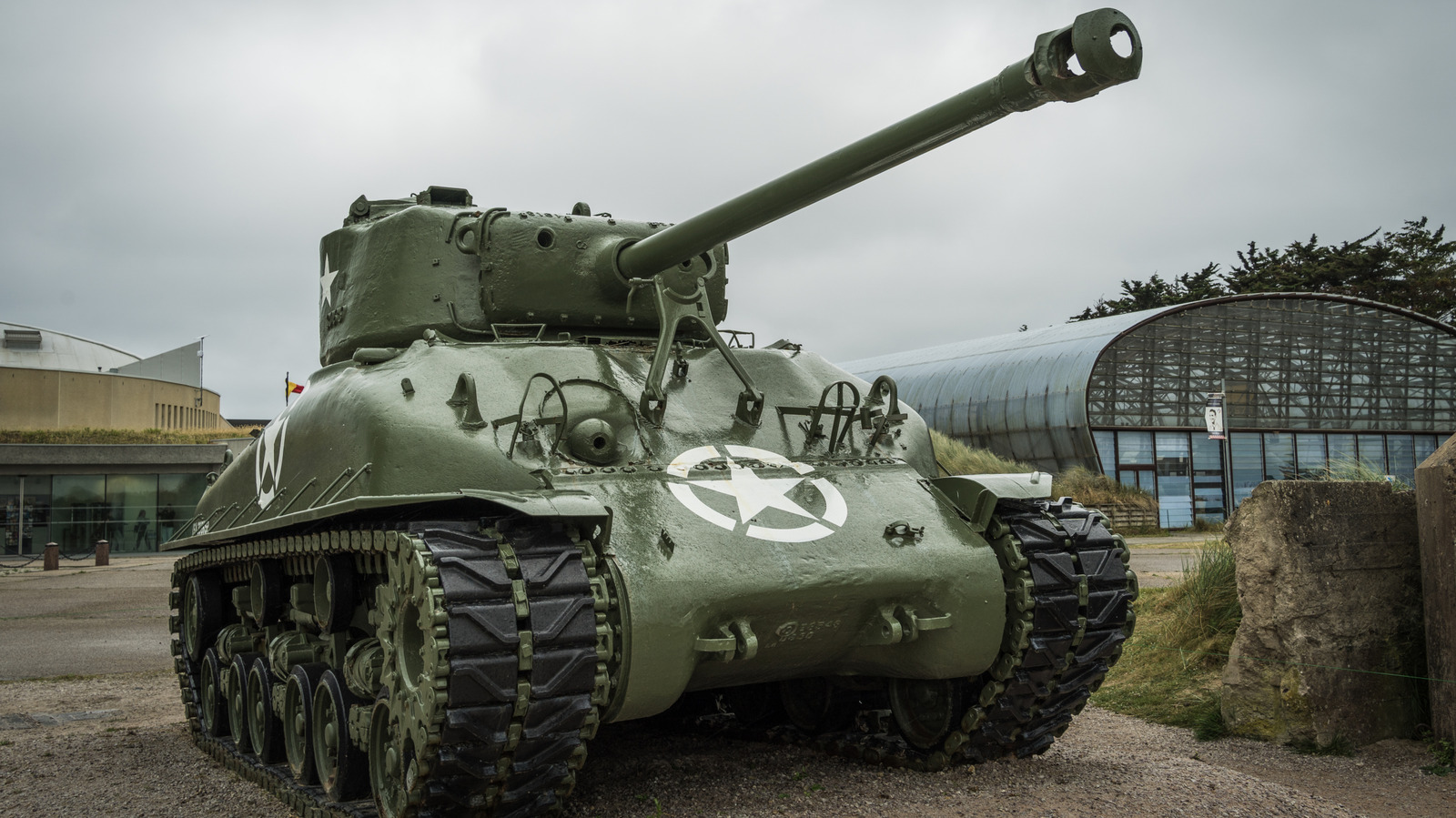
The M4 Sherman tank became the workhorse of Allied forces during World War II, with American factories producing over 49,000 units between 1942 and 1945. Today, fewer than 200 examples survive in running condition worldwide, representing less than 0.4 percent of all tanks ever built.
This dramatic attrition stems from multiple causes. Combat losses account for the most obvious casualties. Soviet forces destroyed thousands of Shermans during the push into Germany, while Japanese attacks in the Pacific eliminated countless others. Beyond battlefield destruction, the U.S. military scrapped the vast majority of surviving tanks after the war ended.
Peacetime economics drove most Shermans into the melting pot. Post-war America needed steel for civilian reconstruction and new military hardware. Keeping thousands of obsolete tanks cost money in storage and maintenance. Selling them to scrap dealers proved cheaper than warehousing them indefinitely. Entire motor pools were cut into pieces and sold as raw material.
Foreign aid programs saved some examples. Nations receiving American military assistance as part of Cold War containment strategy received used Shermans. Many of these tanks saw additional combat in Korea, Vietnam, and Middle Eastern conflicts, further reducing their numbers.
Private collectors and military museums managed to rescue isolated examples from scrapping operations. These institutions now preserve the most historically significant models, including rare variants like the Firefly version equipped with a 17-pounder gun. Enthusiasts have painstakingly restored many examples to running condition, a process requiring months of work and substantial funding.
The rarity of surviving Shermans makes them invaluable to automotive and military historians. Each restored example represents not just a piece of engineering, but a tangible connection to one of history's largest armored vehicle production runs. Tank shows and military museums feature these machines as star attractions, drawing crowds who understand their historical