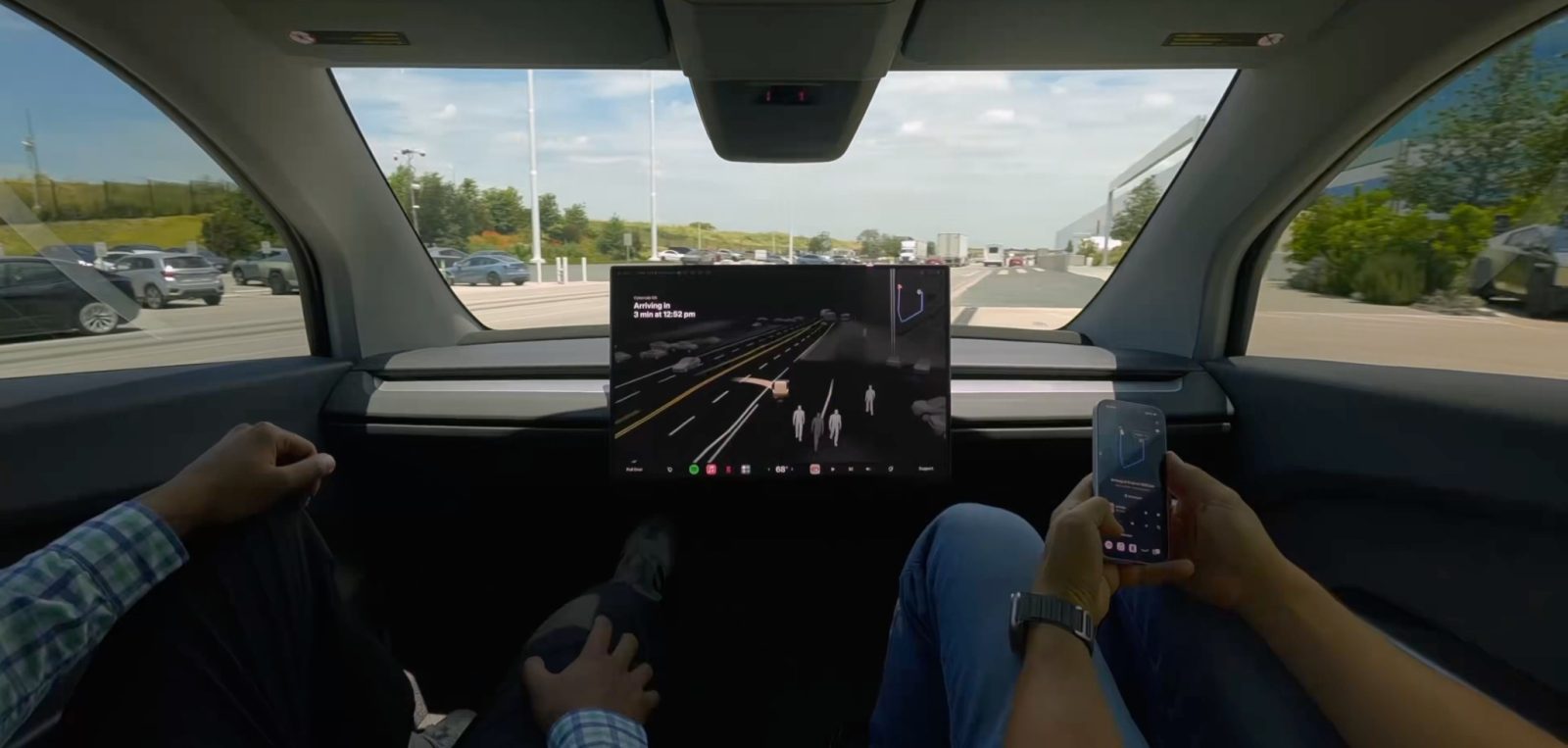
Tesla announced employee rides in its Cybercab robotaxi "starting soon" at Giga Texas, marking its first stated move toward putting people inside the wheel-less, pedal-less vehicle. The claim spread across Tesla social media accounts and reached nearly 3 million views.
The announcement lacks critical detail. Tesla did not specify whether Cybercabs would operate a genuine ride service in Austin or simply shuttle employees around the factory parking lot. That distinction matters enormously for assessing the vehicle's real-world readiness.
The Cybercab represents Tesla's most radical autonomous vehicle design. With no steering wheel and no pedals, it depends entirely on software to navigate, accelerate, brake, and handle emergencies. No traditional manual override exists. That design demands flawless autonomy or catastrophic failure becomes inevitable.
Elon Musk has promised Cybercab production for years without delivering units to customers. Tesla first showed the concept in 2023. Timelines have repeatedly slipped. The company now targets production sometime after 2025, though that date carries little weight given past delays.
A parking lot trial differs fundamentally from public roads. Parking lots lack traffic lights, pedestrians, cross traffic, and the random variables that autonomous systems encounter in real cities. An employee shuttle on known, controlled paths proves nothing about whether the Cybercab can handle an actual commute through Austin traffic or operate a genuine robotaxi service that generates revenue.
Regulators in Texas and California have grown skeptical of Tesla's autonomous claims. Waymo operates driverless robotaxis in multiple cities with safety records companies can inspect. Cruise, despite a major incident and subsequent robotaxi pause, actually deployed vehicles that handled real passenger requests.
Tesla's vagueness suggests the Cybercab likely remains in very early testing stages. If the company possessed working robotaxis ready for genuine