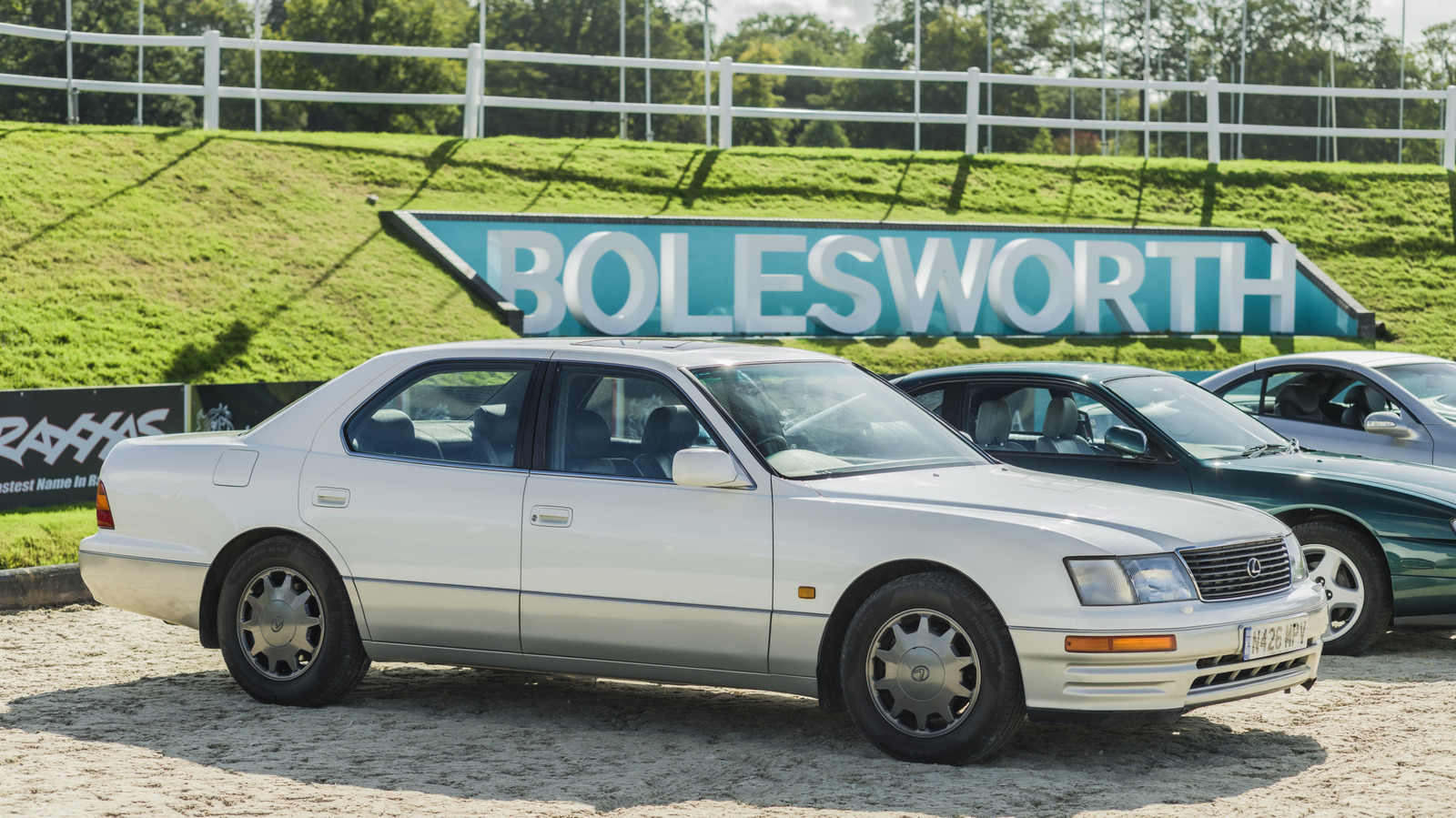
Toyota launched Project F1, a classified $1 billion development effort, to challenge Mercedes-Benz and BMW in the luxury sedan segment. The automaker created the Lexus LS 400 in 1989 as the flagship result, fundamentally reshaping global automotive markets.
The LS 400 arrived with a 4.0-liter V8 producing 400 horsepower, paired to a four-speed automatic transmission. Toyota engineered the sedan to deliver German precision and reliability while undercutting Mercedes and BMW on price. The strategy worked. Lexus dealers opened across North America just as the LS 400 launched, immediately establishing the brand as a credible luxury alternative.
Project F1's ambitions extended beyond hardware. Toyota invested in dealer networks, warranty programs, and customer service that matched or exceeded established luxury competitors. The company studied German manufacturing obsessively, dissecting Mercedes-Benz sedans to understand fit, finish, and engineering philosophy.
The LS 400 proved transformative. Reviewers praised its smoothness, whisper-quiet cabin, and meticulous assembly. Mercedes and BMW engineers scrambled to match the LS's refinement and value proposition. The sedan eventually spawned multiple generations and spawned the entire Lexus lineup, which now includes crossovers, compact sedans, and performance models.
This $1 billion bet changed luxury forever. Toyota demonstrated that established brands could be disrupted through systematic engineering excellence and ruthless cost management. The LS 400 didn't just sell cars. It established a blueprint for how Japanese manufacturers could penetrate Western luxury markets.
Today's Lexus still trades on the LS 400's legacy. The latest generation LS combines hybrid powertrains with AI-enhanced driver assistance. But the core mission remains unchanged from 1989. Toyota still aims to deliver