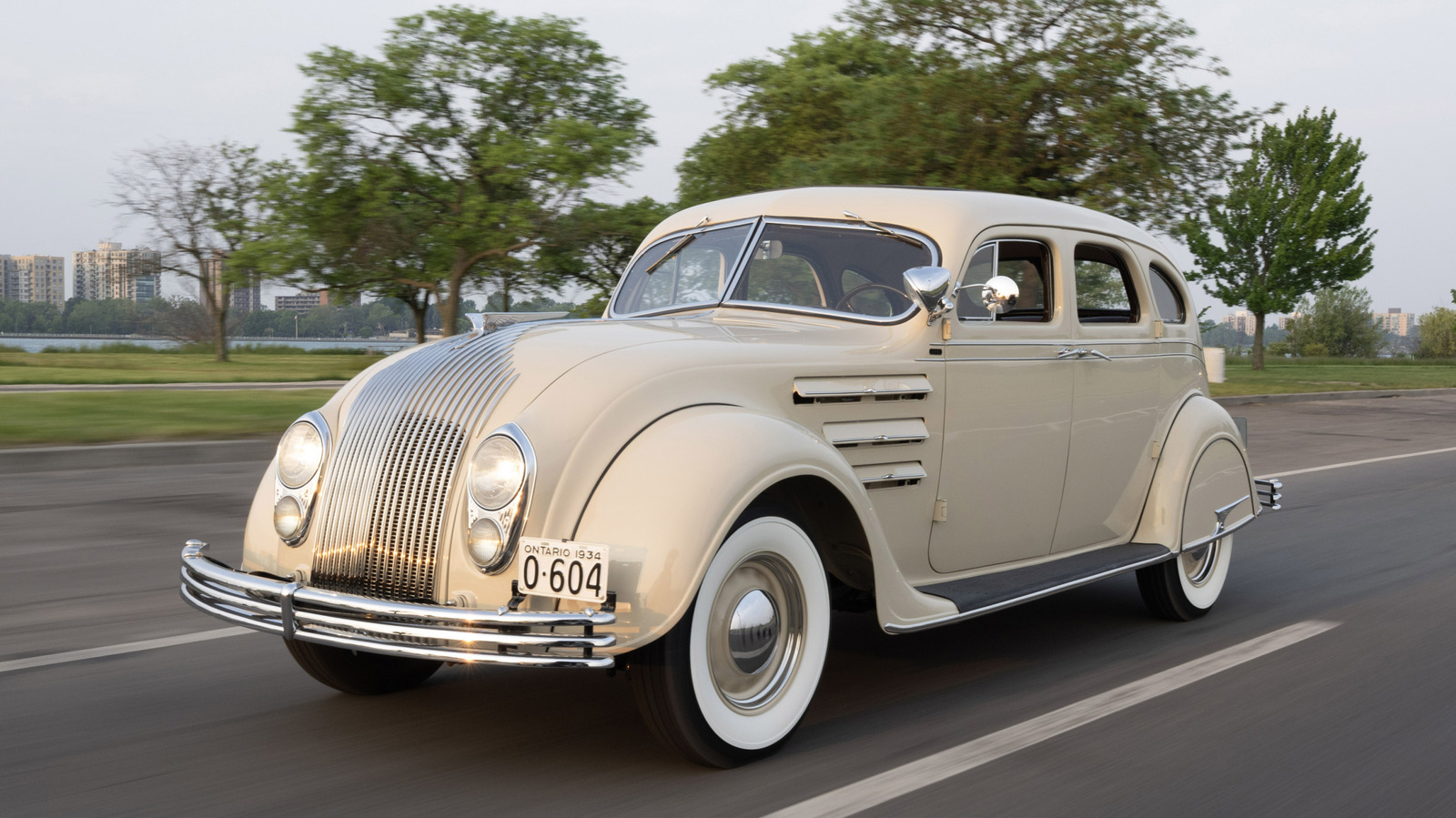
The Chrysler Airflow arrived in 1935 as one of the automotive industry's boldest gambles. Engineers designed the sedan around principles that wouldn't become mainstream for another four decades. The streamlined body reduced drag through a sloped windshield, integrated fenders, and a rounded profile that cut through air far more efficiently than the boxy competitors dominating showrooms.
Constructionally, the Airflow broke convention too. Chrysler mounted the engine farther forward and shifted the passenger compartment rearward, lowering the car's center of gravity and improving weight distribution. The unibody construction eliminated the traditional separate frame, reducing overall weight while increasing rigidity. These innovations foreshadowed modern automotive engineering by years.
Market reception proved catastrophic regardless. Consumers rejected the Airflow's unfamiliar proportions immediately. The sloped hood and streamlined rear baffled buyers accustomed to traditional styling cues. Rushed production amplified the disaster. Chrysler pushed the Airflow to dealers before ironing out manufacturing defects, resulting in quality problems that damaged brand reputation at a fragile moment.
The Great Depression's timing sealed the car's doom. Customers had limited budgets and preferred vehicles matching conventional aesthetics. Chrysler's competitors, particularly Dodge and Plymouth, offered cheaper, more familiar-looking alternatives that appealed to depression-era buyers stretching every dollar.
Sales collapsed after strong initial orders. Chrysler persisted with the Airflow through 1940, but the car never recovered momentum. The company eventually ditched the radical design language, returning to more conservative styling that matched market expectations.
The Airflow's failure teaches Detroit a harsh lesson about timing. Innovation without market acceptance fails, regardless of engineering merit. Aerodynamics and structural advances meant nothing when consumers feared the unfamiliar. Chrysler's engineers were right.