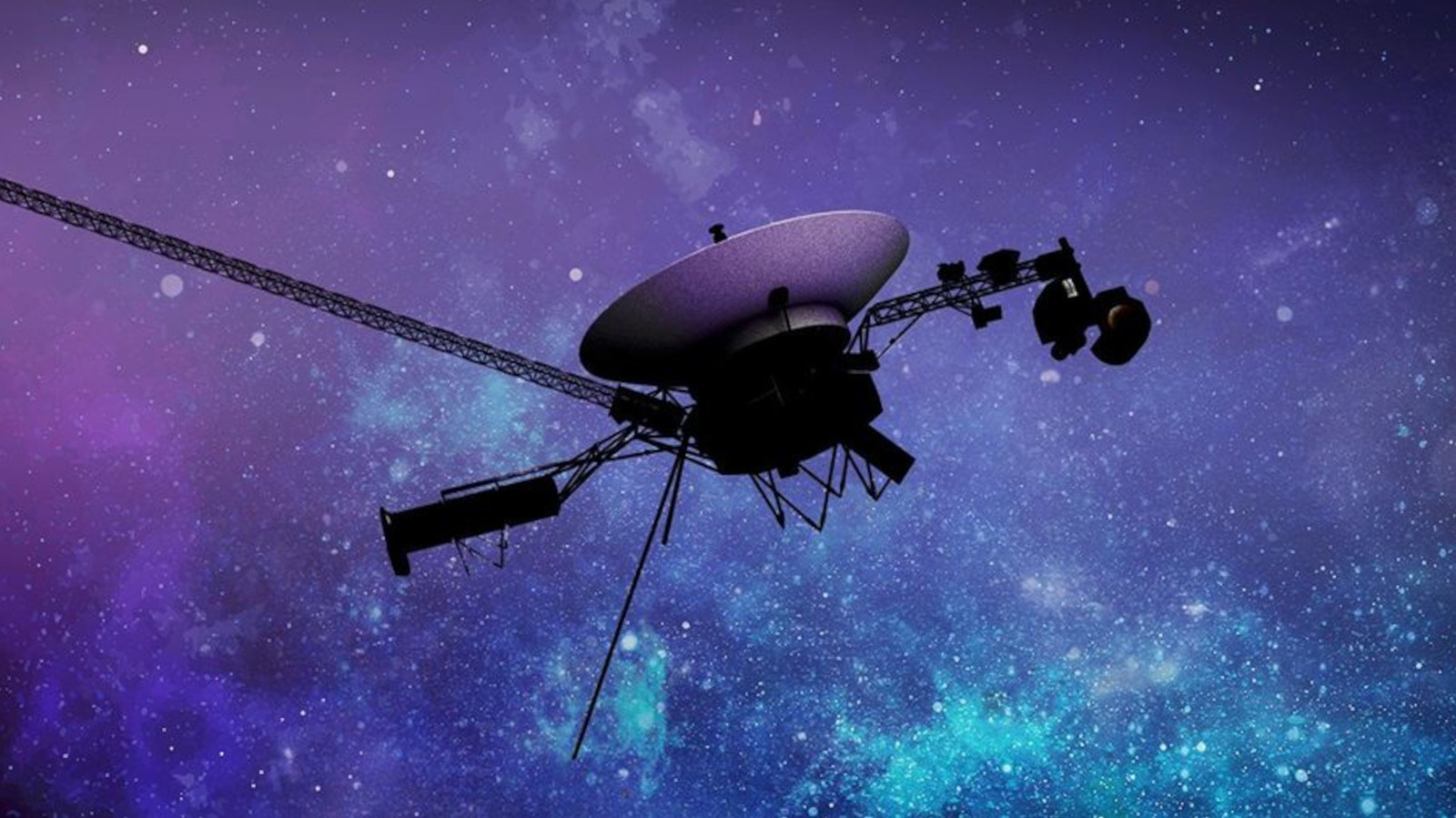
Voyager 1, launched in 1977, continues transmitting data across 15 billion miles of interstellar space after nearly five decades of operation. The spacecraft's signals take 23 hours to reach Earth, a testament to the vast distances separating our solar system from the probe's current position in the heliopause, the boundary where the sun's influence ends.
NASA engineers recently restored partial communication with Voyager 1 after a months-long silence caused by a degraded onboard computer. The probe's engineering team solved the problem through creative troubleshooting, rewriting software to work around corrupted memory. This fix kept humanity's most distant spacecraft functional despite operating with less computing power than a modern smartphone.
Voyager 1 carries a Golden Record encoding sounds, images, and music from Earth, a message intended for potential extraterrestrial intelligence. Its original mission targeted Jupiter and Saturn. The probe's longevity exceeds even Caltech engineers' optimistic projections by decades.
The spacecraft operates with minimal power, its systems rationed to conserve the radioisotope thermoelectric generators that convert plutonium decay heat into electricity. Mission controllers have systematically powered down non-essential instruments to extend survival. Only a handful of sensors remain active.
What makes Voyager 1 remarkable extends beyond engineering. The probe represents humanity's boldest statement about our place in the cosmos. It reaches farther than any human artifact, carrying our hopes beyond the boundaries of our world. Each successfully transmitted signal affirms that we built something to outlast us, to carry our voice into the darkness.
Voyager 1's operational life has already exceeded expectations by decades. Engineers estimate power will finally fail in the late 2020s. Until then, the probe continues its lonely journey outward, still sending messages home across the void, still reminding us of what humans accomplished