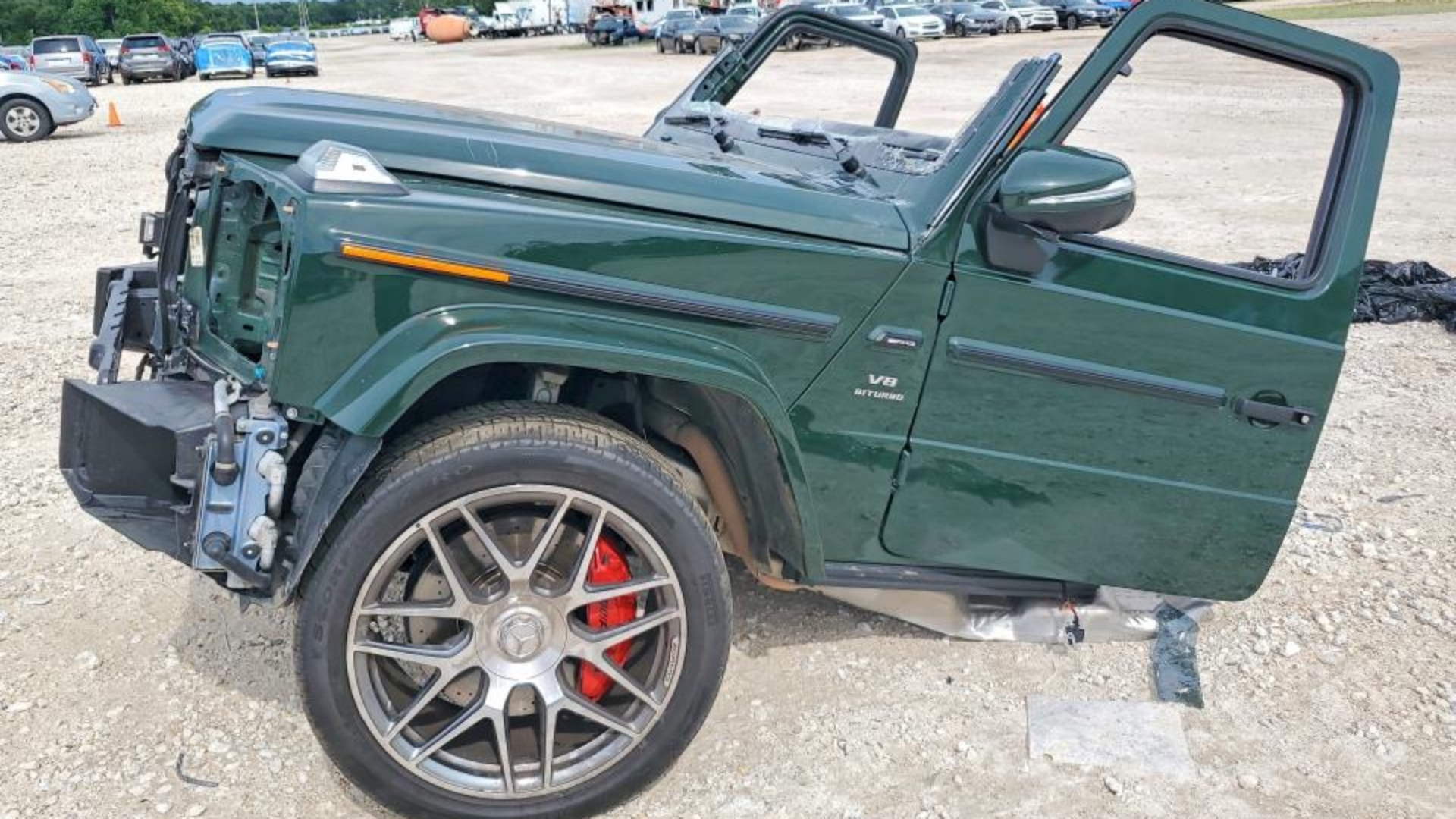
Someone just cut a Mercedes-Benz G-Wagen in half. The green over tan luxury SUV, once a complete and functional vehicle, now exists as disassembled components. The engine sits in a crate, separated from the rest of the chassis and body panels that formerly made up the iconic off-roader.
The question animating this exercise is straightforward. What does half a G-Wagen fetch on the market? It's an unconventional valuation problem that speaks to the G-Wagen's cult status and parts market appeal. These vehicles command strong residual values, and their components hold significant secondary-market demand.
The Mercedes-AMG G63 and G500 models have become status symbols and investment vehicles in recent years. Their prices have climbed steadily. A complete G-Wagen, depending on year and condition, can sell for $150,000 to $300,000 or more. But parting one out tells a different story about component value.
Engines from modern G-Wagons, particularly the twin-turbo V8 from the G63, represent substantial standalone assets. Transmissions, differentials, suspension components, and body panels all carry measurable value to restorers, customizers, and repair shops. The question becomes whether those individual parts sum to more than the whole vehicle's value.
This experiment reflects a broader automotive trend. As collector car values appreciate and supply of desirable models tightens, some owners and dealers have begun calculating whether parting out a vehicle yields better returns than selling it intact. It's a risky strategy. A complete car preserves utility and appeal. Disassembled components require buyers willing to pay retail prices for individual pieces.
The G-Wagen's legendary durability and timeless design enhance parts demand. These vehicles see decades of use, creating sustained replacement