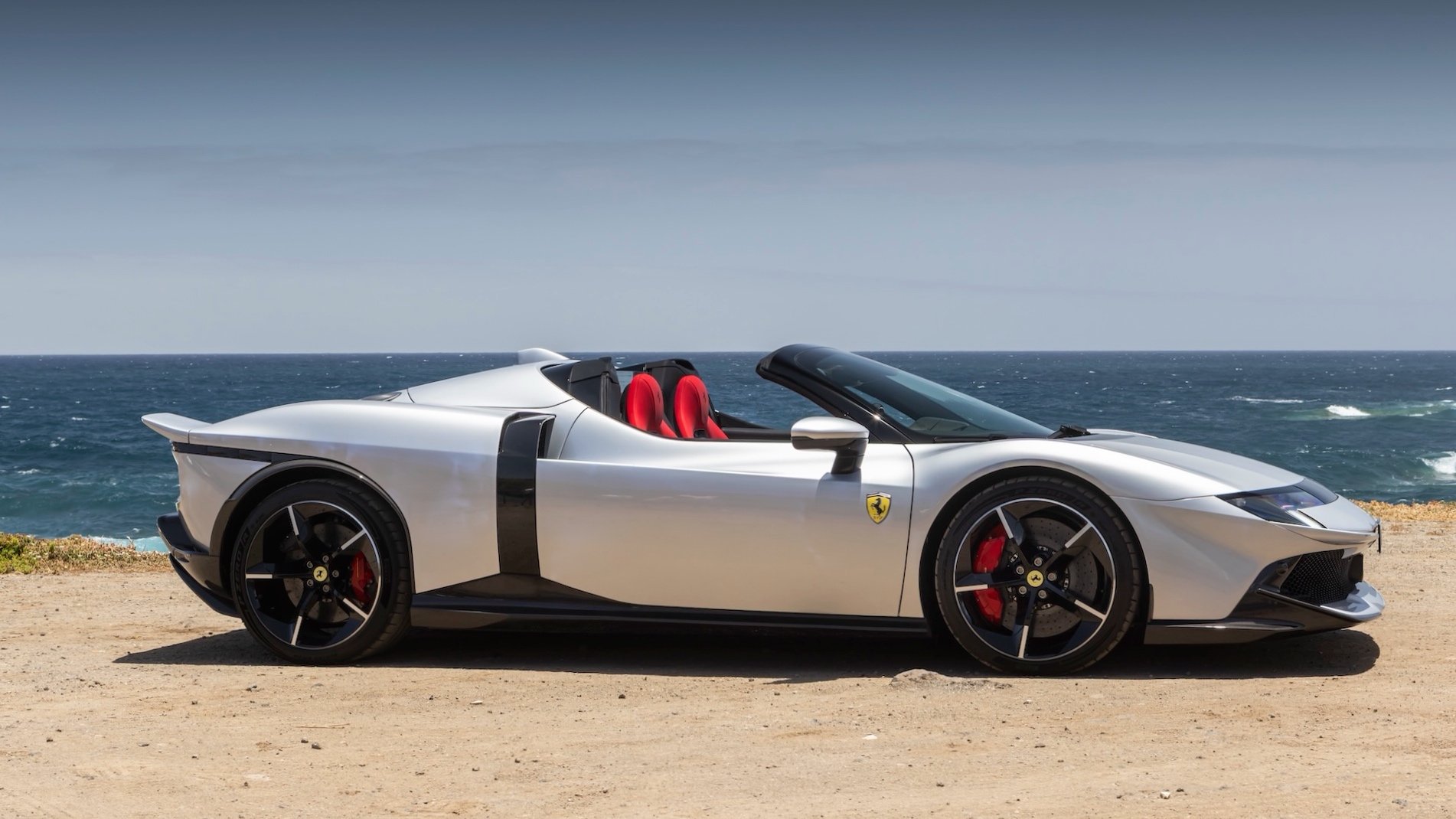
Ferrari's 2027 849 Testarossa Spider convertible delivers 1,000 horsepower with its roof down, and that open-air configuration transforms the wedge-shaped design into something genuinely compelling. The Spider variant overcomes the aesthetic reservations that plagued the hardtop Coupe, where the proportions felt slightly awkward and the target buyer remained unclear.
With the roof retracted, the 849 Testarossa Spider gains visual coherence. The wedge profile, inherited from Ferrari's mid-engine lineage, reads better in convertible form. Wind noise and buffeting are typical convertible concerns, but the engineering allows drivers to feel the 1,000-hp powerplant without the visual intrusion of the fixed roof cutting into sightlines.
Ferrari positions the 849 Testarossa as a modern spiritual successor to the original 1980s Testarossa, one of the era's most iconic supercars. That original packed 390 hp from a flat-12 engine and defined Ferrari's image for a generation. The 2027 version tripling that output reflects two decades of turbocharging technology and hybrid-electric integration. The new car targets collectors and enthusiasts who crave drama, exclusivity, and visceral driving engagement.
The Spider addresses a real market segment. Convertible supercars command price premiums over fixed-roof versions because buyers value sensory immersion at speed. Wind through the cabin, engine sound unfiltered by roof structure, and sight lines to the sky create an experience that no coupe delivers. Ferrari understands this psychology.
Initial impressions suggest the open configuration solves the design's biggest problem. Wedge-shaped cars walk a fine line between purposeful and awkward. When you remove the roof, proportions shift. The side air intakes and muscular fenders