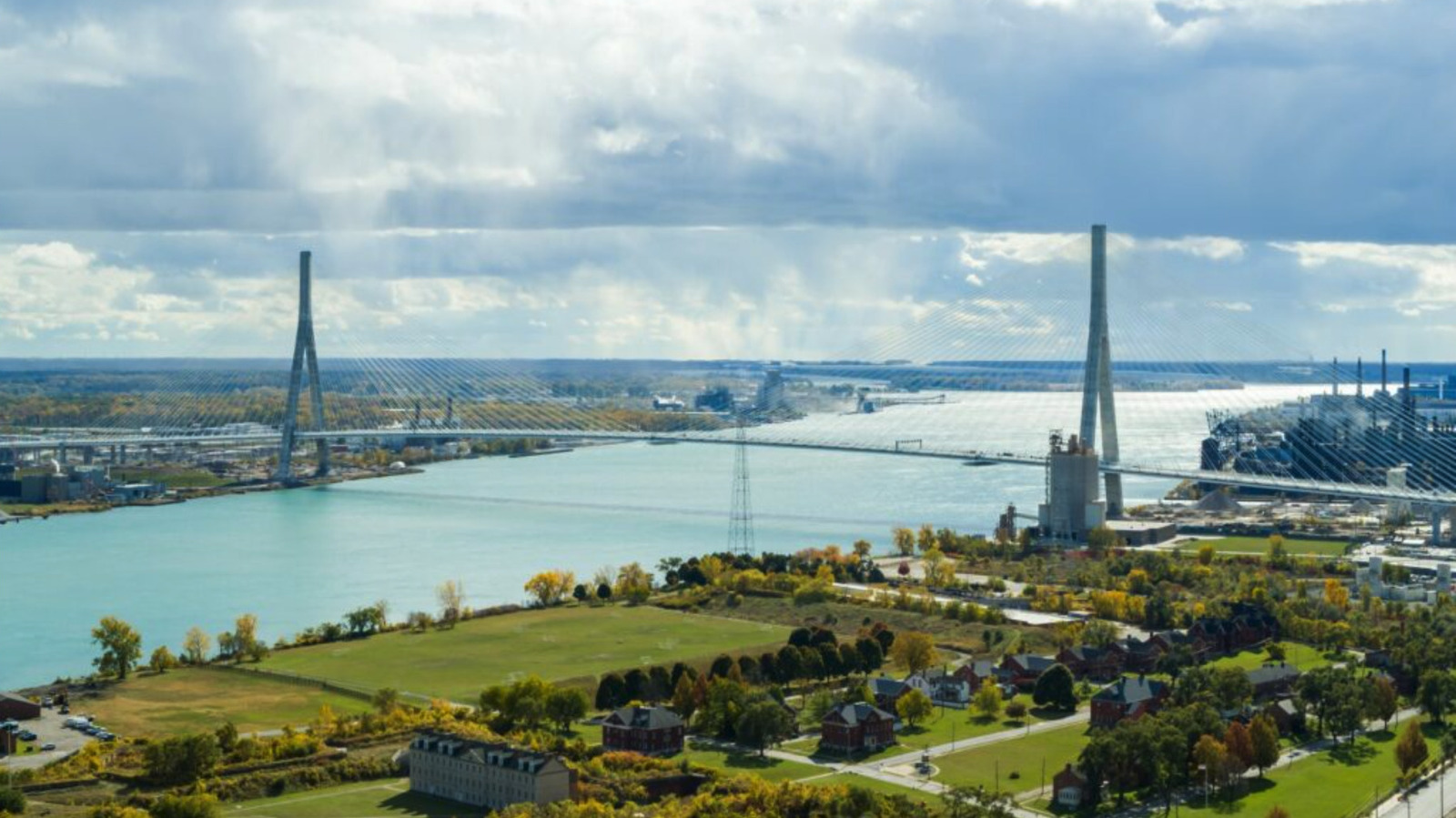
The Gordie Howe International Bridge connecting Windsor, Ontario and Detroit, Michigan has a new timeline under Trump administration negotiations. The project, originally plagued by delays and cost overruns, now targets a 2027 opening instead of an indefinite future completion date.
The bridge itself remains unchanged. The crossing spans the Detroit River with a 2.2-mile main span, featuring six lanes of traffic designed to relieve congestion on the aging Ambassador Bridge and Detroit-Windsor Tunnel. The infrastructure project costs approximately $5.7 billion USD, split between Canadian and American funding.
Trump claims the renegotiated deal improves terms for the United States, though specifics on cost allocation and structural changes remain vague. The core project scope stays the same. Revenue projections, tolling structures, and operational control mechanisms reportedly shift favorably toward American interests, but the bridge's physical specifications do not.
For cross-border commerce, this matters. Heavy truck traffic between the U.S. and Canada's largest trading partner currently squeezes through two aging facilities. The Gordie Howe Bridge promises modern infrastructure with dedicated truck lanes and improved safety systems. A 2027 opening means shippers could see tangible relief within five years.
The Jalopnik headline captures legitimate skepticism. A stated opening date without fundamental design changes or cost reductions raises questions about delivery capacity. Previous announcements from both governments have slipped repeatedly. The automotive industry, which depends on seamless parts flow across the border, watches closely. Ford, General Motors, and Stellantis all operate plants on both sides, making supply chain efficiency critical.
The new timeline reflects political pressure more than engineering breakthrough. Trump's framing as a "much better deal" appeals to nationalist sentiment without demonstrating concrete improvements for drivers or businesses. Whether the 2027 target holds depends entirely on construction execution and continued bilateral cooperation.