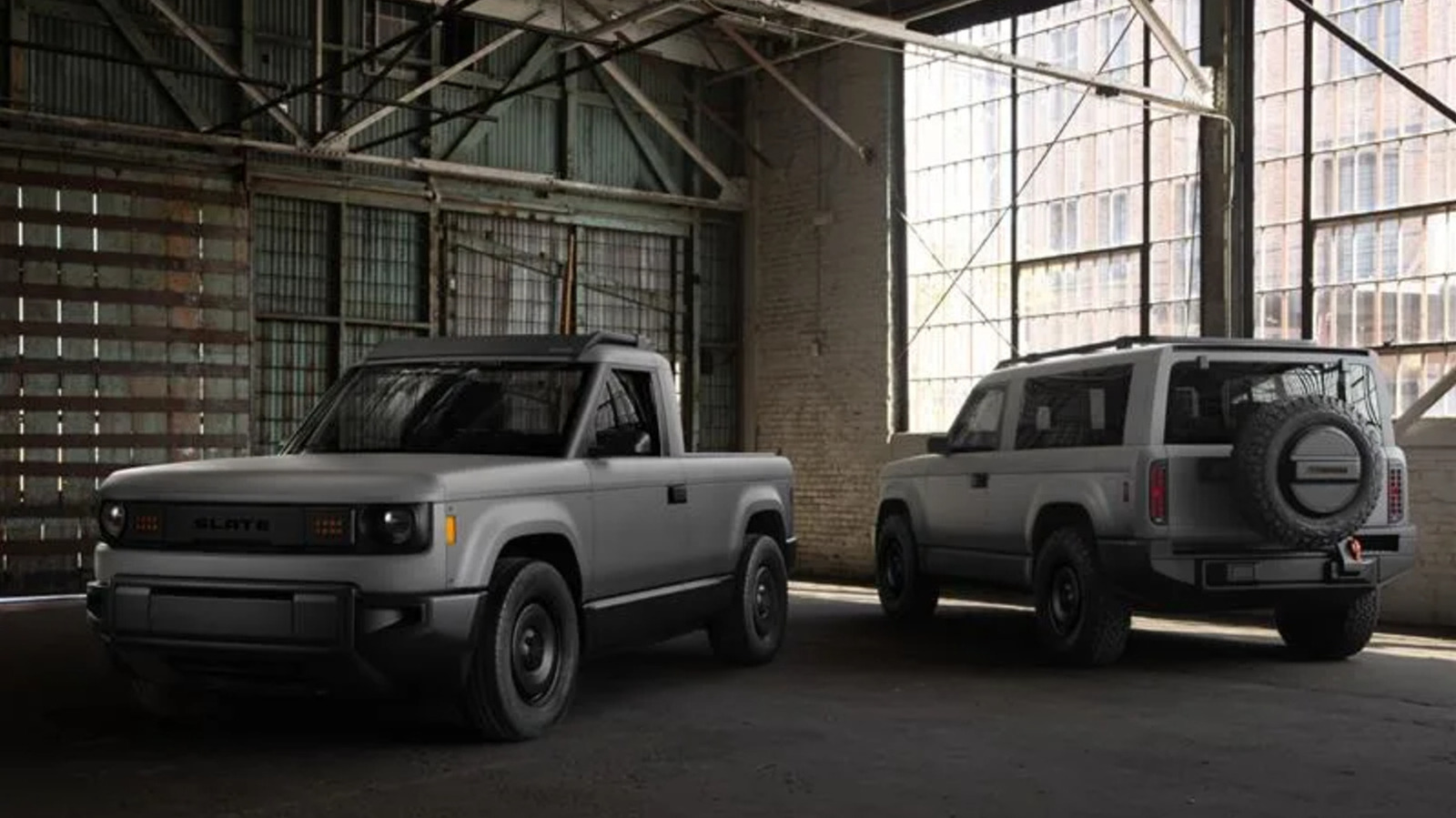
Slate Truck has switched battery chemistries ahead of its market launch, a decision driven by supply chain realities and performance optimization rather than last-minute engineering failures. The startup opted for a different cell type than what appeared in early prototypes, a common pivot in EV development as manufacturers balance cost, availability, and real-world performance data.
Battery selection represents one of the highest-stakes decisions in electric vehicle production. Automakers evaluate lithium iron phosphate (LFP) cells against nickel-based chemistries based on energy density, thermal stability, cycle life, and sourcing reliability. LFP batteries offer superior longevity and safety but trade some energy density for durability. Nickel-heavy chemistries pack more punch per pound but degrade faster and cost more.
Slate Truck's change reflects broader industry trends. Traditional automakers like Tesla, Ford, and Volkswagen have increasingly adopted LFP cells for mass-market models where range anxiety matters less than affordability and durability. The technology has matured dramatically in the past three years, with Chinese suppliers like CATL and BYD dominating production and driving costs down.
For a startup truck maker, battery sourcing is existential. Access to cells at competitive prices determines whether a vehicle can hit its target price point. Prototype vehicles often use premium or scarce chemistries that won't scale to production volumes. Switching before production launch signals the company secured stable supply agreements with real battery makers.
The Slate Truck launch hinges on delivering a truck that undercuts traditional pickup pricing while offering genuine capability. Battery cost represents roughly 30 to 40 percent of an EV's total manufacturing expense. A chemistry swap this late indicates Slate found a better equilibrium between performance specs and production economics.
Customers should view this not as a red flag but as evidence of pragmatic engineering. The