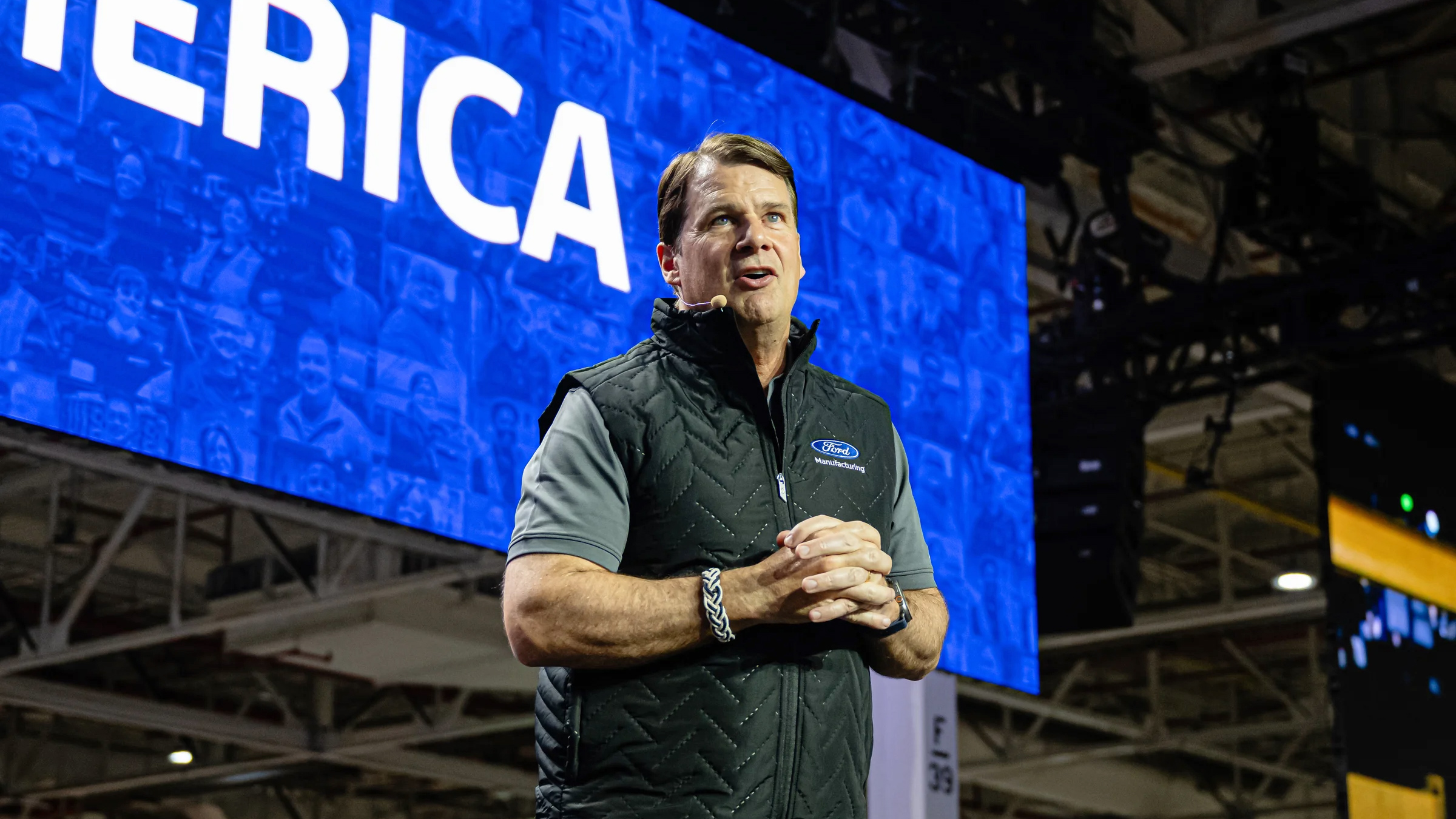
Ford CEO Jim Farley confirmed that the company's U.S. manufacturing plants have made significant strides in operational efficiency and compliance, narrowing the gap with Ford's more established facilities in China and Mexico.
Farley stated that while Chinese and Mexican plants currently rank as "the most compliant with process," American operations have "caught up the fastest" among Ford's global footprint. The comment reflects ongoing efforts to improve productivity at domestic facilities as Ford navigates manufacturing challenges tied to labor costs, supply chain dynamics, and the transition to electric vehicle production.
This shift matters for Ford's competitive position. U.S. auto plants have historically carried higher wage burdens following the 2023 UAW contract negotiations, which granted wage increases and faster progression to top rates for union workers. Simultaneously, Mexico and China maintain cost advantages that have made those regions attractive manufacturing hubs for the industry. Ford's ability to improve U.S. plant efficiency without compromising quality strengthens its domestic production strategy.
Farley's remarks suggest Ford is investing strategically in American factories even as it manages global manufacturing footprint challenges. The company has announced significant investments in U.S. EV production, including facility upgrades at plants in Kentucky, Ohio, and Michigan. These improvements address both legacy internal combustion engine production and the shift toward battery electric vehicle assembly.
The comment also reflects broader industry trends. Automakers increasingly face pressure to maintain U.S. production capacity amid political scrutiny over offshoring and the desire to qualify vehicles for EV tax credits under the Inflation Reduction Act, which includes domestic content and labor requirement provisions.
Ford's progress at American plants indicates the company believes efficiency gains can offset some wage cost disadvantages relative to Mexico and China. However, the company continues to rely on its Mexico and China operations for certain segments and products, suggesting a balanced global strategy rather than a wholesale shift back to domestic-only production