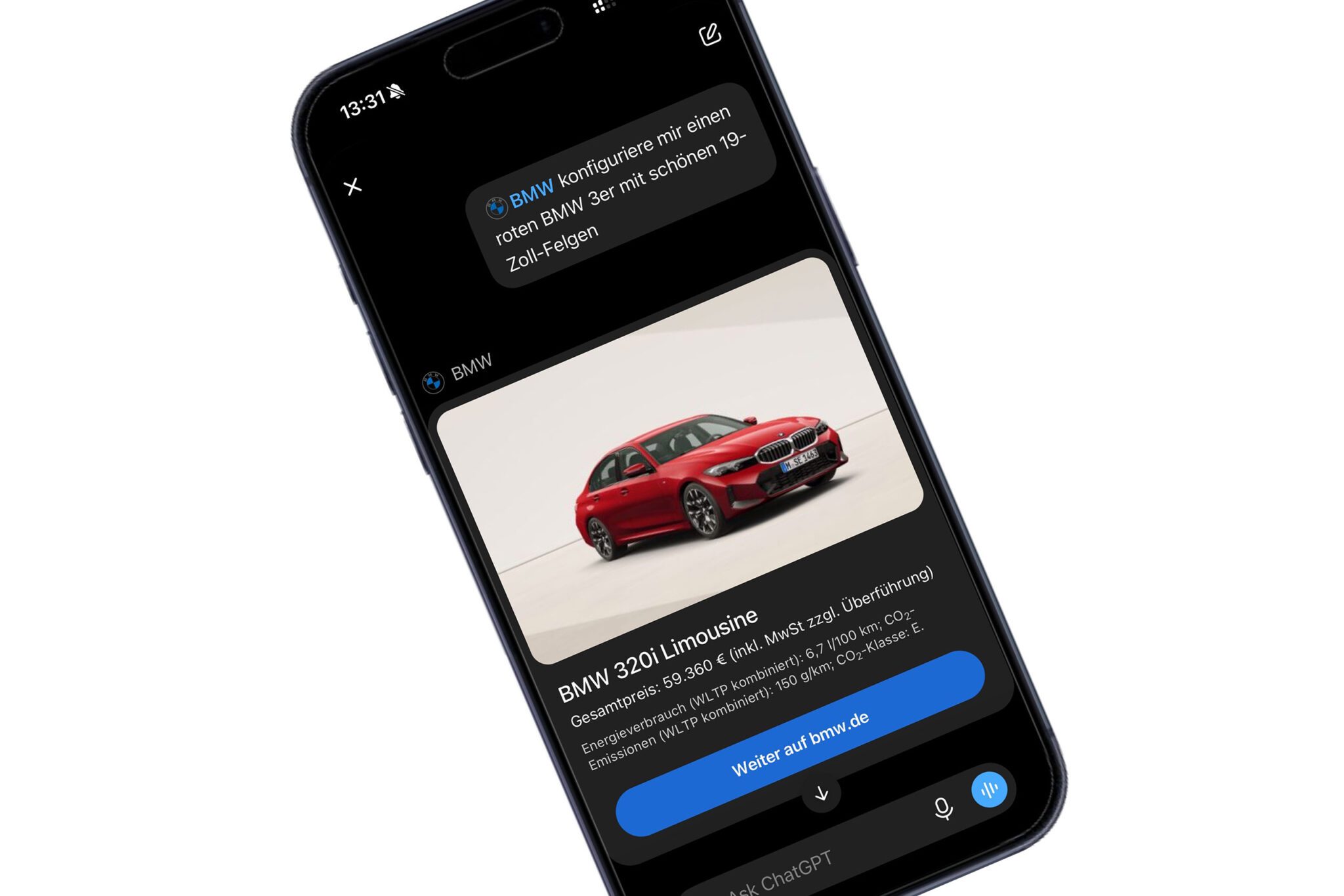
BMW has integrated its vehicle configurator directly into ChatGPT, allowing customers to explore and build vehicles within the AI chatbot's conversational interface. This move reflects a fundamental shift in how automakers approach the early stages of customer engagement and the sales funnel.
Traditionally, prospective buyers visited BMW's website or dealership websites to configure vehicles. Now the configurator lives in an AI conversation where customers already spend time researching and asking questions. This removes friction from discovery and lets potential buyers experiment with options while chatting naturally about their needs.
The integration matters because it acknowledges where buying actually starts. Most shoppers don't wake up and jump to a configurator. They Google questions, ask ChatGPT about reliability and features, and explore options conversationally. By embedding the configurator in that dialogue, BMW meets customers at the moment they're thinking about cars, not after they've already decided to visit a brand website.
This isn't just a convenience play. It's data. Every configurator interaction inside ChatGPT gives BMW insights into what customers actually want to build and how they make decisions. That data becomes richer because it sits alongside the conversational context of why someone cares about a particular trim, engine, or feature set.
Competitors will notice. Mercedes, Audi, and Porsche face pressure to follow suit or risk ceding early-stage engagement to AI platforms. Dealers should also pay attention. This initiative subtly repositions the automaker as the authority in the buyer's journey, not necessarily the dealership.
The move also signals confidence in ChatGPT's reach and stickiness. BMW wouldn't invest in this integration if it didn't believe substantial traffic and genuine purchase intent flow through the platform. As AI chatbots become the default starting point for consumer research, automakers that embed their sales tools there gain control of the narrative and capture higher-intent customers earlier