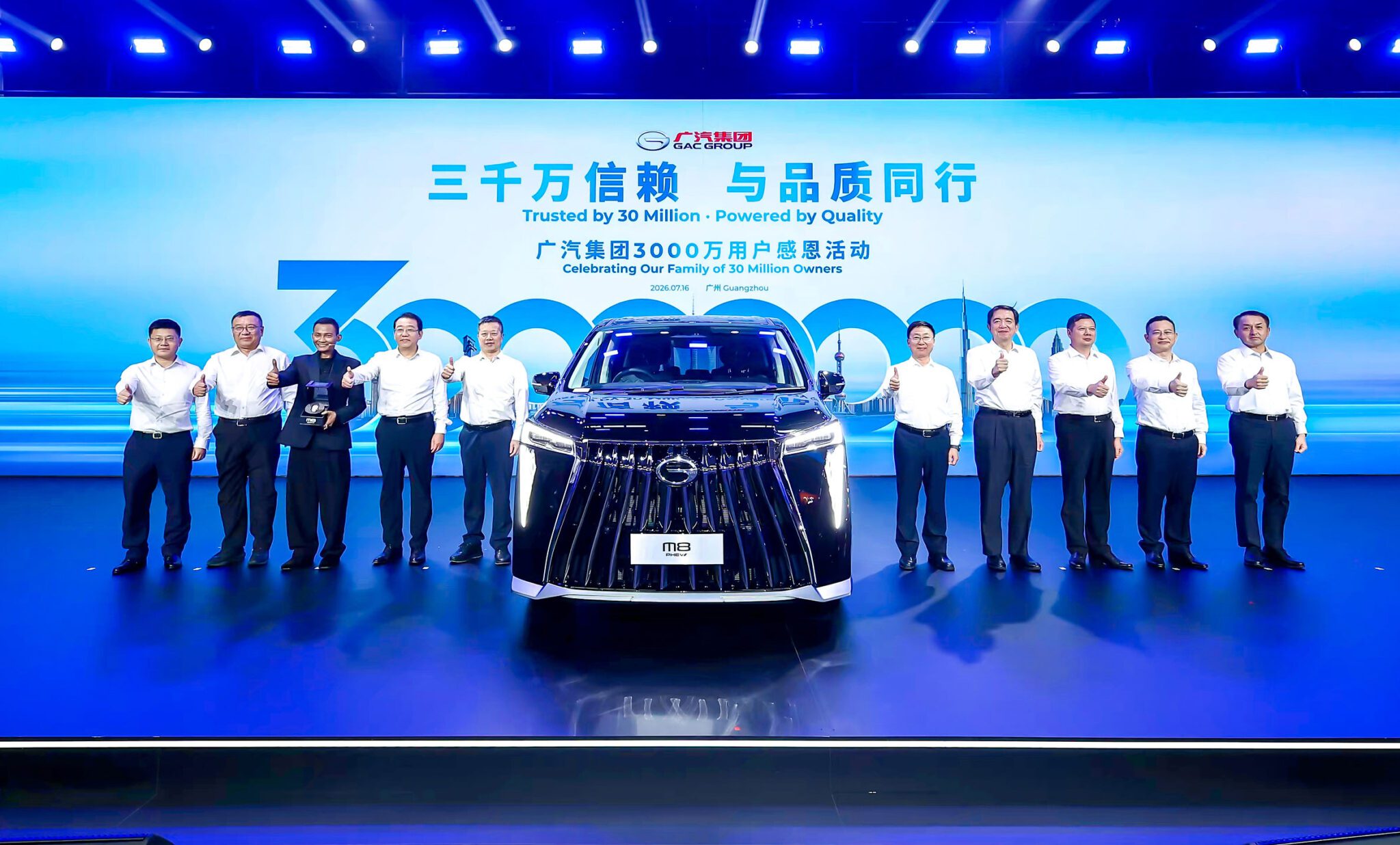
GAC Group, China's state-owned automaker, hit 30 million cumulative vehicles produced, marking a milestone that underscores how rapidly Chinese manufacturers are establishing genuine global manufacturing footprints. The company celebrated the achievement with a worldwide event highlighting its expansion strategy.
The numbers tell a striking story. GAC achieved a 132% export surge, a growth trajectory that reflects both surging demand for Chinese vehicles abroad and the company's aggressive international push. The manufacturer now operates seven overseas production plants, spreading manufacturing capacity across multiple continents rather than relying solely on exports from China.
This strategy mirrors what other major Chinese automakers like BYD and Great Wall Motor pursue. Building local plants reduces shipping costs, tariffs, and supply chain risk while signaling long-term commitment to foreign markets. GAC's overseas plants likely serve Southeast Asia, Europe, and other regions where Chinese brands face tariff barriers or consumer preference for locally made vehicles.
GAC's growth reflects broader industry shifts. Chinese automakers now compete not just on price but on EV technology, battery innovation, and design quality. GAC itself produces both traditional ICE vehicles and electric models, positioning itself across multiple powertrains as global markets transition unevenly toward electrification.
The 30 million vehicle milestone puts GAC in rarified company. For context, General Motors reached 50 million cumulative vehicles over roughly a century. GAC's compressed timeline reveals how manufacturing scale has accelerated in China and how quickly state backing and industrial policy can mobilize resources.
GAC's export surge matters for global automakers. Chinese brands now compete directly in markets once dominated by Detroit, Tokyo, and Stuttgart. Western manufacturers face pressure to match Chinese pricing on EVs and improve cost structures. Tariff barriers in North America and Europe remain the primary tools preventing Chinese market penetration, but those protections may only delay rather than stop the competitive shift.