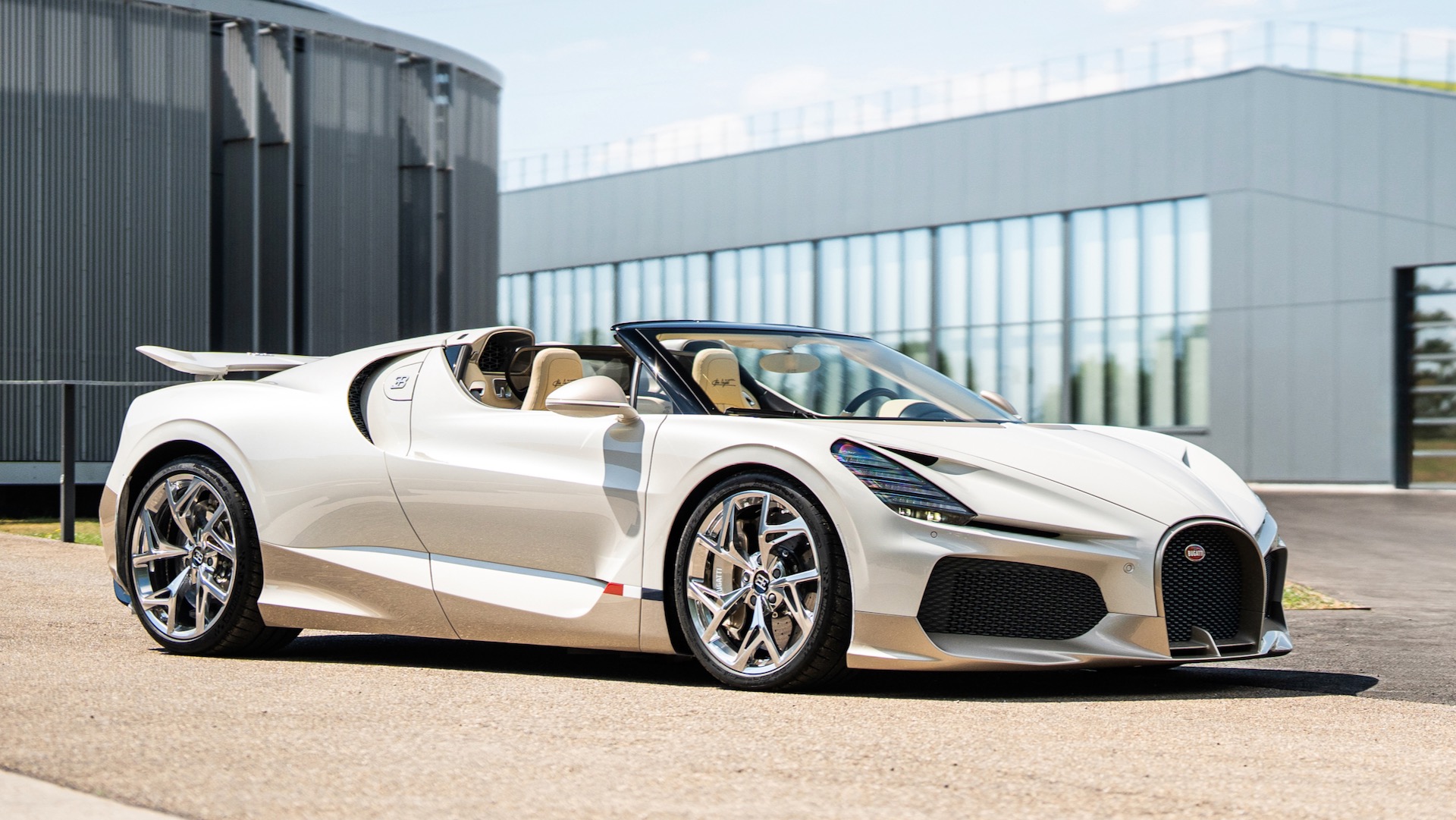
Bugatti has ended production of the W16 Mistral, marking the final chapter for the 16-cylinder engine that defined the brand's modern era. The quad-turbocharged, 8.0-liter W16 generated 1,500 horsepower and represented one of the most extreme powerplants ever fitted to a production car.
The W16 debuted in the original Veyron in 2005 and carried through generations of hypercars including the Chiron and its variants. The engine's complexity and raw power made it an engineering statement. No other automaker attempted something this ambitious at such scale.
Bugatti positioned the Mistral as the W16's swan song. An open-top roadster capable of 250 mph, it served as a final celebration before the brand pivots to electrification. Only 99 units were built, cementing its collector status.
The departure signals shifting realities in hypercar development. Electric powertrains eliminate the mechanical symphony that defined Bugatti's identity, but they deliver instant torque and operational simplicity. Battery technology now matches combustion engines on acceleration while exceeding them in refinement.
Bugatti parent company Rimac already signals the future. The Croatian EV specialist acquired a stake in Bugatti and steering the brand toward electric hypercars. This represents a generational shift for a house built on internal combustion excess.
For enthusiasts, the W16's retirement carries weight. Future Bugattis will prioritize efficiency metrics and software capabilities over displacement and cylinder count. The new era demands different engineering heroes.
The Mistral's final production units represent the last chance to own a Bugatti with a naturally-aspirated exotic engine. Values will track accordingly. Collectors understand that certain mechanical legacies don't return once they vanish.
Bugatti