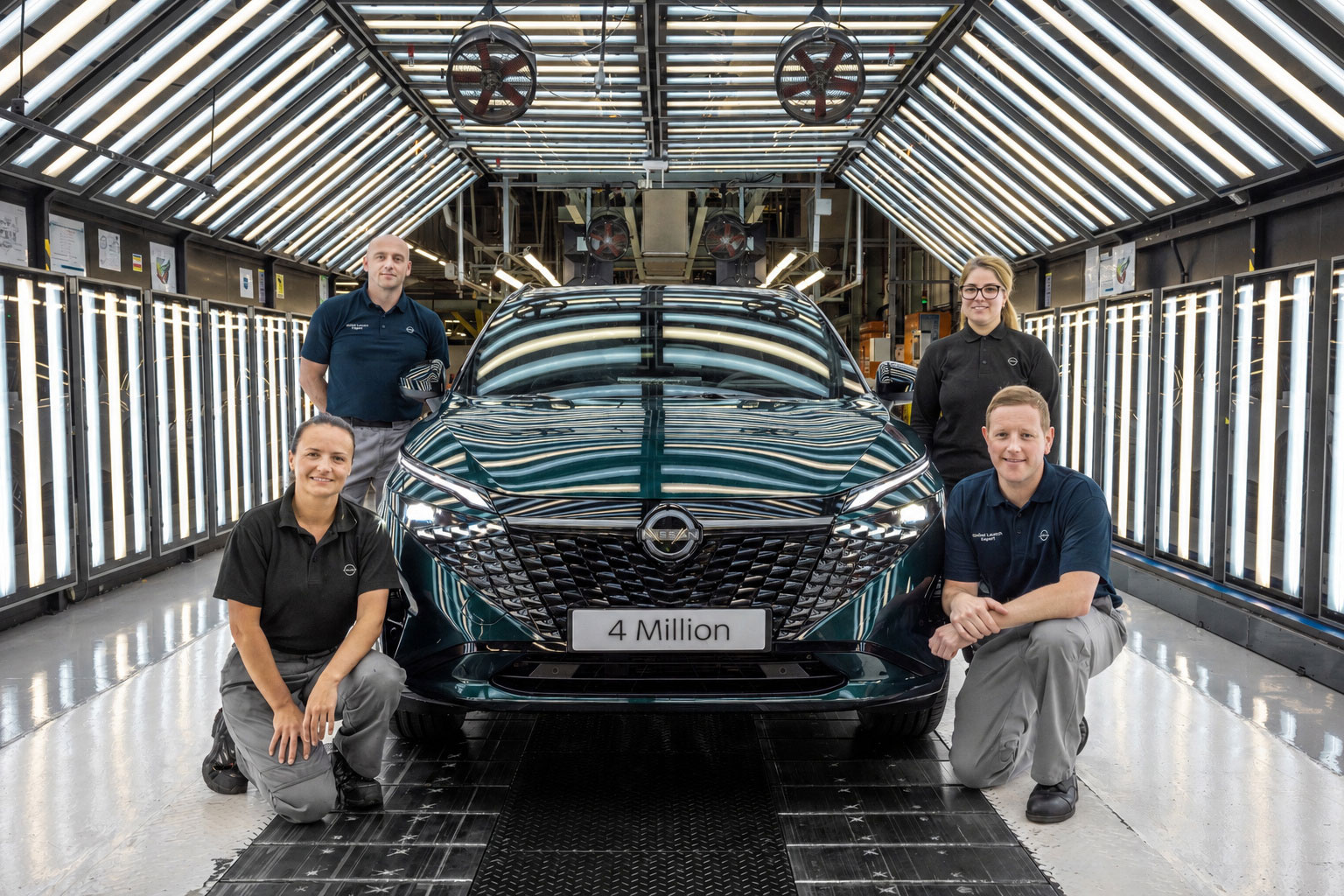
Nissan's Qashqai has reached four million European sales, cementing its status as the compact crossover segment's defining product. The Japanese automaker essentially invented this category when it launched the first Qashqai in 2006, and that pioneer positioning never wavered across three generations.
The Qashqai's durability in Europe reflects a fundamental shift in how drivers buy cars. Compact crossovers offer the raised driving position and practicality of SUVs without the fuel consumption or size penalties of traditional sport utility vehicles. Buyers want crossovers that actually fit in city parking spaces. The Qashqai delivers that balance, which explains why it became Europe's go-to choice in this booming segment.
This four million figure matters because it shows staying power in a market obsessed with EVs and new launches. While electrification reshapes the industry, traditional combustion models still move volume. The Qashqai's longevity proves that product fundamentals still win. A competent crossover with good packaging, reasonable pricing, and proven reliability keeps customers coming back across generations.
Nissan faces real competition now. The Volkswagen T-Roc and Peugeot 3008 press hard on the Qashqai's territory. Hyundai's Tucson and Kia Niro offer similar propositions with increasingly aggressive styling and warranty programs. The compact crossover segment has become crowded, making the Qashqai's sustained European success even more noteworthy.
The fourth-generation Qashqai, which arrived in 2021, brought a redesigned interior, updated infotainment systems, and plug-in hybrid options alongside traditional engines. That refresh kept the nameplate relevant without abandoning the formula that works. Nissan's challenge now involves balancing the legacy