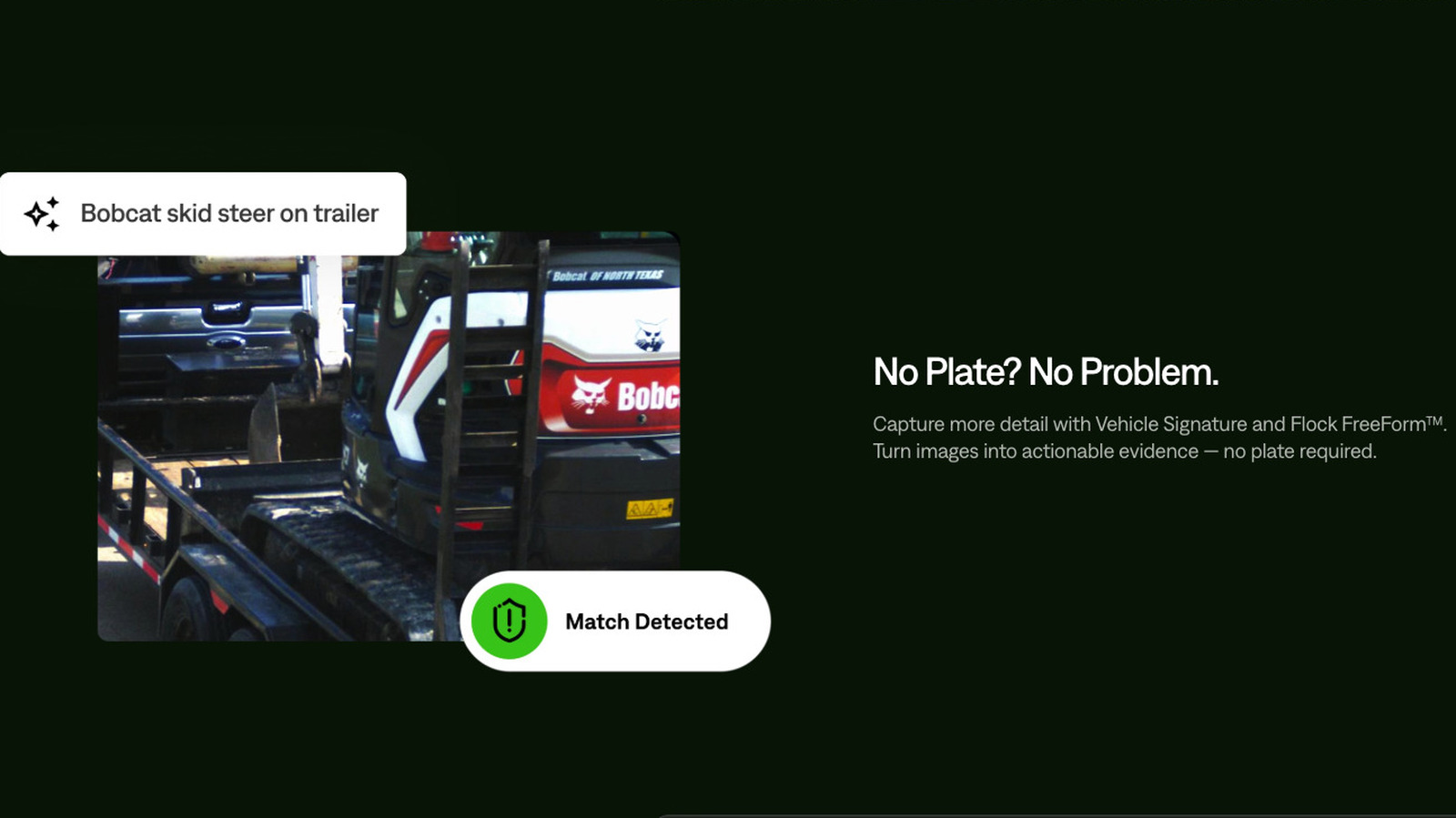
Flock Safety's automated license plate reader network operates far beyond simple plate identification. Police departments across the country use the company's FreeForm search tool to locate vehicles and people based on visual characteristics like clothing color, vehicle type, and body features. This capability extends surveillance reach dramatically beyond the original stated purpose.
The system processes footage from thousands of cameras mounted on utility poles, traffic lights, and private businesses. Officers input descriptions like "red jacket" or "silver sedan" and receive location data on matching individuals and vehicles. Flock claims its technology reduces search time and improves case resolution rates, but the scope of tracking raises privacy concerns.
Unlike traditional license plate readers that capture only registration numbers, Flock's broader search functionality creates a continuous visual database of people's movements and appearances. The company has partnered with law enforcement agencies nationwide, positioning itself as essential infrastructure for public safety. Yet drivers and pedestrians often have no knowledge that their images are captured, analyzed, and searchable by police.
Privacy advocates argue this represents a significant shift in surveillance capabilities. The FreeForm tool essentially turns street cameras into a real-time tracking system that monitors how people look, what they wear, and where they go. Flock markets the efficiency gains to police departments while remaining largely out of public consciousness.
The company emphasizes that its tools help solve crimes and find missing persons. But without transparent disclosure requirements or meaningful consent mechanisms, the technology enables mass surveillance at scale. Citizens walking down the street or driving to routine destinations become part of a searchable database, subject to police queries based on appearance alone.
This expansion of surveillance capabilities reflects broader industry trends toward comprehensive monitoring systems. As technology companies develop increasingly sophisticated tools, the gap between stated purpose and actual capability widens. Law enforcement adoption continues accelerating even as fundamental questions about privacy, accuracy, and potential abuse remain largely unaddressed in policy and regulation.