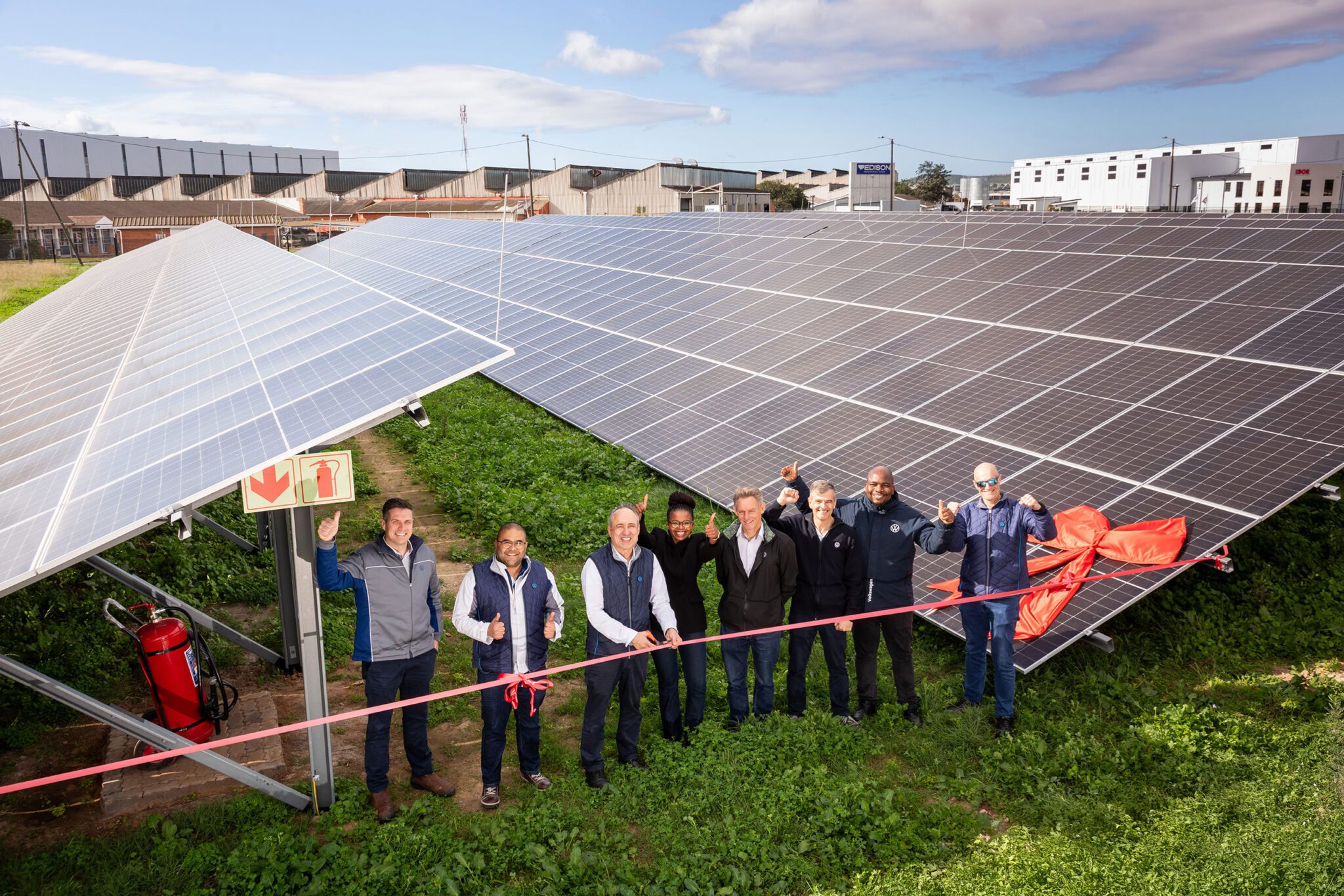
Volkswagen Group Africa expanded solar capacity at its Kariega Component Plant, reaching a 40% green energy rate at the facility. The investment reflects the automaker's incremental progress toward decarbonizing production operations across the continent, though the milestone also exposes a wider gap between short-term renewable gains and the full decarbonization targets the group has committed to.
The Kariega plant, located in South Africa's Eastern Cape province, now sources two-fifths of its electricity from solar installations. VW Group's expansion of onsite solar generation addresses both rising energy costs and the region's grid reliability challenges. South Africa's state-owned utility Eskom has struggled with load-shedding for years, making renewable energy an operational necessity for manufacturers.
Yet 40% green energy still leaves 60% of the plant's power draw dependent on grid electricity, which in South Africa remains heavily coal-dependent. This gap highlights a reality facing automakers across Africa. Renewable investments at individual plants deliver tangible carbon reductions and energy independence, but they cannot achieve full decarbonization without broader grid transformation or additional large-scale renewable projects.
Volkswagen Group has committed to carbon neutrality across its operations by 2050, with interim targets for 2030 and 2040. The Kariega expansion contributes to those goals, but the company's Africa footprint extends beyond component manufacturing to assembly operations that consume significantly more power. VW produces vehicles at facilities in South Africa through its subsidiary brands, including operations that feed into exports across the continent and to Europe.
The strategy mirrors VW's global approach. The group has added solar arrays at plants in Mexico, Brazil, and Europe, treating onsite generation as a cost-containment and sustainability measure. For African operations specifically, solar makes economic sense. The continent receives consistent high-intensity sunlight, making per-kilowatt-hour costs