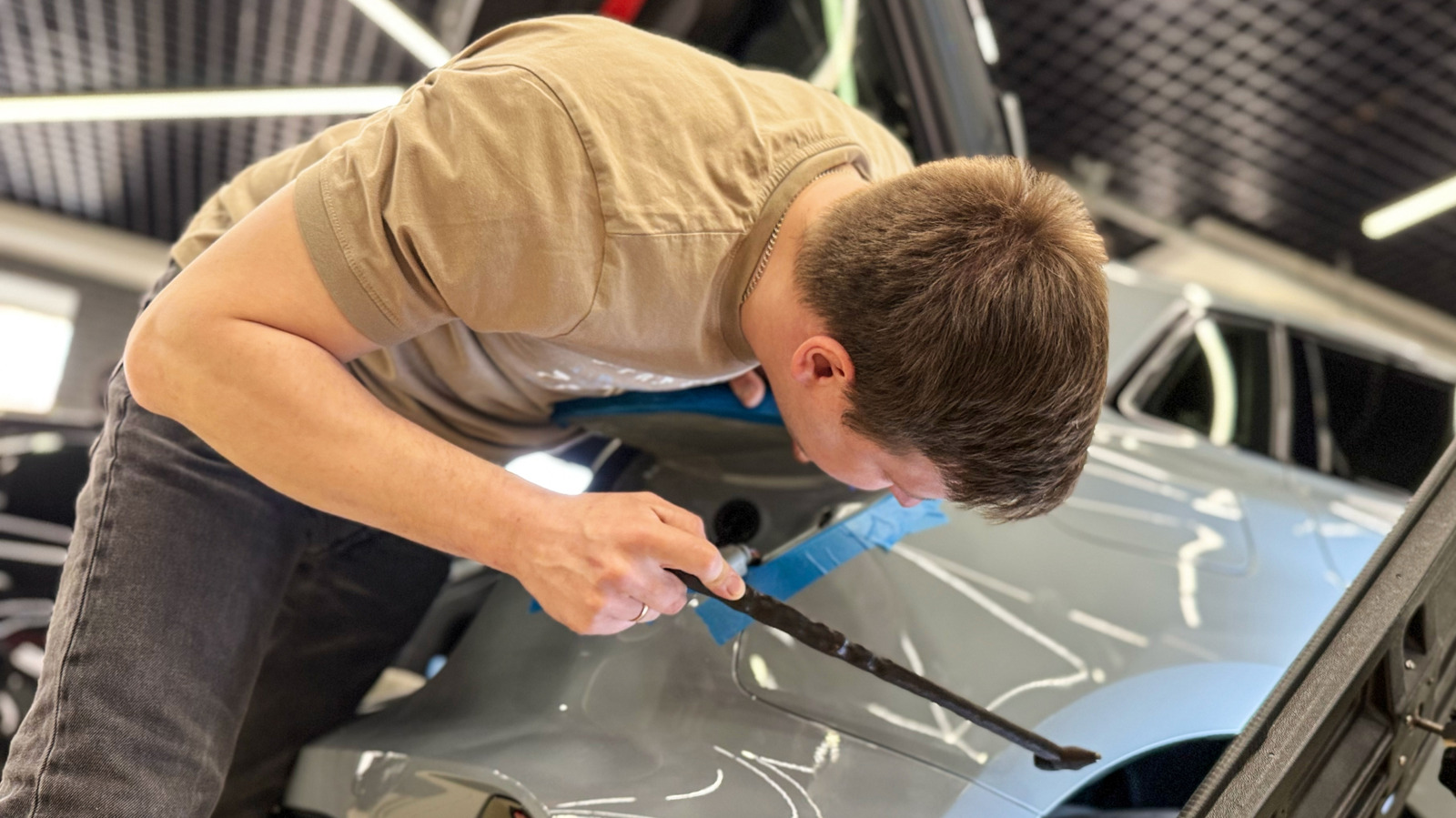
DIY dent removal works for minor damage but requires honest assessment of your car's condition before you grab a plunger. Small dents without paint damage respond well to simple techniques. Boiling water can soften plastic bumpers enough to pop dents from behind. A plunger creates suction on metal panels if the dent has clean edges and hasn't creased the metal. Some owners use dry ice to contract the metal rapidly, forcing the dent outward.
Depth matters more than size. Shallow dents under half an inch often yield to these methods. Deep creases or dents near panel edges typically require professional intervention because they damage the paint or distort the metal permanently.
Paint condition determines your next move. If the dent didn't break the clear coat, you keep your options open. Broken paint means rust will develop, and body shops need to sand, fill, and repaint anyway. That pushes costs toward professional repair territory.
Location changes everything. Dents on flat surfaces like doors and quarter panels respond better to DIY treatment than dents on curved sections like fenders. Curved metal naturally resists popping back into shape.
Professional body shops charge $300 to $1,000 for small dent repairs depending on location and paint matching. Insurance deductibles often sit at $500 or $1,000, making minor dent removal a pay-out-of-pocket decision. Paintless dent removal, a technique that doesn't require repainting, costs less than traditional bodywork but still runs $150 to $400.
Start with the simplest approach. Fill a spray bottle with hot water, spray the dent, and use a plunger. If that fails after three or four attempts, stop. Aggressive plunging damages paint and creates more expense. Accept that deep dents, creases, or damage near edges