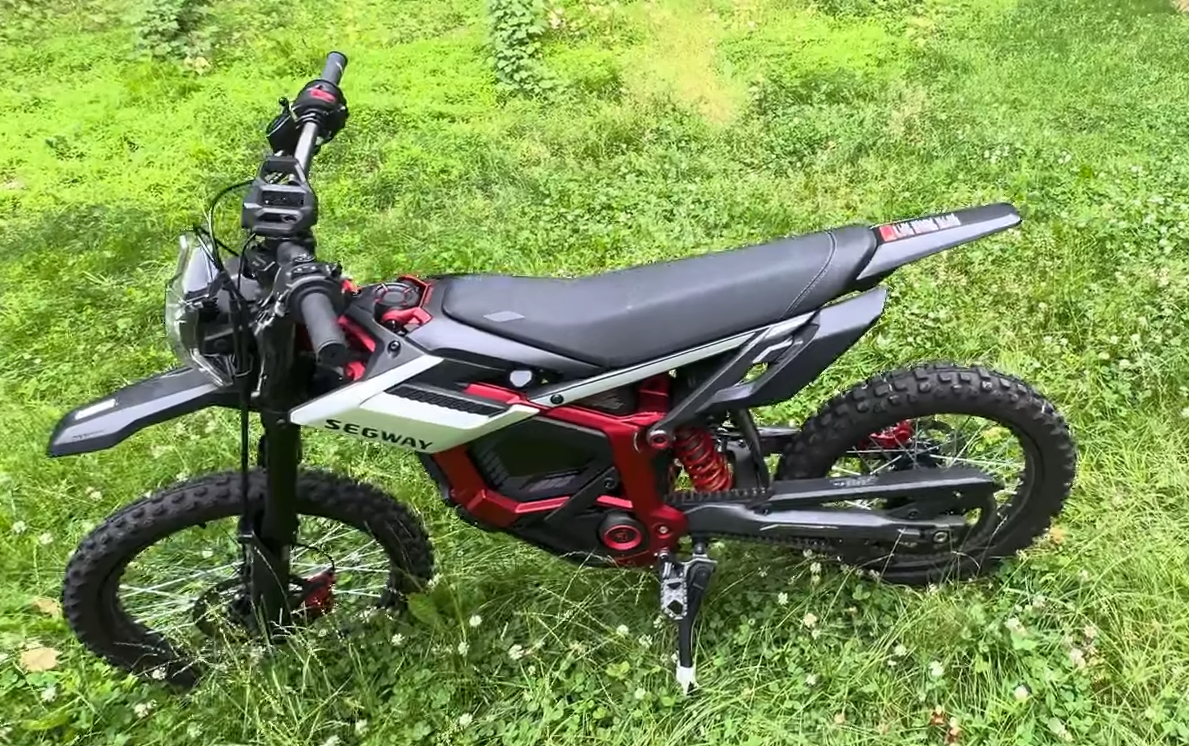
Segway has evolved far beyond mall-cop mobility. The Beijing-owned company, which acquired the self-balancing scooter maker a decade ago, now builds serious electric off-road motorcycles. The new Xaber represents the company's most aggressive push into performance terrain bikes, capable of speeds exceeding 60 mph.
Reviewers who spent a month with the Xaber note that Segway has engineered a compelling alternative to Sur Ron bikes at a lower price point. Sur Ron dominates the electric off-road motorcycle segment with models like the Storm Bee, commanding premium pricing for its lightweight aluminum frame and dual-motor performance. The Xaber undercuts that positioning while delivering comparable capability.
Segway's expansion into off-road bikes follows a strategic pattern. The company has methodically entered e-bikes, e-scooters, go-karts, and off-road UTVs over recent years, building depth in electric mobility hardware. Now the Xaber signals ambition to compete in a market where enthusiast riders actually care about power delivery, suspension geometry, and real-world range.
The timing matters. Electric motorcycle startups like Sur Ron proved demand exists for sub-motorcycle performance bikes with serious speed and trail capability. Traditional OEMs largely ignored this segment, leaving room for Chinese manufacturers to capture market share. Segway, with engineering resources and manufacturing scale behind it, enters an opening.
The Xaber's speed capability and price advantage position it directly against Sur Ron's lineup. Rider priorities in this segment include acceleration, suspension quality, battery range, and build durability. At a lower entry price, Segway can attract buyers priced out of Sur Ron territory while forcing the incumbent to justify its premium positioning.
This move reflects broader EV industry trends. Chinese manufacturers continue infiltrating premium segments once considered off-limits. Segway's brand credibility