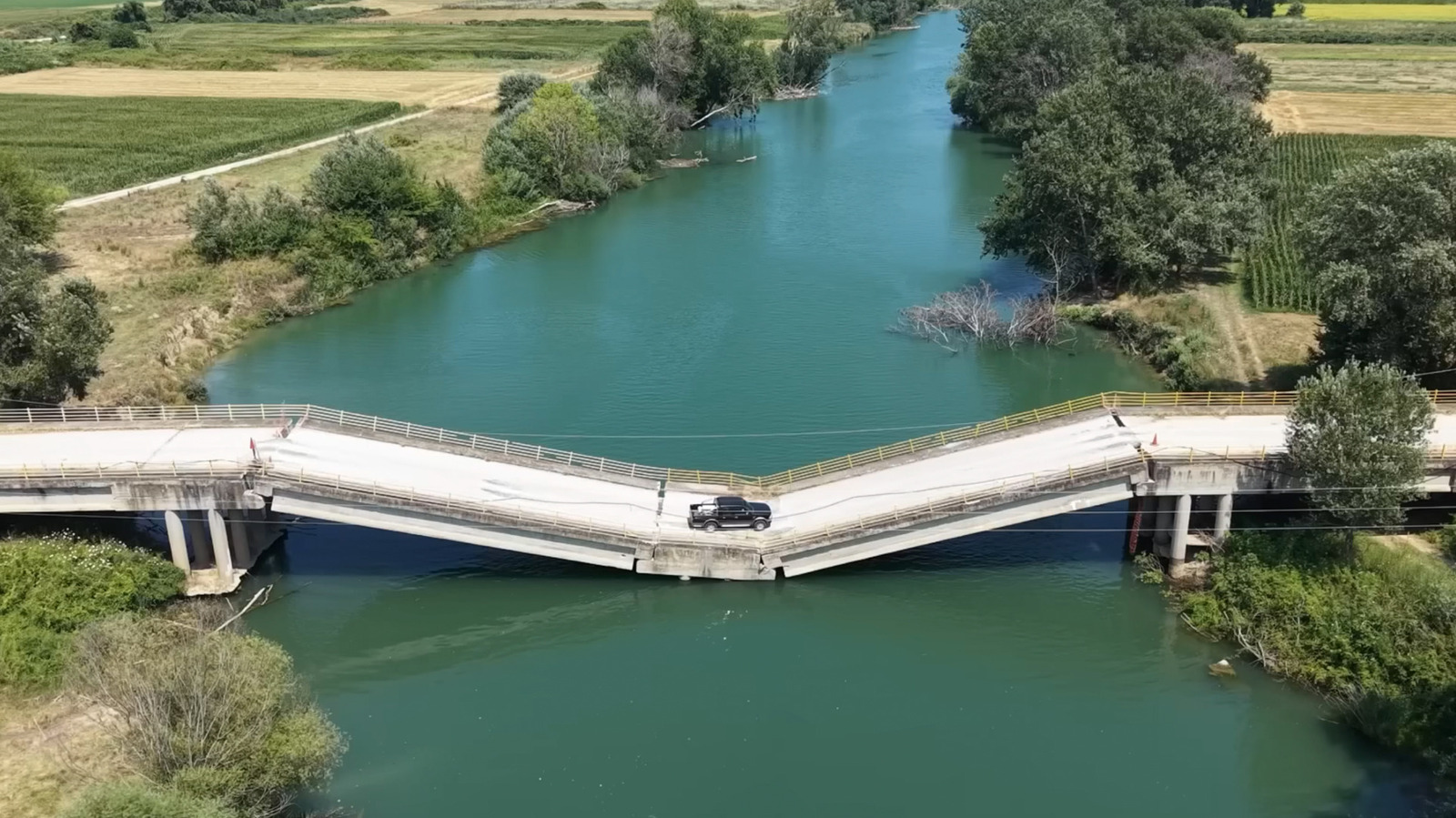
A Greek bridge in active structural collapse continues to carry traffic despite obvious safety hazards. The unnamed crossing shows visible deterioration and crumbling infrastructure, yet authorities have not implemented barriers or closure protocols to prevent drivers from using it.
This situation exemplifies a broader infrastructure crisis affecting Southern Europe. Greece faces chronic underfunding for road maintenance and repair, a legacy of the 2008 financial crisis that gutted public budgets. Many bridges and highways across the country operate well beyond safe service life, creating daily risks for commuters and commercial traffic.
The bridge's continued use while deteriorating reflects systemic failures in infrastructure management. Engineers typically recommend closure or immediate repair when structural integrity becomes compromised. The absence of warning signs, barriers, or detours suggests either negligence, resource constraints, or bureaucratic delays in Greece's transportation department.
This spans a pattern seen across aging European infrastructure. Roads built in the 1960s and 1970s require substantial reinvestment that cash-strapped governments struggle to fund. Greece's economic recovery has been slow, leaving maintenance budgets depleted. Meanwhile, traffic volumes continue rising, accelerating wear on already-stressed assets.
The risk extends beyond the immediate risk to drivers. A catastrophic collapse could trap vehicles, injure or kill occupants, and disrupt regional commerce. Rescue operations on a collapsed bridge would prove complicated and time-consuming. Secondary economic impacts would follow transport disruptions.
The European Union has allocated some recovery funds for Greek infrastructure, but allocation remains slow and bureaucratic. Local and national authorities must prioritize immediate intervention. Either temporary closure with diversion routes or emergency repairs need implementation now. Continuing to allow vehicles on a visibly collapsing bridge represents negligent public safety policy. The question is not if it fails, but when.