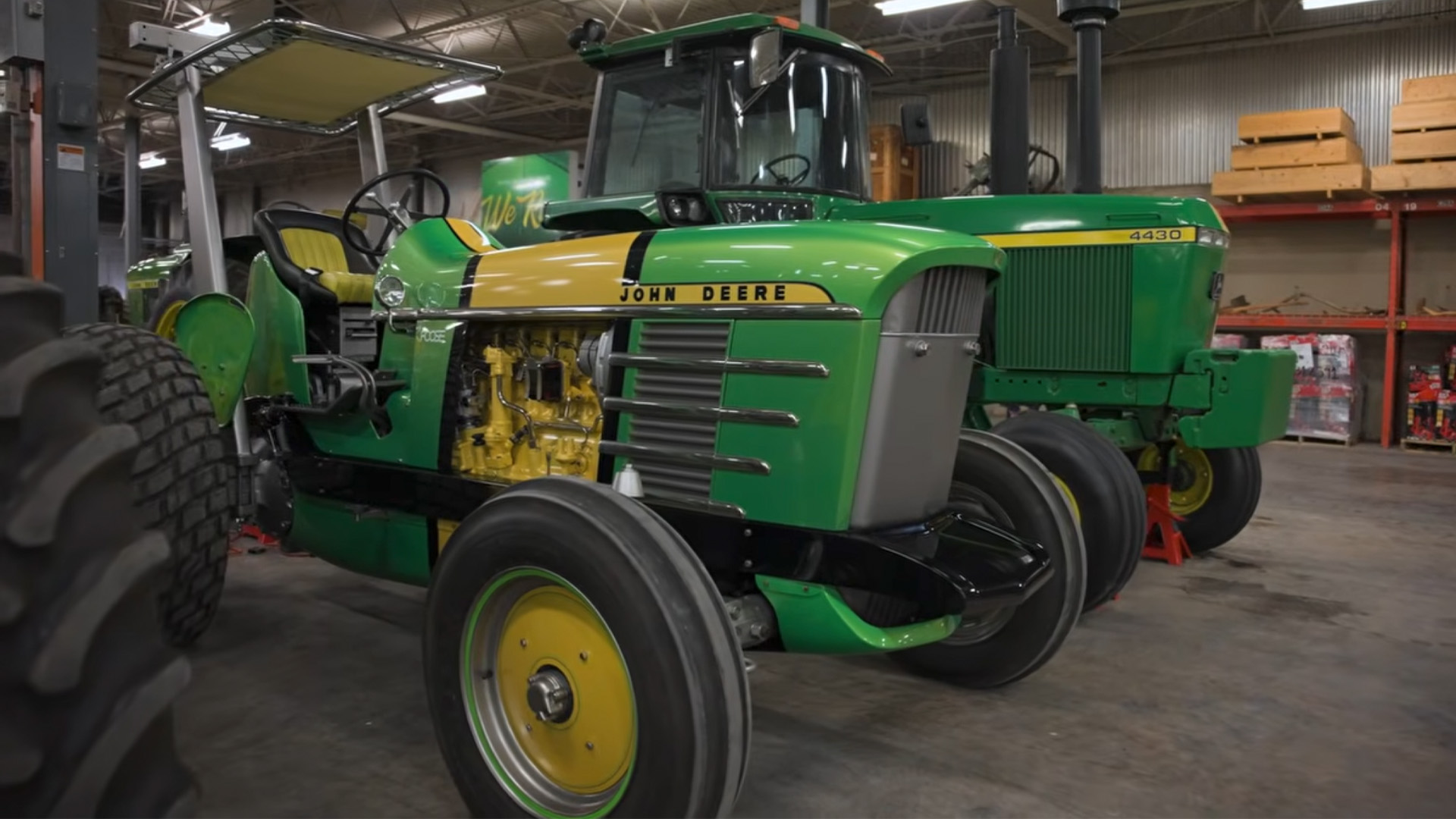
Chip Foose, the legendary hot rod designer famous for his work on "Overhaulin'" and countless custom builds, applied his signature design language to an unlikely subject: a John Deere tractor. At the height of his career visibility, Foose created a farm machine that channels classic race car aesthetics, blending agricultural functionality with automotive artistry.
Foose built his reputation transforming ordinary vehicles into show-stopping customs through dramatic bodywork, aggressive proportions, and meticulous craftsmanship. His approach emphasizes flowing lines, purposeful curves, and theatrical presence. The John Deere project represents a departure from his typical automotive clientele, yet demonstrates how his design principles transcend vehicle categories.
The tractor conversion likely incorporated Foose's hallmark design elements: streamlined bodywork, custom hood treatments, and modernized proportions that evoke vintage racing machinery. By applying hot rod aesthetics to farm equipment, Foose created a unique crossover that appeals to both agricultural enthusiasts and automotive design followers.
This collaboration highlights growing interest in crossover design projects within the custom vehicle community. High-end fabricators increasingly explore unconventional builds to showcase versatility and push creative boundaries. Foose's tractor project sits at the intersection of Americana, motorsport heritage, and agricultural tradition.
John Deere has cultivated a passionate collector base, with vintage tractors commanding serious money at auctions. A Foose-customized piece would carry cachet from both the industrial equipment world and custom automotive circles. The project likely generated substantial media attention, expanding Foose's portfolio beyond passenger cars and trucks into equipment design.
For Foose, the John Deere build served as a creative laboratory. It proved his design methodology works across different vehicle types and purposes. For John Deere enthusiasts, it demonstrated that agricultural equipment could receive the same design