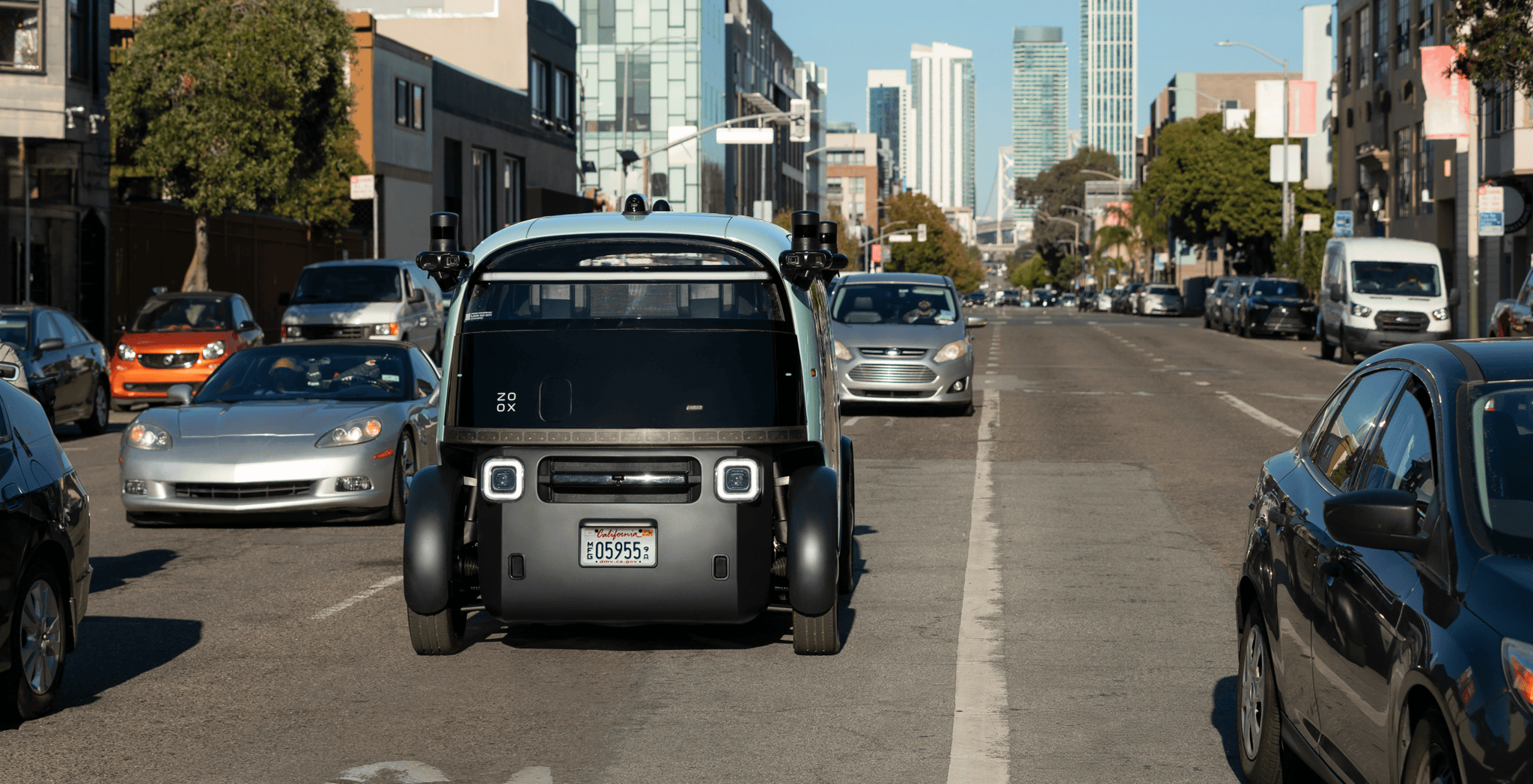
Amazon-owned Zoox issued a smoke-detection recall for its autonomous vehicles just days after the National Highway Traffic Safety Administration ordered all US autonomous vehicle operators to fix emergency-response deficiencies. The timing underscores regulatory pressure mounting on the self-driving sector.
NHTSA's directive demanded that AV companies address failures in their emergency protocols, a broad mandate affecting operators across the industry. Zoox's specific recall involves smoke-detection systems in its purpose-built robotaxi, the ZX. The company has not disclosed how many vehicles require repairs or the exact nature of the smoke-detection malfunction.
This recall reflects ongoing safety concerns with autonomous vehicles beyond their core driving capabilities. Emergency systems, fire detection, and occupant alerting protocols have become focal points for regulators scrutinizing self-driving technology deployment in urban environments. A smoke-detection failure could leave passengers without timely warning of vehicle fires or electrical hazards, creating liability and safety risks that regulators cannot ignore.
Zoox operates driverless taxi services in San Francisco and Las Vegas, competing directly with Waymo and Cruise. The recall arrives as these companies face heightened NHTSA oversight following several high-profile incidents involving AV emergency responses. Regulators have questioned whether autonomous systems adequately handle unexpected scenarios and whether occupant safety measures match those in conventional vehicles.
The recall does not necessarily indicate a systematic design flaw in Zoox's architecture. However, it demonstrates that even purpose-built autonomous platforms must meet conventional vehicle safety standards. Smoke detection, airbag deployment, and occupant egress represent non-negotiable safety baselines that apply equally to driverless and driver-operated cars.
For Zoox and competitors, recalls like this one complicate the path to scaled autonomous operations. Each safety remediation requires fleet updates, service center coordination, and regulatory documentation. As NHTSA t