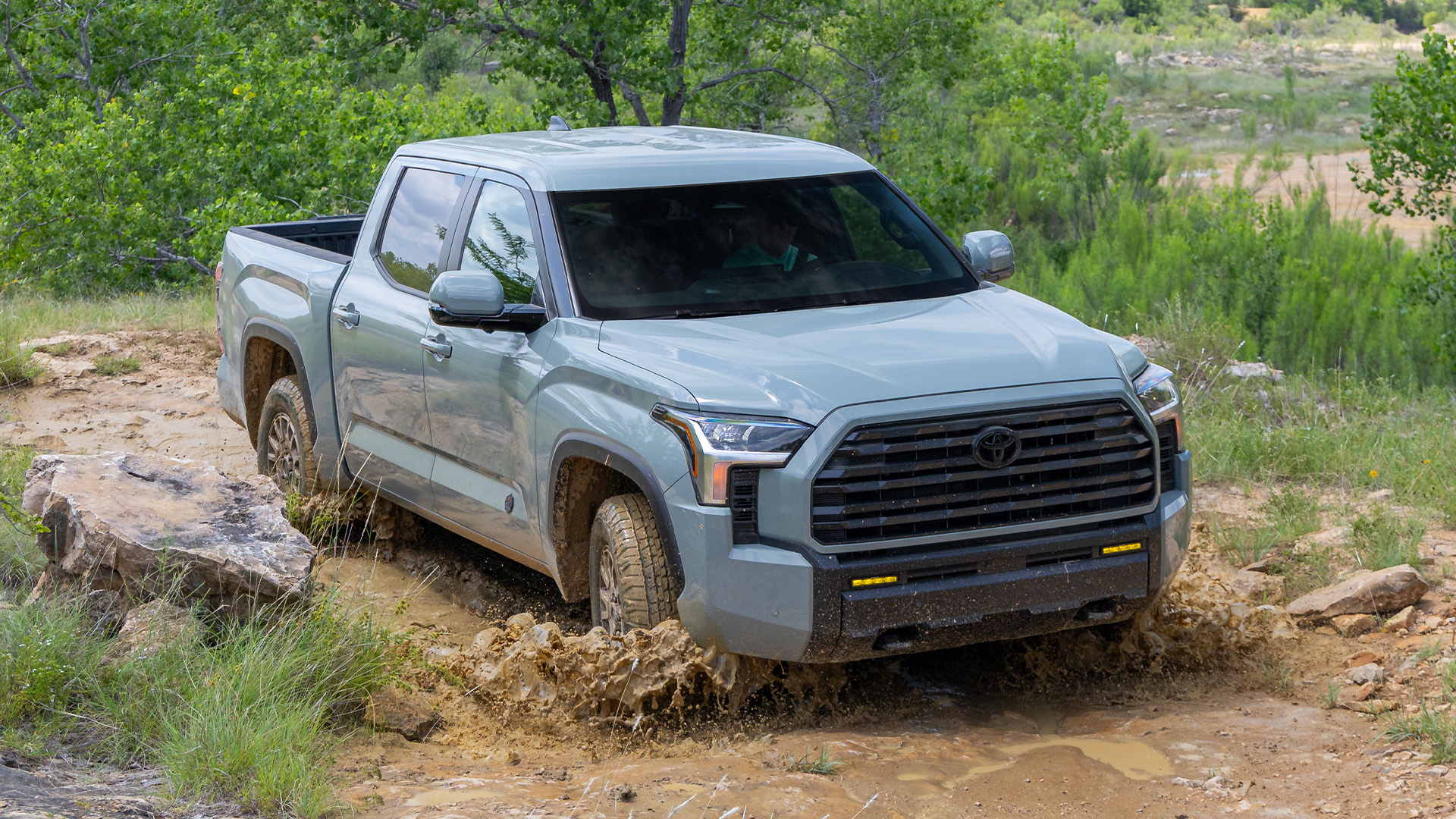
Toyota expands its Trailhunter off-road lineup to the Tundra for 2027, applying the package to the SR5 trim level rather than creating a standalone premium variant. The move signals Toyota's strategy to democratize rugged capability across its truck portfolio.
The Trailhunter treatment brings proven off-road hardware to the mid-range SR5, making serious trail credentials accessible without jumping to top-tier pricing. This approach mirrors Toyota's successful formula with the 4Runner, where Trailhunter became a popular alternative to costlier adventure trims.
The package notably excludes a snorkel, a detail that defines some competitors' off-road trucks and reflects Toyota's engineering priorities. Without snorkel integration, the Tundra Trailhunter likely focuses on suspension upgrades, all-terrain tires, skid plates, and rock sliders. These foundational improvements address everyday off-road performance without the deep-water ford capability a snorkel provides.
Toyota targets buyers seeking capable weekend warriors rather than expedition vehicles. The SR5 base keeps pricing reasonable while the Trailhunter package justifies the expenditure through genuine hardware. This positions the Tundra competitively against Ford's F-150 Raptor variants and Ram's Power Wagon, though at a lower price point.
The snorkel omission matters less for the average buyer tackling rocky trails, sand dunes, and forest roads. Deep-water fording remains niche use. Toyota's analysis likely showed that most Trailhunter customers prioritize ground clearance, articulation, and terrain response over extreme water crossing depth.
This 2027 Tundra update reflects broader truck market segmentation. Manufacturers now offer multiple off-road personalities at different price tiers rather than one flagship adventure truck.