Tesla logged 207 crashes involving Autopilot and Full Self-Driving in a single month, marking the highest count in the company's reported history. The figure appears in data submitted to the National Highway Traffic Safety Administration. This spike coincides with Tesla's aggressive expansion of Full Self-Driving availability and rollout. The company continues to withhold detailed information about individual crash circumstances, making independent assessment of these incidents difficult. NHTSA requires manufacturers to report crashes involving driver-assist features, and Tesla's submission reveals the volume of collisions tied to these systems but provides minimal context on causation, severity, or contributing factors. The record represents a notable inflection point as Tesla deploys FSD to broader audiences while the feature remains in beta testing. Competitors including Waymo, Cruise, and traditional automakers all face similar NHTSA reporting requirements for their autonomous and semi-autonomous systems. Tesla does not break down whether the 207 crashes involved minor fender-benders or serious collisions, nor does it specify how many involved human driver error versus system malfunction. The lack of transparency fuels ongoing debate over the readiness of Tesla's driver-assist technology for public roads. Regulators and safety advocates have repeatedly called for more granular crash data from manufacturers. Tesla maintains that its systems reduce overall accident rates compared to human drivers, a claim the company supports with aggregate data rather than crash-by-crash analysis. The 207-crash month underscores the scale at which these systems now operate and the mounting complexity of evaluating their safety profile without access to detailed incident reports. As Full Self-Driving approaches wider commercial deployment, the pressure on Tesla to provide clearer safety metrics only intensifies.
News
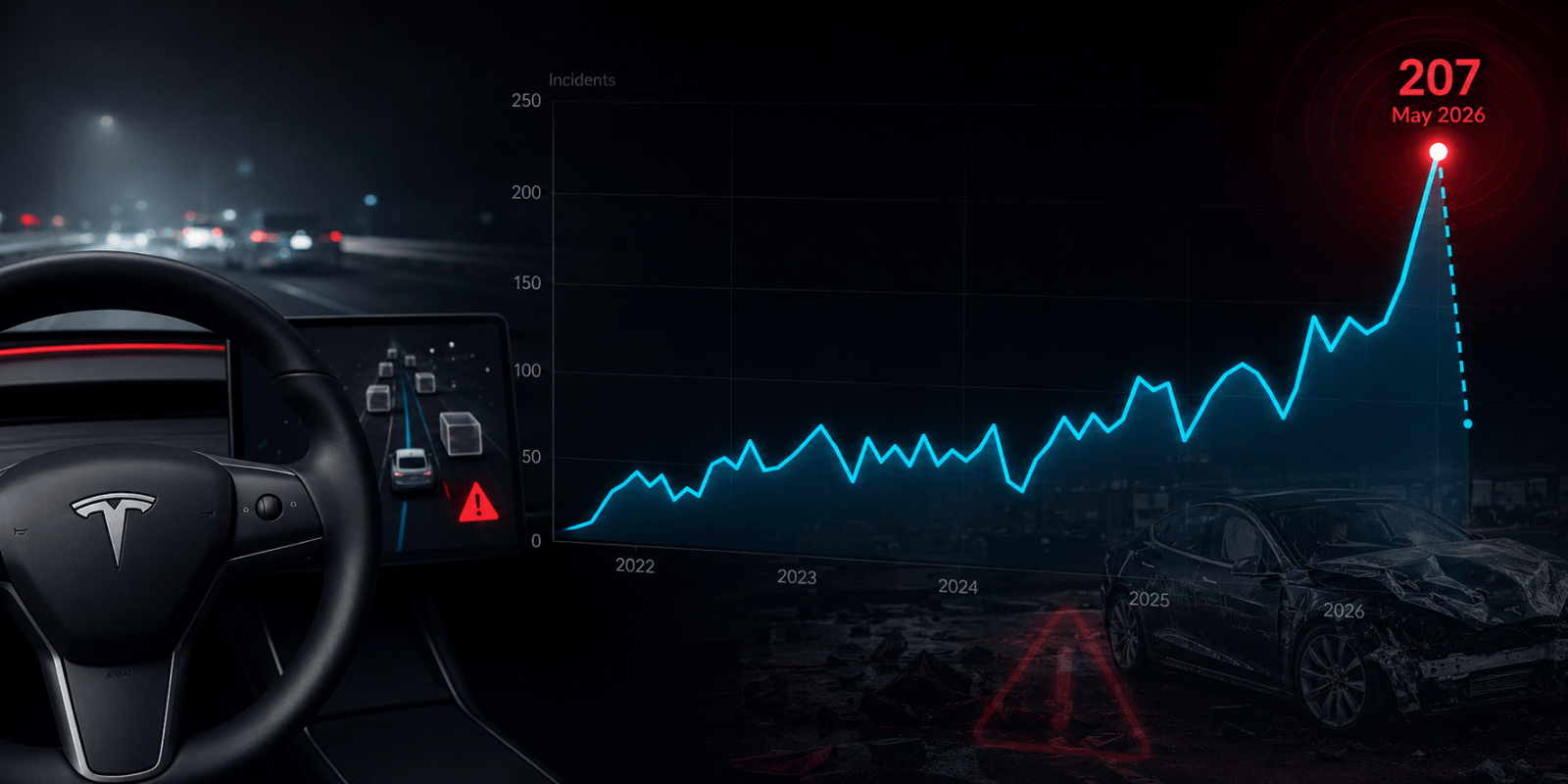
Tesla Autopilot and FSD crashes hit record 207 in a single month