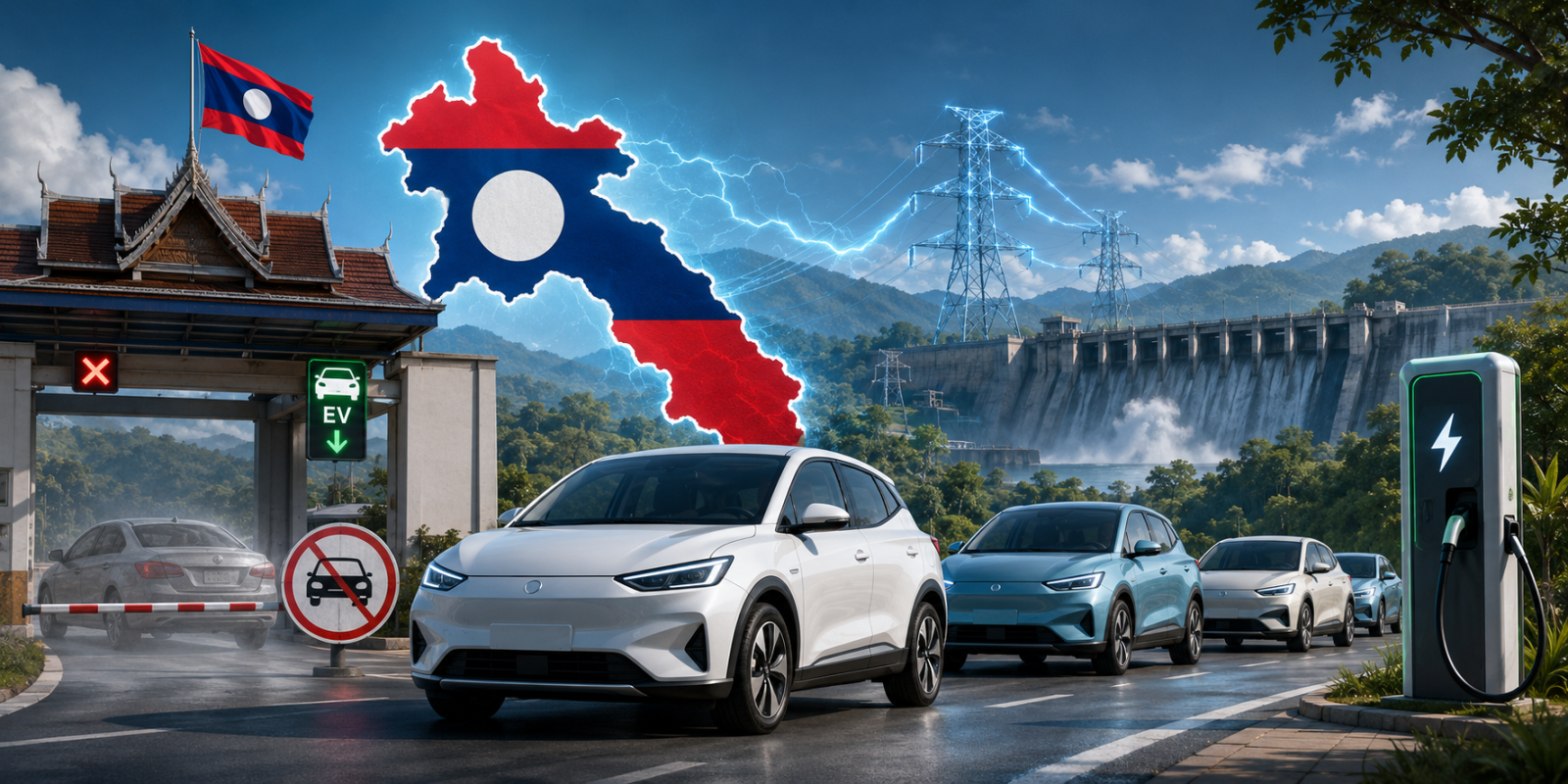
Laos implemented the world's most aggressive vehicle electrification policy by banning gasoline and diesel car imports entirely as of June 1. The Southeast Asian nation now requires nearly all new passenger vehicles to be electric, making it the first country to enforce a complete overnight prohibition rather than a gradual phase-out.
This mandate differs fundamentally from EV adoption strategies elsewhere. Norway, the global leader in EV market share, achieved high electric penetration through incentives and tax breaks that aligned with consumer preferences. California and the European Union set deadlines decades away, allowing manufacturers and buyers to adjust gradually. Laos chose coercion instead.
The policy reveals little about EV enthusiasm among Laotian drivers. Rather, it reflects strategic decisions by the government and Chinese automakers who dominate the region's vehicle supply. Laos depends heavily on Chinese trade relationships and investment. Chinese EV makers like BYD, NIO, and others have flooded Southeast Asian markets with affordable electric models, creating a supply advantage that Laos chose to leverage through regulation.
The move creates immediate practical challenges. Laos lacks widespread charging infrastructure, a critical barrier for EV ownership in developing economies. Vehicle service networks remain underdeveloped. Used gas car markets may flourish as workarounds. Consumers who cannot afford electric vehicles face genuine hardship, particularly rural populations dependent on older imported vehicles.
Other developing nations watch carefully. Such aggressive mandates bypass market forces but risk alienating consumers forced into unfamiliar technology. Laos essentially wagered that supply-side pressure from Chinese manufacturers combined with regulatory force can reshape transportation faster than demand alone ever could.
The experiment tests whether governments can bypass the consumer preference phase entirely. Success depends on whether affordable Chinese EVs, combined with eventual infrastructure investment, make electric driving practical for ordinary Laotians. Failure could discredit EV adoption in emerging markets that lack