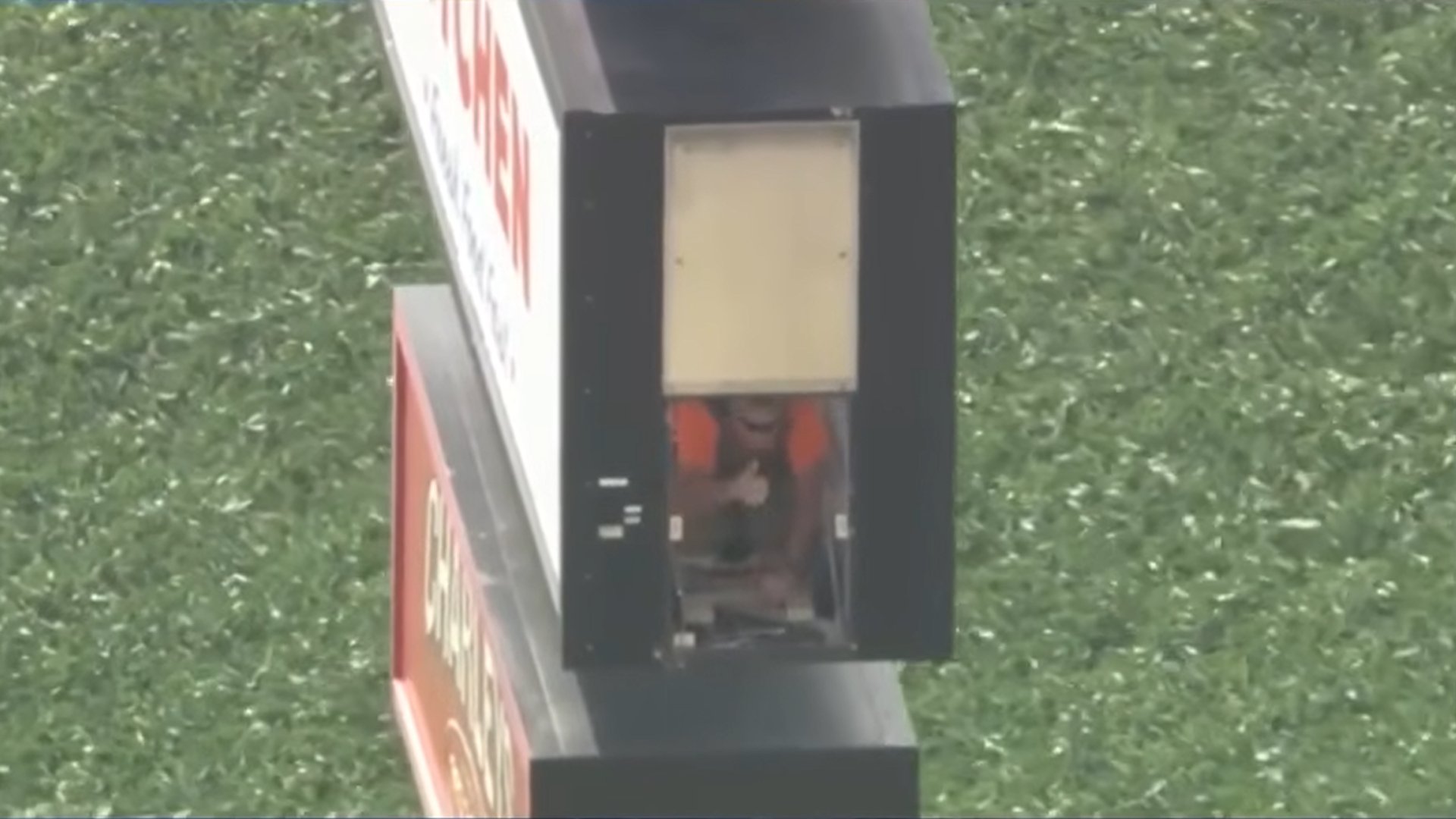
A maintenance contractor became trapped 130 feet above ground inside a truck stop sign's internal lift mechanism for nearly six hours. The worker was performing routine maintenance work when the lift malfunctioned, leaving him stranded at the top of the structure.
Large roadside signs at truck stops incorporate internal lift systems to allow workers safe access for repairs, cleaning, and bulb replacement without relying on external ladders or scaffolding. These hydraulic or mechanical lifts represent standard infrastructure at major travel plazas across North America. The contractor's entrapment underscores both the operational complexity of maintaining these towering structures and the potential hazards when equipment fails at extreme heights.
Emergency responders worked to extract the worker safely. The extended duration of the rescue reflects the technical challenges of reaching someone trapped inside a confined space at such an elevation. Crews had to coordinate carefully to avoid further equipment failure or injury during the removal process.
Truck stop operators maintain these signs as critical wayfinding assets. They serve drivers across highways as distinctive landmarks visible from considerable distances. Regular maintenance keeps bulbs functioning, structures sound, and lettering legible. That work comes with inherent risks that most motorists never consider while passing at highway speed.
This incident highlights workplace safety concerns in specialized maintenance roles. Contractors performing high-elevation work depend entirely on equipment reliability. Single-point failure in a lift system becomes a life-threatening emergency within seconds. Many maintenance firms now implement redundant safety systems, harness protocols, and regular equipment inspections to prevent exactly this type of incident.
The contractor's ordeal adds to the growing conversation around occupational hazards in roadside infrastructure maintenance. While truck stops prioritize operational efficiency, worker safety during routine upkeep remains equally vital. Equipment testing schedules and backup rescue procedures may face scrutiny following this event across the industry.