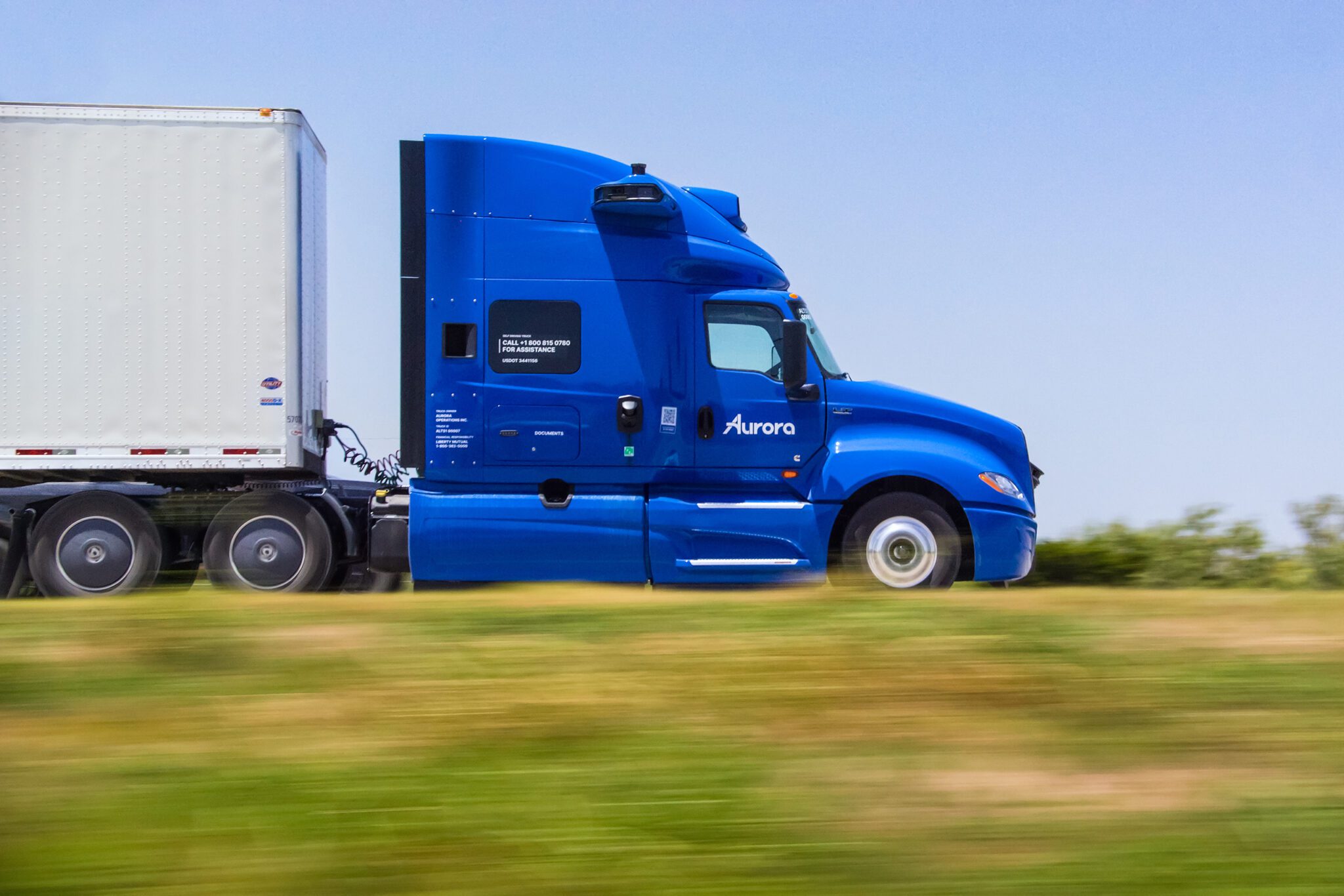
Aurora launched its second-generation autonomous trucking platform, marking a decisive shift from prototype validation to commercial production. The company built 1,000 units annually with clear ambitions to scale toward 10,000 trucks per year, signaling confidence in the technology's readiness for real-world deployment.
The new generation vehicles represent Aurora's commitment to the long-haul trucking segment, where autonomous systems promise the largest efficiency gains and driver cost reduction. Unlike first-generation platforms focused on proving autonomous capability works, this iteration prioritizes manufacturability, reliability, and fleet integration across multiple carrier partners.
Aurora operates in a crowded autonomous trucking space where Waymo, Nvidia-backed Kodiak, and traditional OEMs all pursue driverless freight solutions. The company's approach differs by focusing exclusively on trucks rather than competing across multiple vehicle categories. This narrow focus allows deeper engineering into highway driving scenarios where the problem space narrows compared to urban autonomous vehicles.
The scale target reflects Aurora's financial reality. The company burned through venture capital and needed to demonstrate a path to profitability. Producing 10,000 trucks annually represents meaningful revenue without requiring the billions of units a mass-market passenger car business demands. It also shows confidence among freight carriers who need assurance before deploying autonomous fleets.
Long-haul trucking remains the most viable near-term market for Level 4 autonomy. Highways eliminate many variables plaguing urban autonomous systems. Traffic patterns repeat predictably. Road infrastructure remains consistent. Trucks don't navigate tight parking spaces or dense pedestrian environments. These conditions make consistent autonomous performance achievable with current sensor and compute technology.
Aurora's second-generation push also acknowledges that regulatory approval accelerates as deployment scales. More vehicles on roads generate real-world data addressing safety questions regulators pose. Federal approval for expanded autonomous operations becomes easier to justify when carriers demonstrate safe operation across thousands of