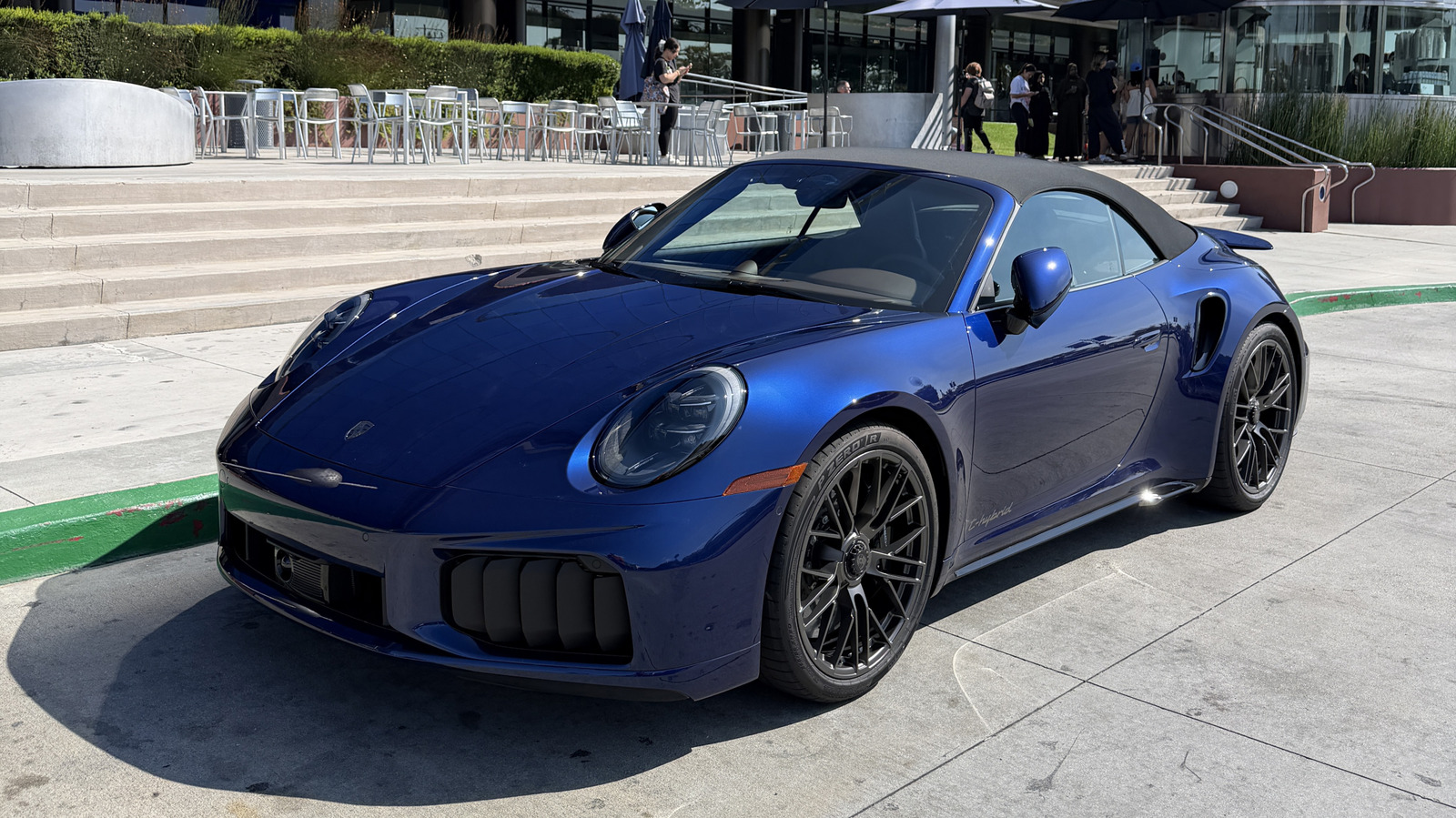
Porsche handed over its 911 Turbo S T-Hybrid for a week-long evaluation that includes daily driving duties and canyon carving through Southern California's most challenging roads. This is the latest iteration of Porsche's hybrid strategy applied to its flagship 911 performance variant.
The 911 Turbo S T-Hybrid pairs a 3.8-liter twin-turbocharged flat-six engine with electric motor assistance, generating 919 horsepower and 950 pound-feet of torque. The system targets real-world usability alongside track credentials, addressing one persistent criticism of the previous non-hybrid Turbo S. That older model produced 640 horsepower but lacked the efficiency benefits of electrification.
Porsche's T-Hybrid badge distinguishes this setup from traditional mild hybrids. The electric motor integrates directly into the transmission, providing immediate torque fill during turbo lag and enabling brief all-electric crawling in low-speed traffic. Combined with an eight-speed PDK transmission and all-wheel drive, the powertrain targets 0-60 mph in 2.5 seconds and a top speed of 205 mph.
Daily driving evaluation matters here. Most hybrid supercars live behind velvet ropes at collector garages. Real-world testing reveals whether a $340,000 hypercar actually functions as advertised when sitting in Los Angeles traffic, navigating tight parking structures, and demanding precision on technical backroads.
Southern California's canyon roads like Mulholland Drive and Pacific Coast Highway curves present the real test. These roads expose whether the hybrid system's added complexity and weight distribution affect handling dynamics that 911 purists have cherished for decades. The car's estimated 3,725-pound curb weight represents a meaningful increase over previous generations.
Porsche positions