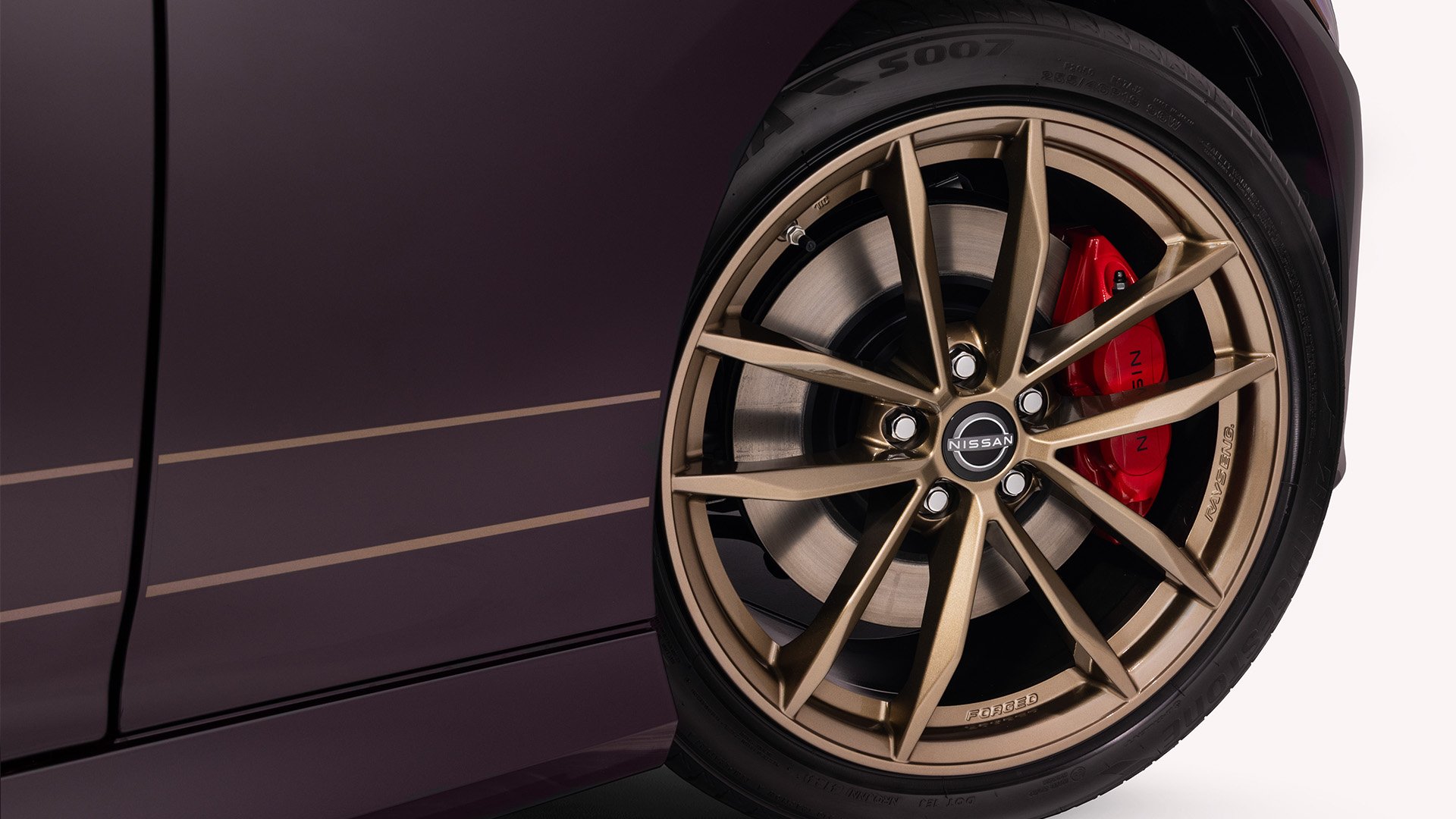
Brake caliper color functions as a performance tier indicator across the automotive industry, revealing which trim level or performance variant buyers actually own. The Nissan Z demonstrates this hierarchy clearly. Base Z models arrive with standard gray or black calipers, while the Z Performance variant displays eye-catching red calipers that telegraph upgraded stopping power and sportier credentials to observers.
This color-coding system extends far beyond Nissan. BMW uses red calipers on M models to distinguish them from standard variants. Porsche reserves its signature red calipers for higher-performance 911 variants. Dodge deployed similar tactics with Challenger and Charger performance editions. Mercedes-AMG models sport red calipers on the SL and C63 AMG versions. The practice communicates performance hierarchy without requiring buyers to examine spec sheets or window stickers.
The strategy serves multiple purposes. For manufacturers, caliper color provides a low-cost visual differentiation that justifies price premiums between trim levels. A base Z and Z Performance may share the same platform and powertrain basics, but red calipers immediately establish performance intent. For buyers, the color acts as visual proof of their investment, delivering bragging rights that justify spending extra dollars.
The trend reflects broader automotive psychology. Buyers at this price point want their purchase choice visible. Red calipers announce to pedestrians and fellow drivers that you invested in genuine performance capability, not just a standard model. It's affordable personalization that carries real status signaling power in the enthusiast community.
Other manufacturers have experimented with different caliper colors. Gold and silver calipers appear on certain performance variants, though red dominates as the performance standard. Some buyers customize caliper colors aftermarket, but factory color-coding carries authenticity that modifications cannot replicate.
This system works because it's immediately recognizable within car culture. Enthusiasts glance at a car