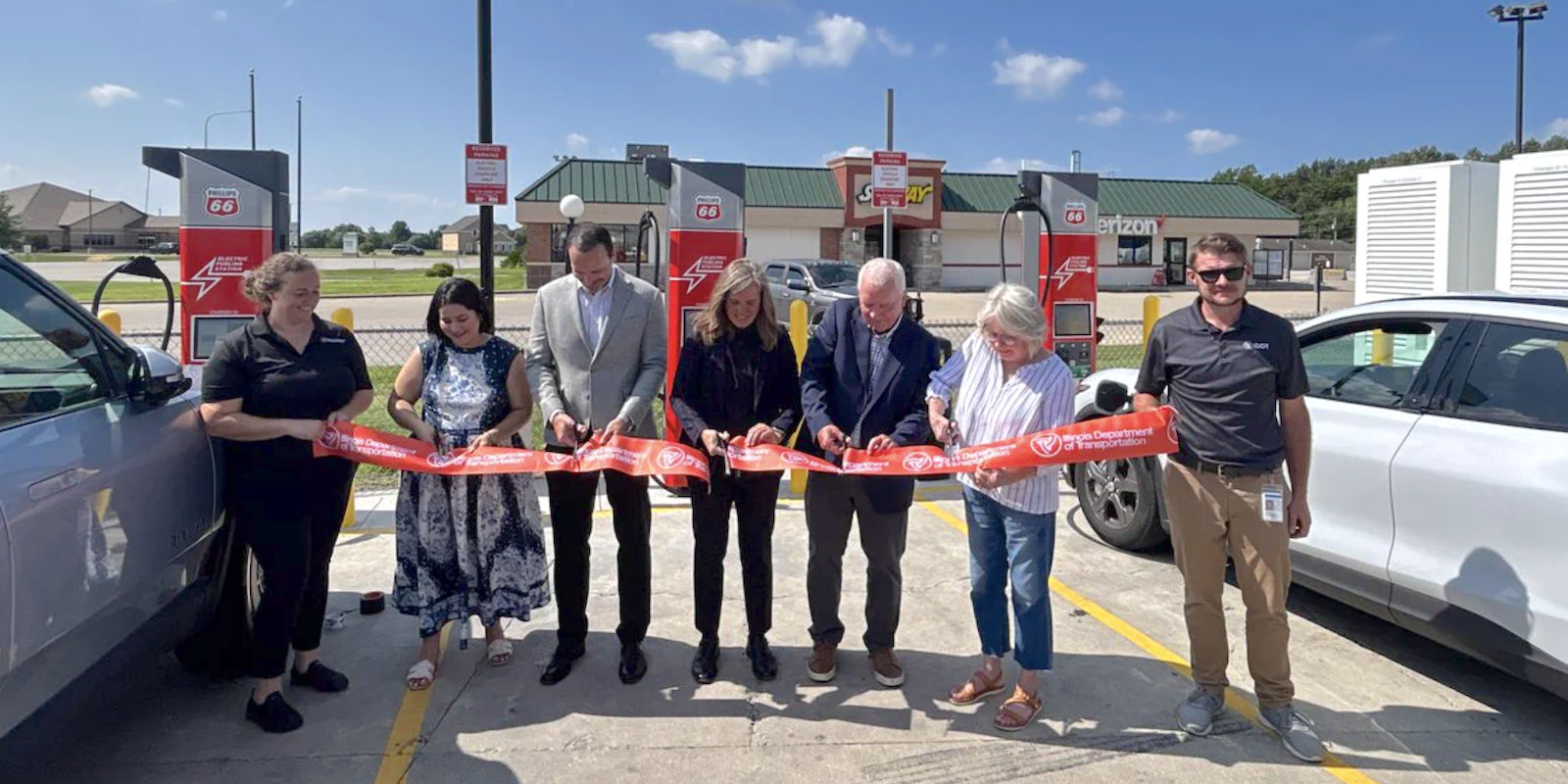
Illinois reached a federal infrastructure milestone this week when the state's Department of Transportation activated the first federally-funded EV chargers at a Phillips 66 Mach 1 station in Casey. The ribbon-cutting marks a tangible deployment of the National EV Infrastructure (NEVI) program, which Congress authorized under the Biden administration's Bipartisan Infrastructure Law.
NEVI allocated $7.5 billion to build a nationwide network of fast-charging stations along interstate corridors. The program aims to eliminate range anxiety and standardize charging across state lines by prioritizing locations on major highways. Illinois, a transportation hub connecting the Midwest and coasts, received federal grants to install high-speed chargers at strategic points.
The Casey station deployment reflects NEVI's core strategy. Rather than scattered urban charging, the program targets rural and semi-rural interstate exits where gaps exist. A Phillips 66 Mach 1 travel center provides an ideal host location, offering amenities like restrooms and food service while drivers charge. High-speed DC fast chargers can replenish 200 miles of range in 30 minutes, making long-distance EV travel practical for the first time.
The project arrives as automakers push aggressive EV timelines. Ford, General Motors, and Chevrolet have all announced significant electrification targets, and customer adoption depends directly on charging availability. Previous EV infrastructure efforts failed partly because chargers clustered in dense urban markets where most owners already had home charging. NEVI corrects this by prioritizing highway reliability and rural access.
For Illinois specifically, the deployment strengthens the state's EV readiness ahead of anticipated higher adoption rates. The station signals that federal funding has moved from planning into execution, a critical phase that tests whether NEVI can deliver on its $7.5 billion promise.
Other states report similar progress.