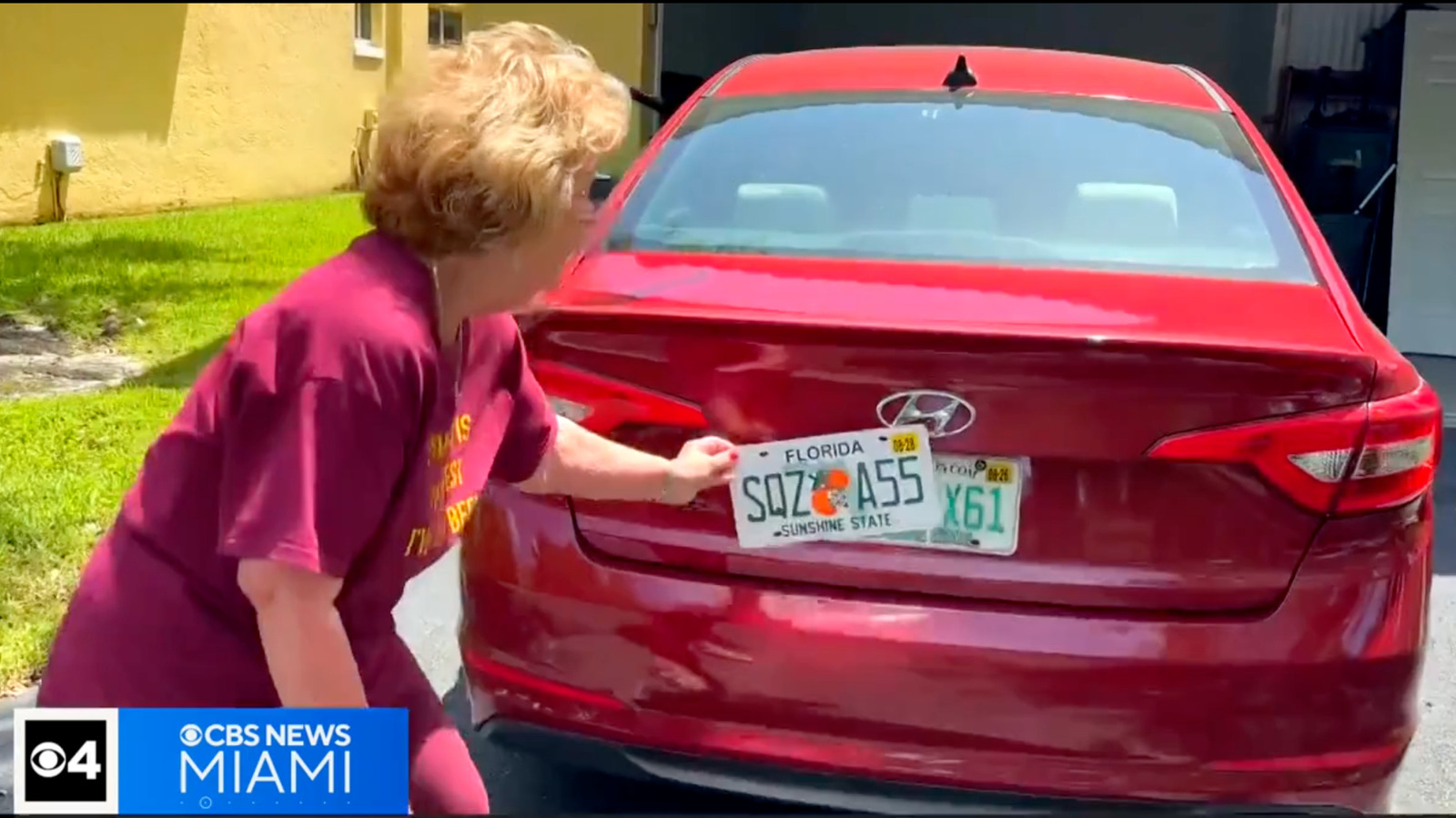
A Florida woman rejected her state-issued license plate after the Department of Motor Vehicles assigned her the alphanumeric combination SQZ-A55, which reads as "squeeze ass" when spoken aloud. The driver found the unintentional double entendre objectionable enough to request a replacement plate.
Florida's DMV generates random character sequences for standard plates without human review of potential crude interpretations. The system occasionally produces combinations that sound like profanities or inappropriate phrases when pronounced, catching both drivers and the agency off guard. This plate cleared the computer's filters because it contains no explicit words, only letters and numbers that phonetically suggest something crude.
The woman's complaint highlights a real tension between automated efficiency and the awkwardness of driving around with a plate that invites snickering. While some drivers embrace these accidental comedy gold moments, others—particularly those in professional settings or simply preferring dignity—want nothing to do with them.
Florida has processes for requesting alternative plates when drivers object to their assigned numbers. The DMV can issue replacements, though most states don't pre-screen for unintended phonetic interpretations. The cost and effort of implementing human review for every plate issued would be substantial, and many agencies view the issue as minor compared to operational demands.
This incident underscores how randomization systems designed for efficiency can miss contextual humor. Vanity plates exist specifically to let drivers choose their own identities, but standard-issue random plates occasionally produce the opposite effect. A simple human checkpoint might catch offensive combinations before they reach drivers, but Florida has apparently chosen to let the random system run unfiltered and handle complaints on a case-by-case basis.
The woman got her replacement. The internet got its laugh.