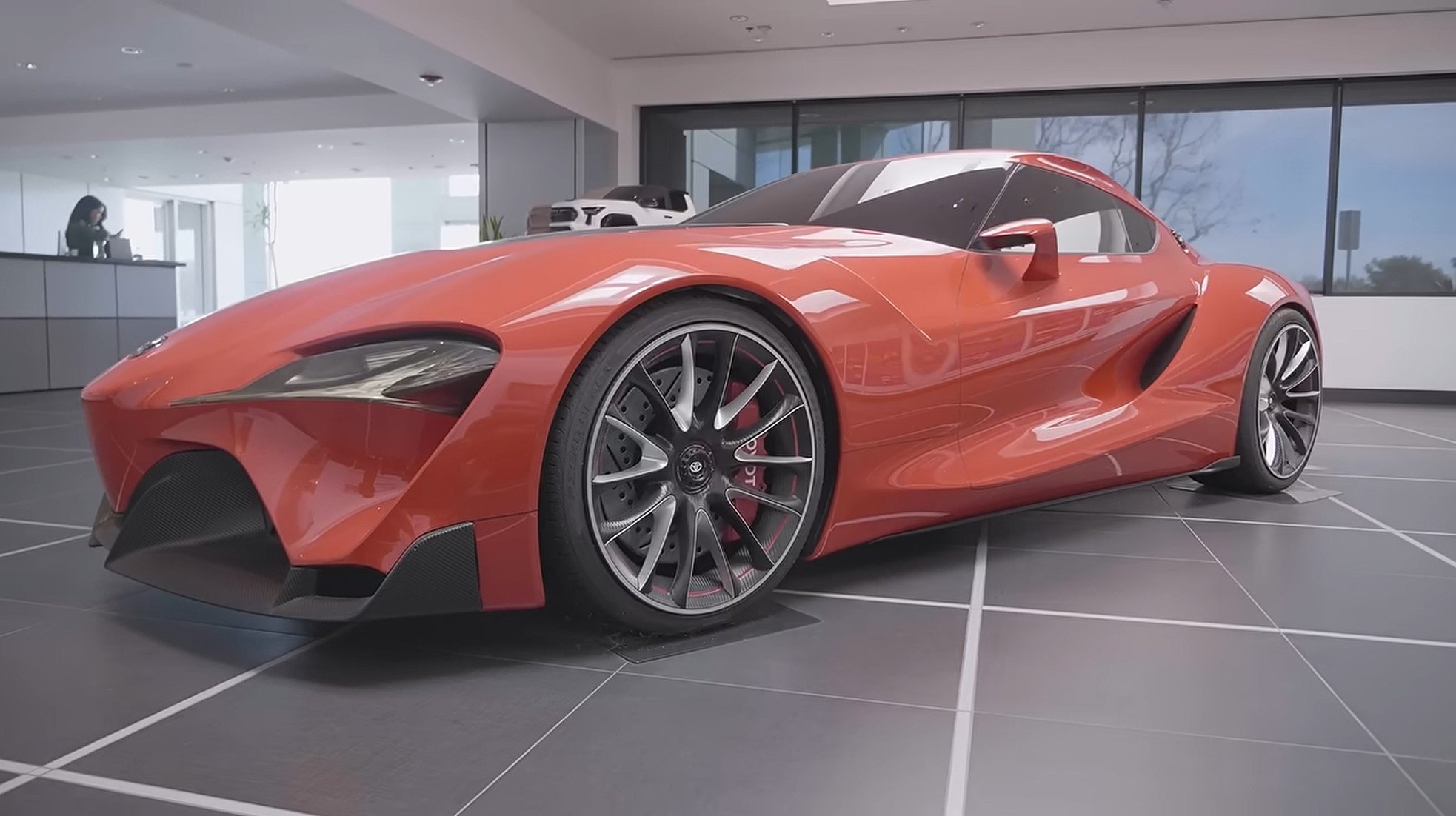
Toyota's FT-1 Concept captured hearts when it debuted, but the production A90 Supra that followed disappointed purists who expected a closer translation of that aggressive, sculpted design language. The FT-1's designer now explains why the gap between vision and reality exists.
The core issue comes down to engineering constraints and cost realities. The FT-1 was pure fantasy, unshackled by crash test requirements, pedestrian safety regulations, and platform sharing dictates. Toyota built the production Supra on a shared BMW Z4 platform, a decision that locked in proportions and packaging before design could begin. That partnership meant compromise on every front. The roofline, door handles, window shapes, and overall stance had to accommodate engineering already baked into the Z4's structure.
Aerodynamics demanded changes too. Concept cars can wear dramatic fender flares and angular surfaces. Production vehicles need real-world cooling, underbody airflow management, and manufacturing feasibility. The FT-1's knife-edge creases softened. The proportions widened to accommodate wider tires and suspension geometry. What looked purposeful on a one-off show car looked generic when packaged for volume production.
Cost killed some of the FT-1's visual aggression outright. Hand-laid carbon fiber body panels don't scale to a $40,000 sports car. Exotic materials gave way to conventional paint-and-plastic solutions. The number of unique parts plummeted, forcing design compromises that simplified surfaces and eliminated bespoke details.
The designer acknowledges this gap reflects industry reality. Concepts serve as design direction and marketing tools. They test radical proportions and styling without consequence. By the time legal, engineering, and finance get involved, a concept's bold strokes become production's cautious edits.
The A90