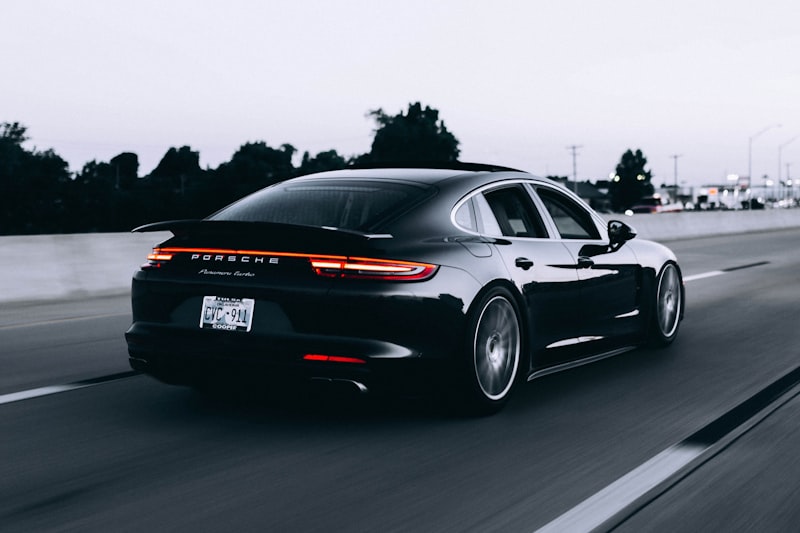
Here's what's happening in the automotive industry right now, and frankly, it should worry anyone who actually cares about cars: we're rewarding spectacle over substance, and the winners aren't the consumers or the planet. They're the marketing departments.
Look around at what's getting attention. The fastest 0-60 times. The loudest exhaust notes. The most outrageous limited editions. The industry has turned the car into a stage production, and everyone from manufacturers to media to social platforms is complicit in this performance. But ask yourself: who actually benefits when we celebrate these metrics above all else?
The answer is simple. It's the brands that can afford to make noise, literally and figuratively. It's the legacy manufacturers with massive budgets who can build one-off monsters and hire PR firms to generate viral moments. It's the luxury segment that profits from exclusivity and hype. Meanwhile, the companies actually trying to solve real problems, transportation reliability, efficiency, and accessibility, are grinding away in relative obscurity.
This matters because incentives shape behavior. When the industry sees that extreme performance gets headlines and social engagement, it doubles down on extreme performance. When limited-edition variants get more coverage than incremental improvements to safety or durability, manufacturers allocate resources toward limited editions. We're not just celebrating these choices. We're economically rewarding them.
The perverse part? Consumers often don't actually want what we're glorifying. Most people buy cars for transportation. They want reliability, reasonable costs, and practical features. But those stories don't trend. A thoughtfully engineered midsize sedan with a ten-year powertrain warranty won't generate the same content engagement as a hand-built performance variant with a 500-horsepower engine.
This creates a feedback loop that benefits the wrong players. Established manufacturers with deep pockets can afford to play the performance game and still make money on volume sales. Newer entrants and smaller companies can't. They get squeezed out or forced to compete on terms that don't suit their business models. The result is a market that looks more consolidated, more repetitive, and increasingly divorced from what actually serves the majority of drivers.
There's another angle here worth considering. This obsession with performance theater has real environmental and economic costs. The resources poured into building specialty vehicles and chasing efficiency records could be directed toward infrastructure, affordability, and technology that benefits everyone. Instead, we celebrate engineering that serves a narrow slice of the market and then acts surprised when discussions about sustainability feel disconnected from the industry's actual priorities.
I'm not arguing against performance cars or exciting design. Those things have value. What I'm saying is that our coverage, our attention, and our industry incentives are wildly unbalanced. We're treating edge cases like they're the center of gravity.
The automotive journalists, enthusiasts, and industry observers who claim to love cars should recognize this dynamic. Our choices about what deserves attention have consequences. When we consistently elevate performance extremes and rare limited editions, we're not just covering the news. We're actively shaping what gets built next.
If you want the industry to focus on different problems, you have to stop rewarding it for focusing on performance theater. That means changing what we talk about, what we celebrate, and what we consider newsworthy. It means acknowledging that the most important automotive innovations often aren't the flashiest ones.
The industry will continue building what gets rewarded. Right now, it's rewarding the wrong things. That's not a report. That's a choice.